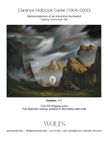
An upcoming exhibition at WOLFS Gallery in Cleveland explores the career of surrealist artist Clarence Holbrook Carter. The gallery, which represents the estate of the artist, showcases more than 200 works, including the artist’s eminent architectural paintings, otherworldly landscapes and symbolic portraits. 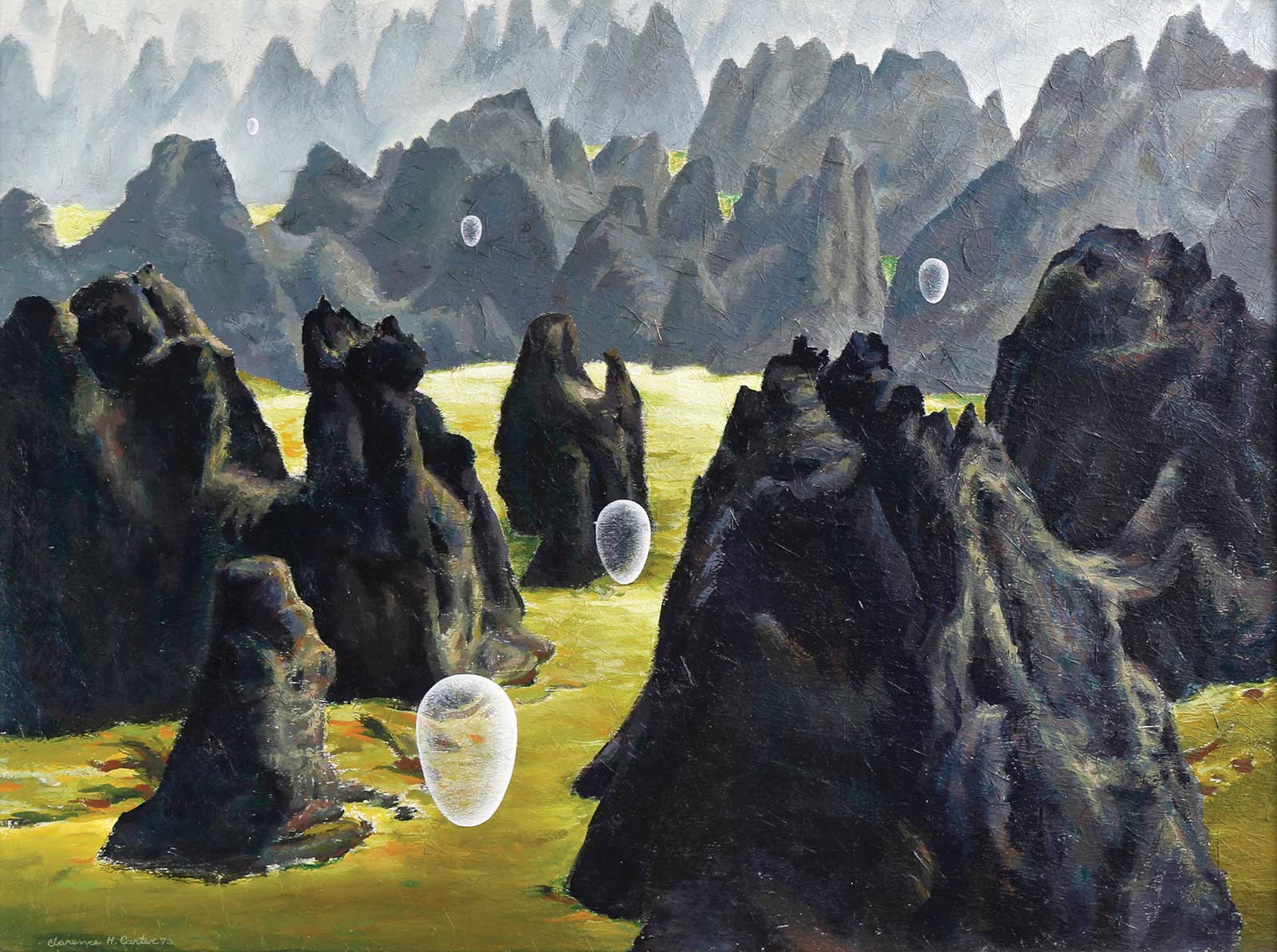 Clarence Holbrook Carter (1904-2000), Eschatos #16, 1973. Acrylic on scintilla, 22 x 30 in.
WOLFS Gallery director Michael Wolf explains the significance of Cleveland as a major art destination at the turn of the 20th century, where Carter studied. “It so happens that Carter was a graduate of the Cleveland School of Art (now the Cleveland Institute of Art), and because of our long history in Cleveland we’ve become associated with the well-known artists who [attended the school]. Cleveland at the turn of the century was the biggest lithographic and printing community in the world, and artists flocked all over the world to Cleveland because they could make great money in that industry,” Wolf says. “All of the silent movie posters in this country were printed in Cleveland, and there’s this evolution, this community that evolves into this wonderful artistic community.”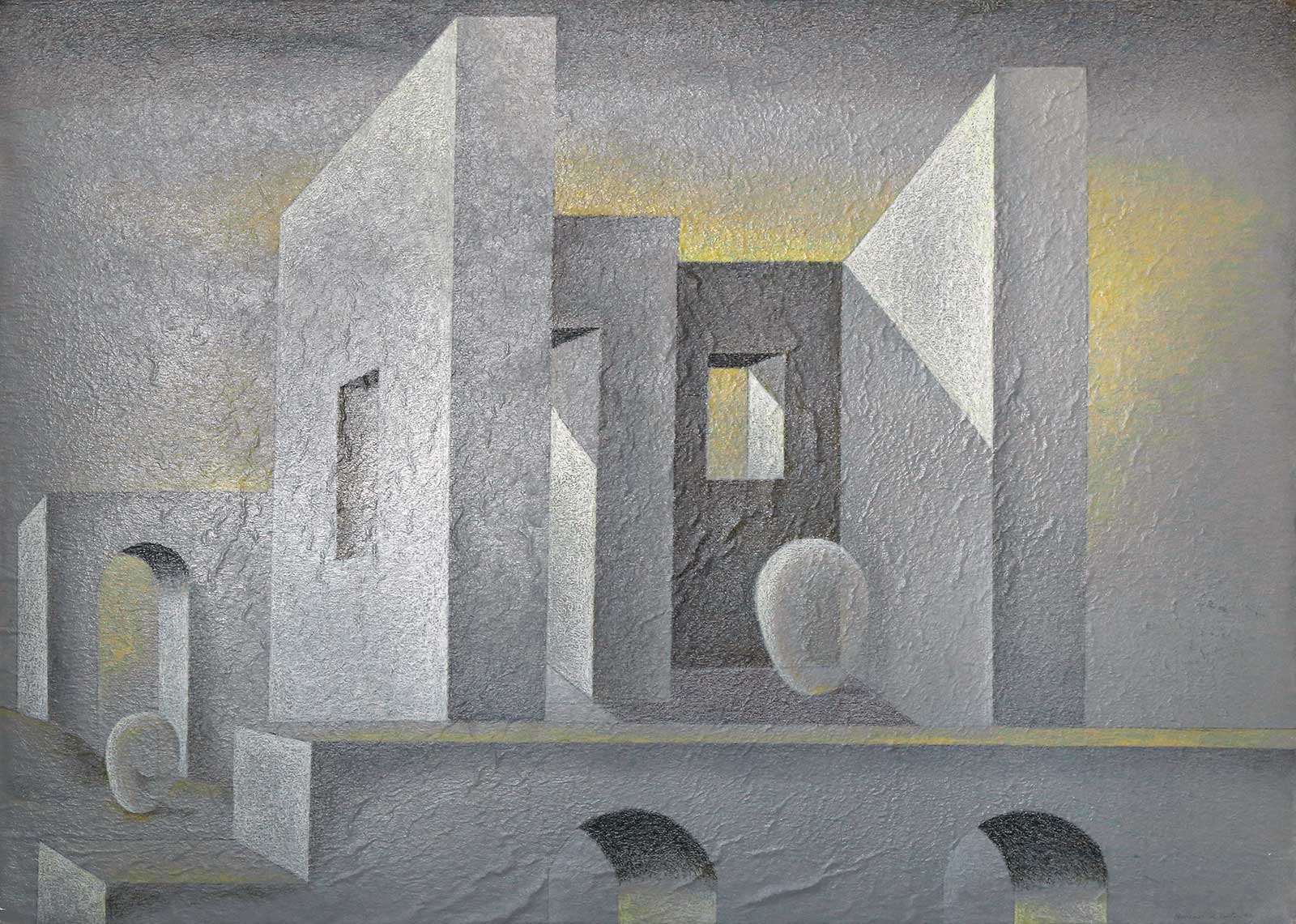 Clarence Holbrook Carter (1904-2000), Haunted by Memories, 1986. Acrylic and pastel on paper, 40 x 56 in.
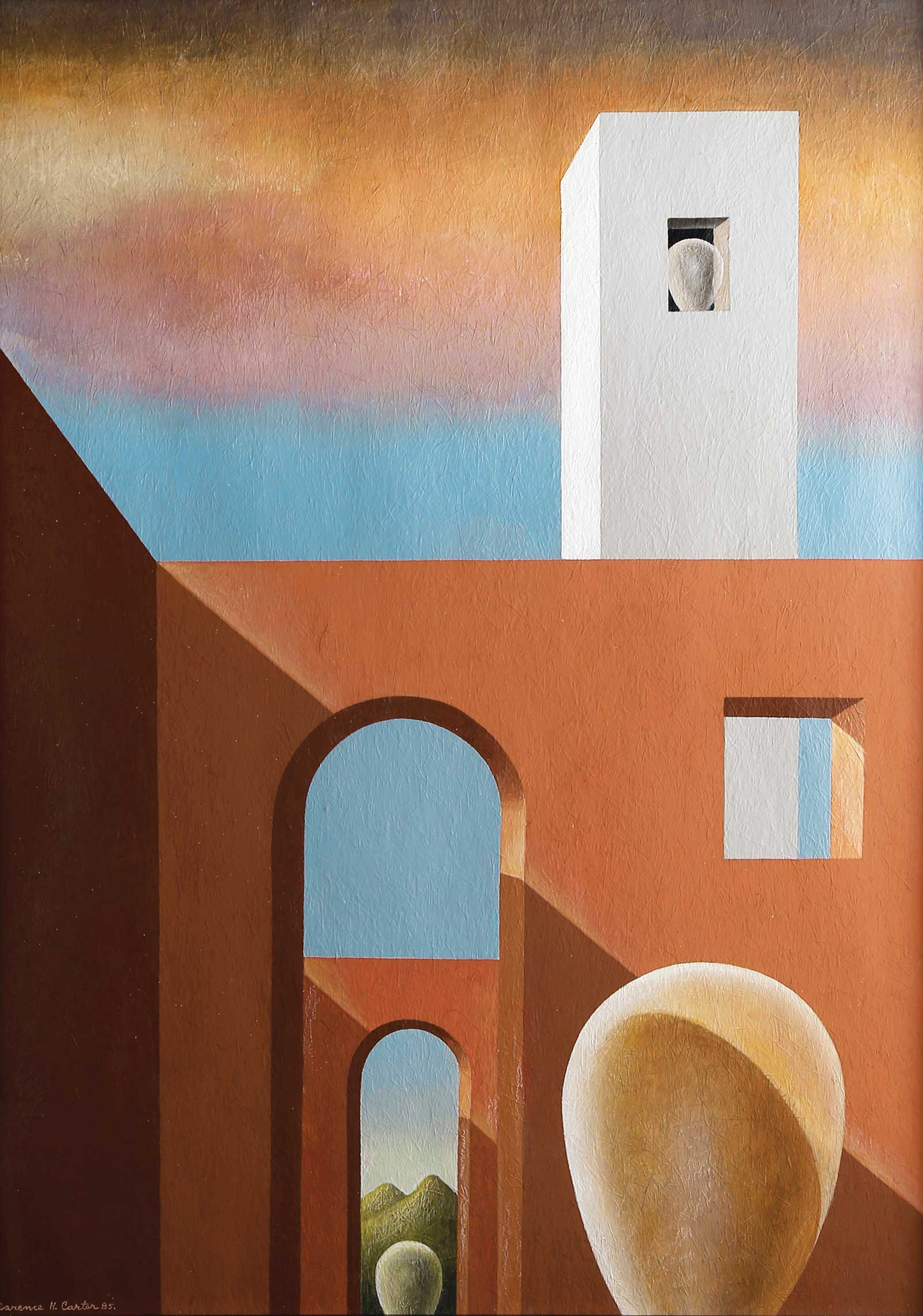 Clarence Holbrook Carter (1904-2000), Study for Sentinels “B”, 1985. Acrylic on paper, 30 x 22 in.
Carter emerged as an American scene painter in the 1930s and ’40s, his works having a sense of surrealism and often depicting tense societal issues of the time-the Great Depression, for instance. Eventually in the 1960s and ’70s he refined his precision as an artist, employing the egg or ovoid symbol seen in many of his works, like Eschatos #16, Haunted by Memories, Study for Sentinels “B” and, most prominently, Balancing Act. The artist said, “Beyond reality I felt there must be another realm to explore. I needed some symbol broader and more encompassing than human figures within actual environments. I experimented with symbols that grew naturally into the ovoid. Pure abstraction never satisfied me completely. I needed a contact with all that was and is. The ovoid has been an understandable symbol and a living part of life and cultures. It not only symbolizes life but also death and rebirth.”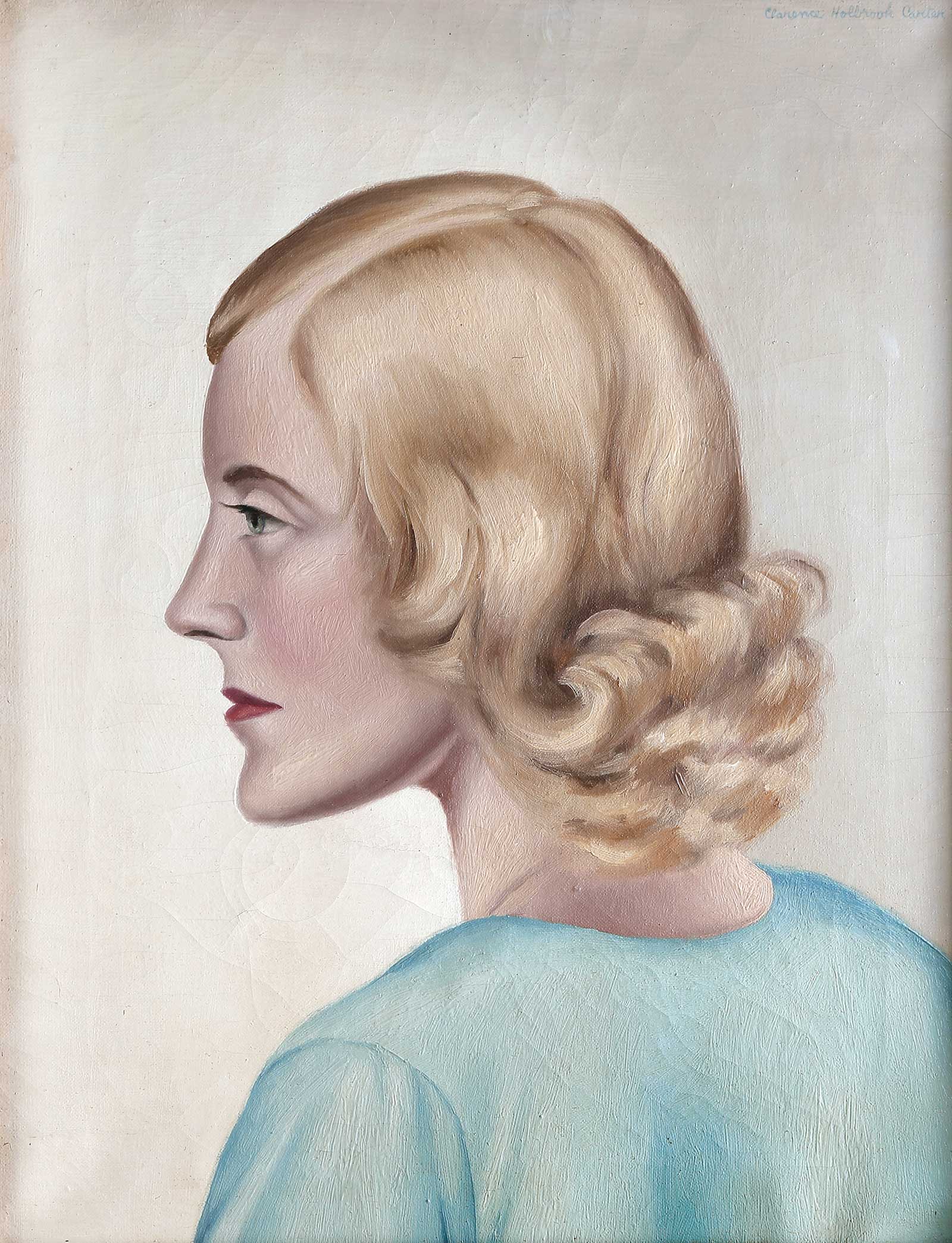 Clarence Holbrook Carter (1904-2000), Blonde, 1932. Oil on canvas, 20 x 16 in.
Wolf continues, “From the beginning, Carter was intrigued by the world beyond us. He had confronted death as a young man numerous times within his family, and he was a deep thinker as well. Spiritual and mysterious things were always a part of his work from when he was an emerging young artist. Even when you look at what appears to be regional representational work, there’s always something underlying what you’re seeing. You’re looking at what you think is a portrait, but there’s the expression, there’s something about the setting, there’s the posture. You don’t always understand why you’re so compelled [until you look more closely].”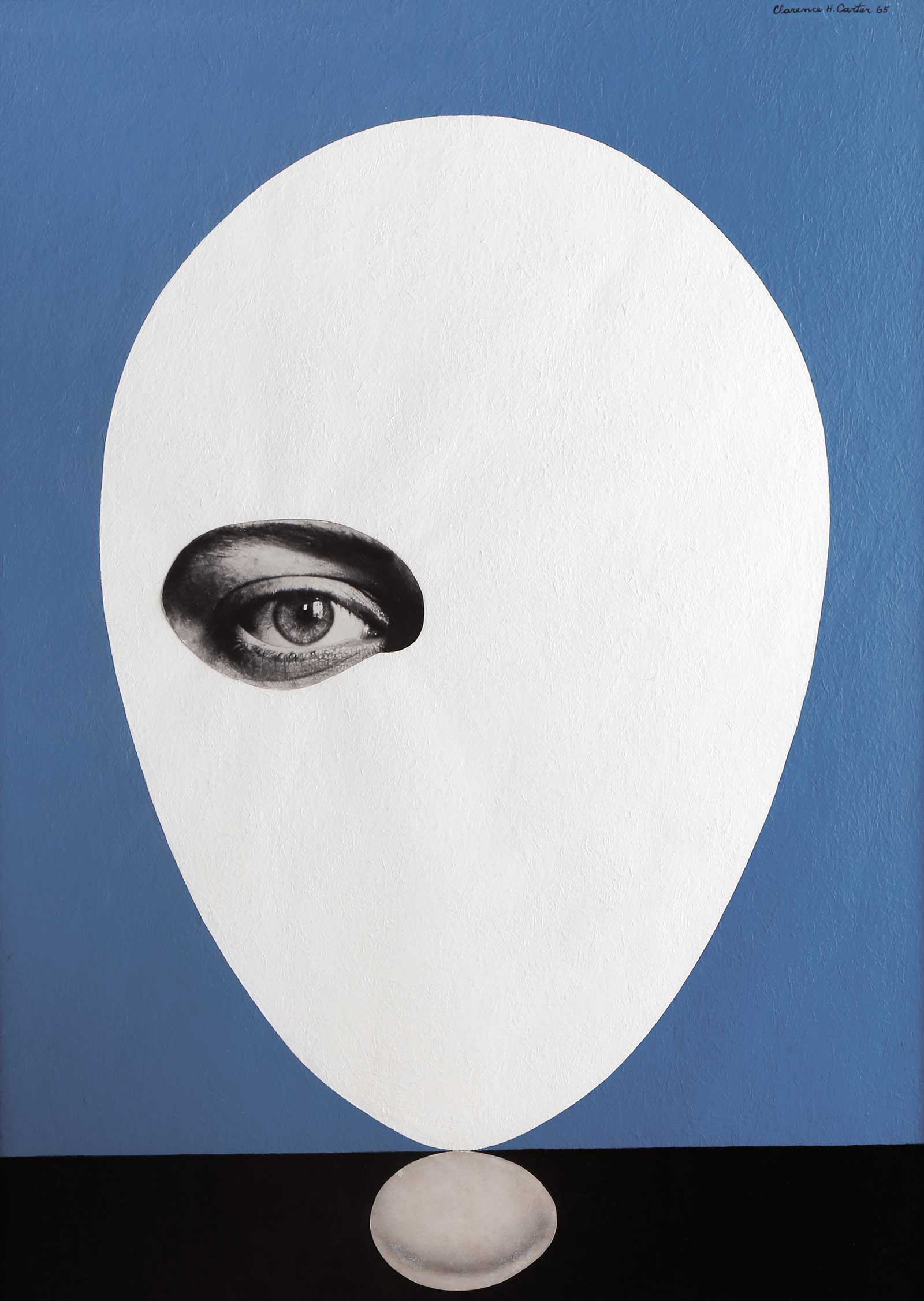 Clarence Holbrook Carter (1904-2000), Balancing Act, 1965. Acrylic and collage on paper, 30 x 22 in.
Clarence Holbrook Carter: Metamorphosis of an American Surrealist will be on view April 16 through May 30. An opening reception is being held on April 16 from 6 to 8 p.m. —
Powered by Froala Editor