Now open at the Patricia & Phillip Frost Art Museum at Florida International University in Miami is Transitional Nature: Hudson River School Paintings from the David and Lara Grey Collection, a new exhibition that features 29 impressive landscapes from an important period of American art history. 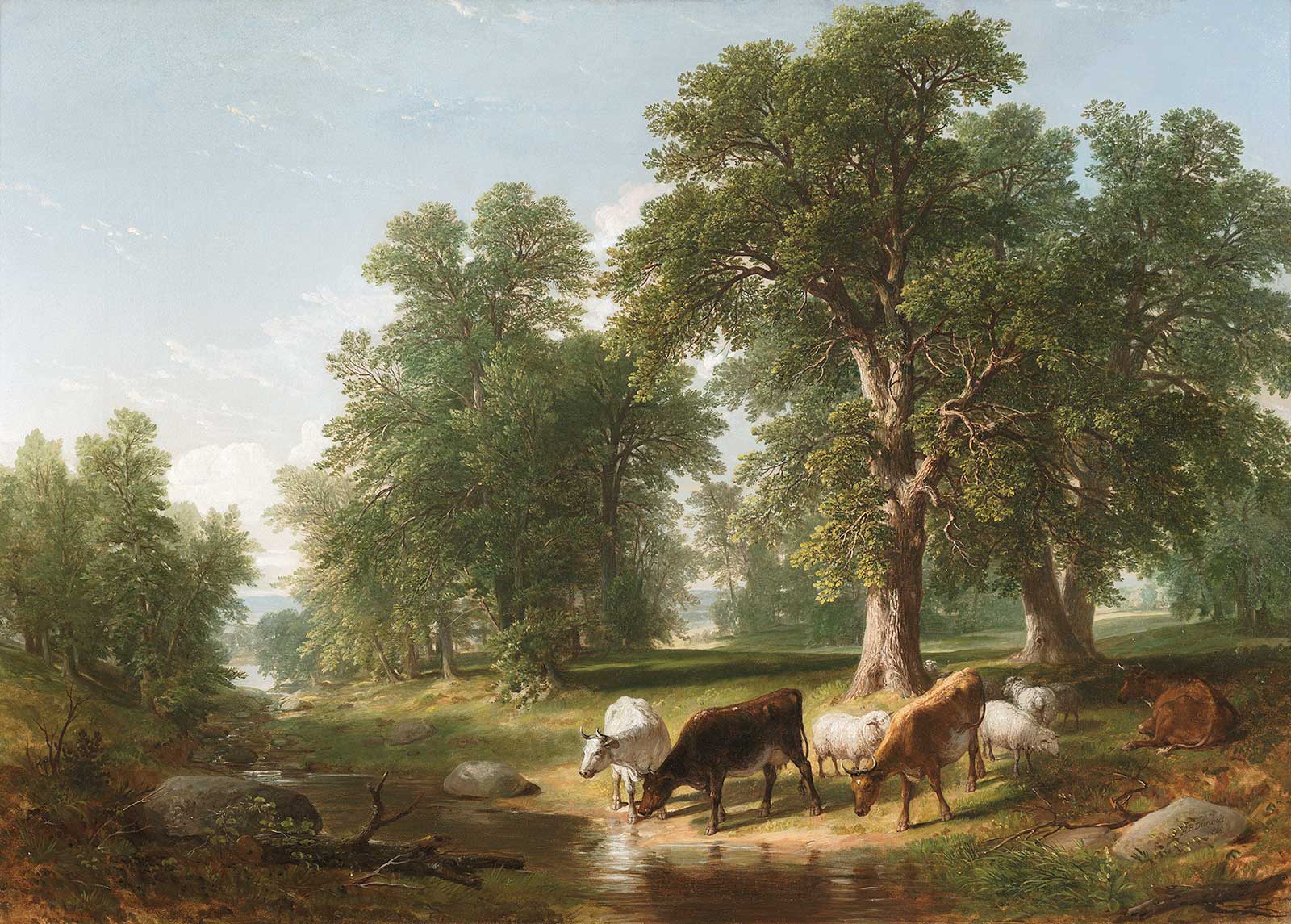 Asher B. Durand (1796-1886), A Summer Afternoon, 1849. Oil on canvas, 41 x 51½ in. Collection of Laura and David Grey.
The New York-based collectors, who make frequent loans to institutions, have collected artwork with a specific focus on the Hudson River School. “They are incredibly knowledgeable and take it very seriously,” says Amy Galpin, chief curator at the Frost Art Museum. “They do their homework and study everything they collect. Mr. Grey can give quite a museum tour.”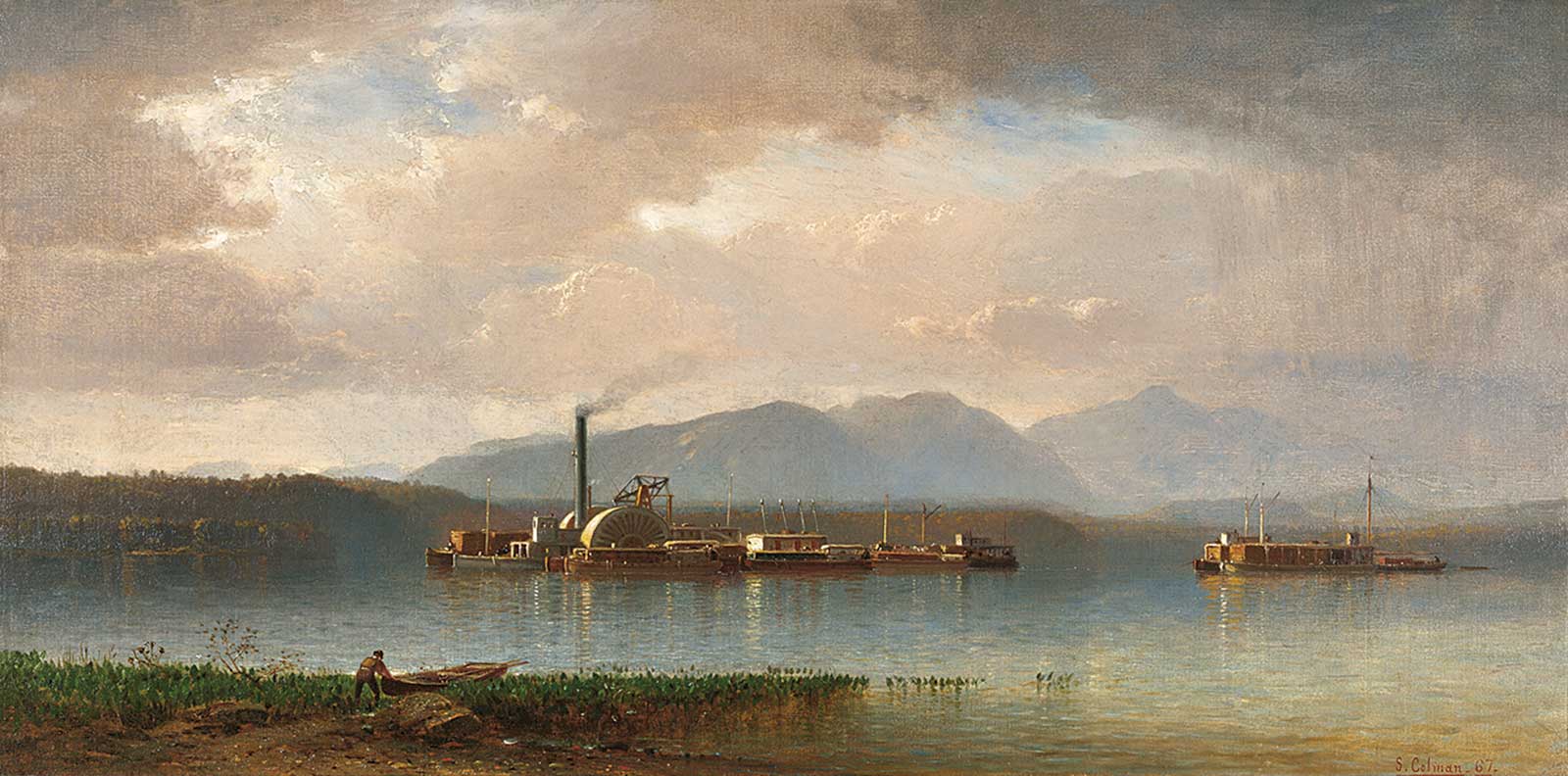 Samuel Colman (1832-1920), Barges on the Hudson, 1867. Oil on canvas, 15 x 30 in. Collection of Laura and David Grey.
The exhibition, which was curated and organized by Katherine Manthorne, an art professor at the City Museum of New York, will feature artwork from many of the Hudson River School greats: Albert Bierstadt, Asher B. Durand, David Johnson, T. Worthington Whittredge and many others. Organizers of the museum are excited that these artists are being exposed to Miami museumgoers, who are often shown artwork from around the world in many different styles. “This will definitely be something very different,” Galpin says. 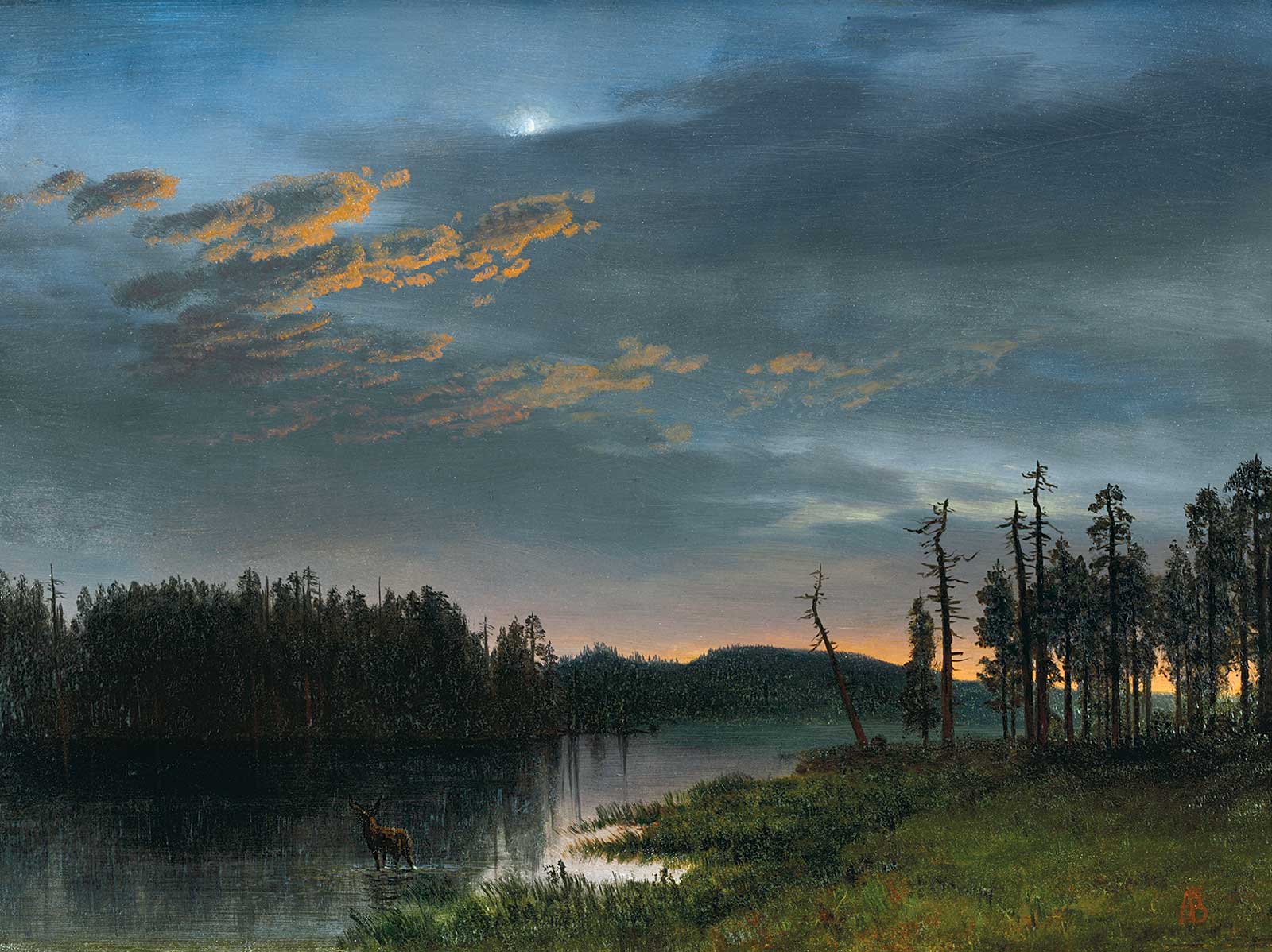 Albert Bierstadt (1830-1902), Western Landscape—Deer Wading, ca. 1870s. Oil on canvas, 11¼ x 15½ in. Collection of Laura and David Grey.
Works in the show include Durand’s 1849 oil A Summer Afternoon, showing several cows and sheep grazing and drinking from a nearby stream. “I just love the Durand because it’s not a typical scene—it’s not a grand picture,” says Galpin. “It’s more of a quiet moment. It’s not Yosemite or Yellowstone or some big Hudson River scene. It speaks to the awe-inspiring power of nature, even from this lovely little grove.”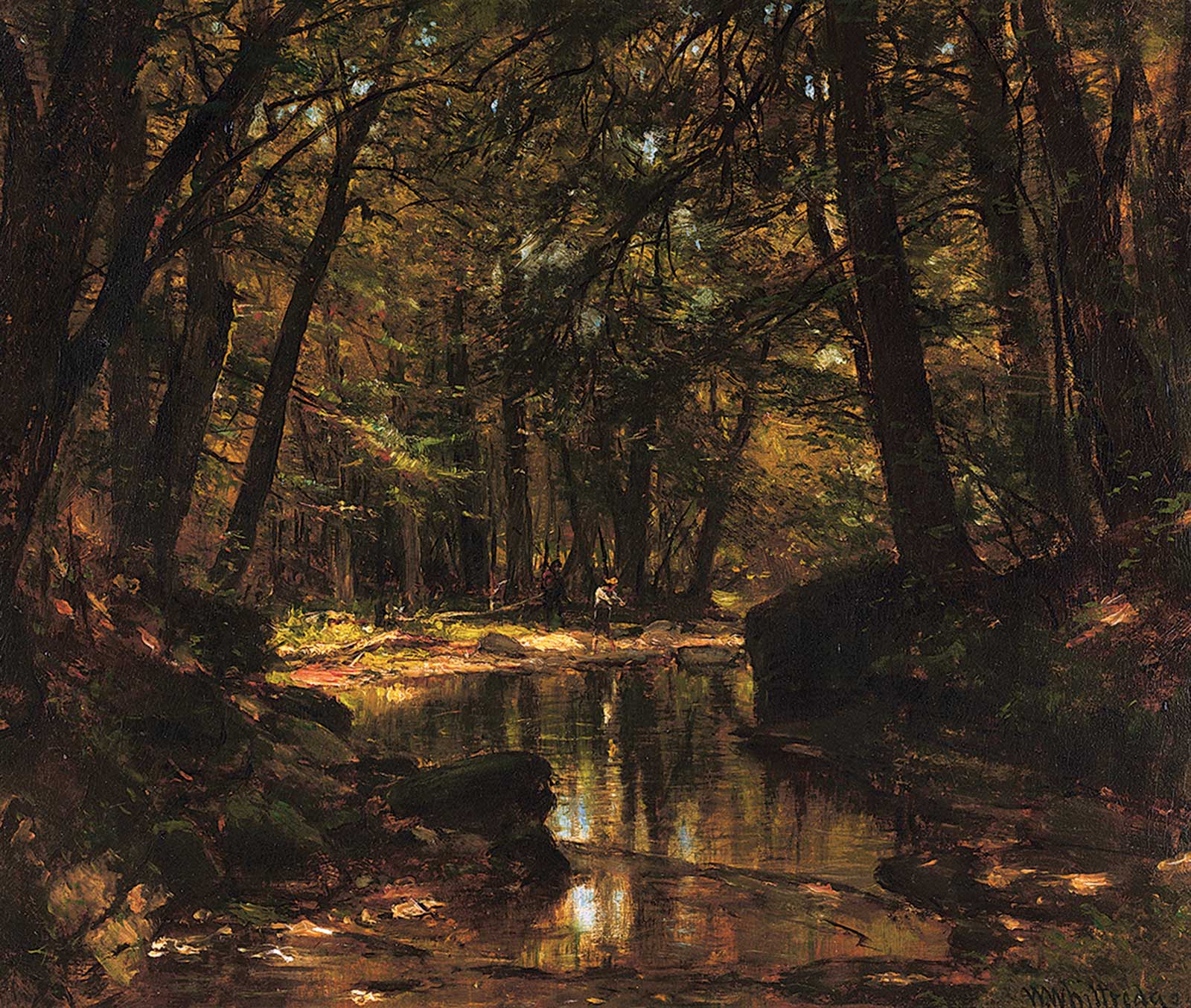 T. Worthington Whittredge (1820-1910), Trout Stream, ca. 1870s. Oil on canvas, 12 x 15 in. Collection of Laura and David Grey.
Samuel Colman’s 1867 oil Barges on the Hudson will also be in the exhibition, and Galpin says it addresses an important period after the Civil War. “The American landscape is changing as a result of industry, and you can see that here in his depiction of the Hudson, where workers and trade are very much present,” she says. “A nice little detail is the man pulling a small rowboat in the foreground. It’s a great visualization going from rowing to steam-powered boats. From the perspective of this painting, the modern age is here and Colman celebrates the change.”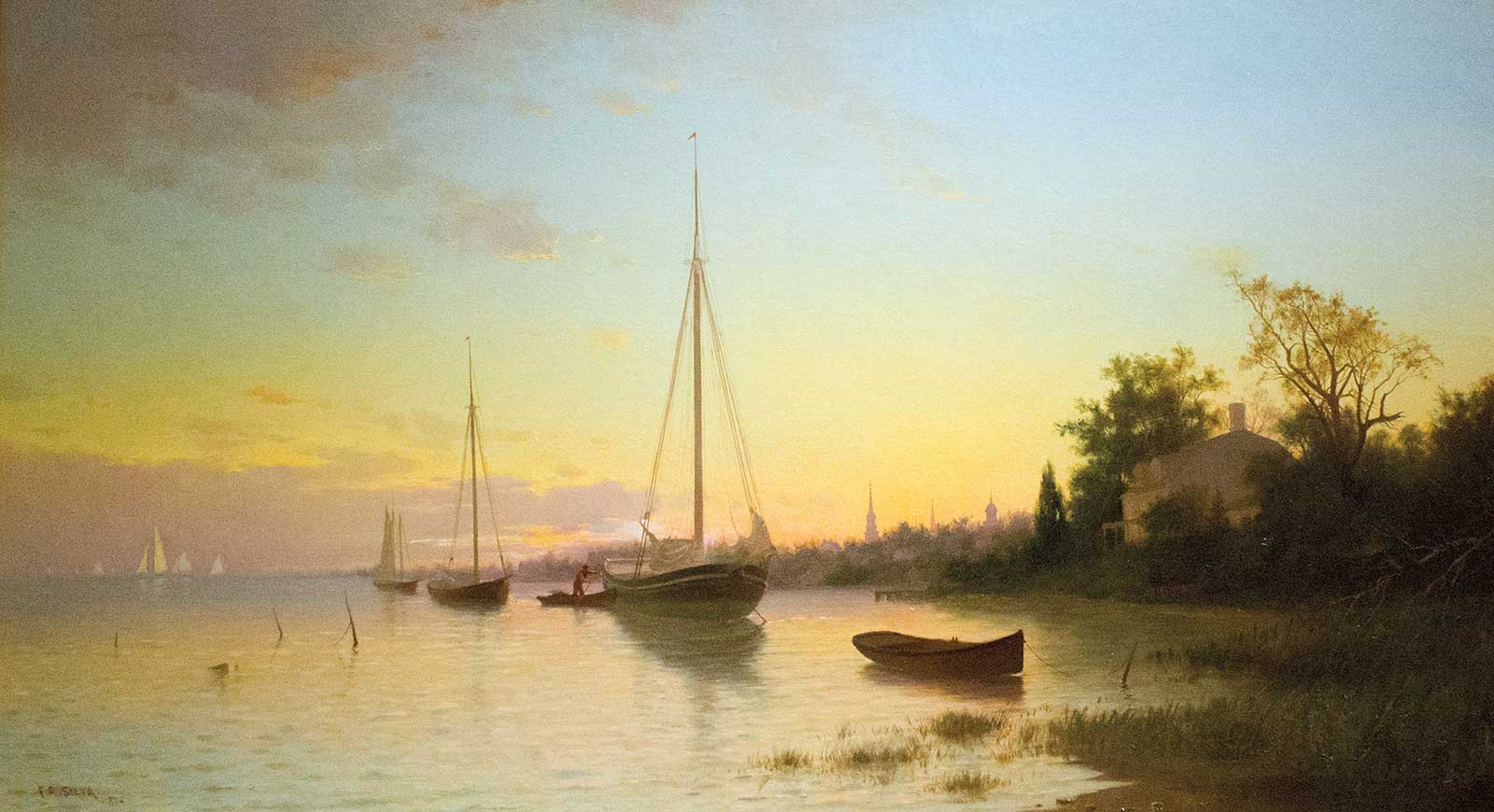 Francis Augustus Silva (1835-1886), Evening, 1881. Oil on canvas, 20 x 36 in. Collection of Laura and David Grey.
One of the more dramatic works is Lemuel Wiles’ 1867 oil Cove Near West Point, which shows a magnificent reflection of the sky off the pristine surface of a body of water. “The immediate foreground of this picture is occupied by an inlet with a hyper-still surface that bars the viewer’s entrance to the scene,” writes Manthorne. “The band of water paralleling the land is tinged with a burgundy-wine color while the adjacent strip reflects the blue-grey of the sky. The title refers to the nation’s military academy West Point, which graduated approximately 977 men who fought for the Union and for the Confederacy. Wiles’ inclusion of African American figures in the boat and on the shore, as well as the ghostly presence of blood in the water, makes this landscape a statement about suffering and loss.”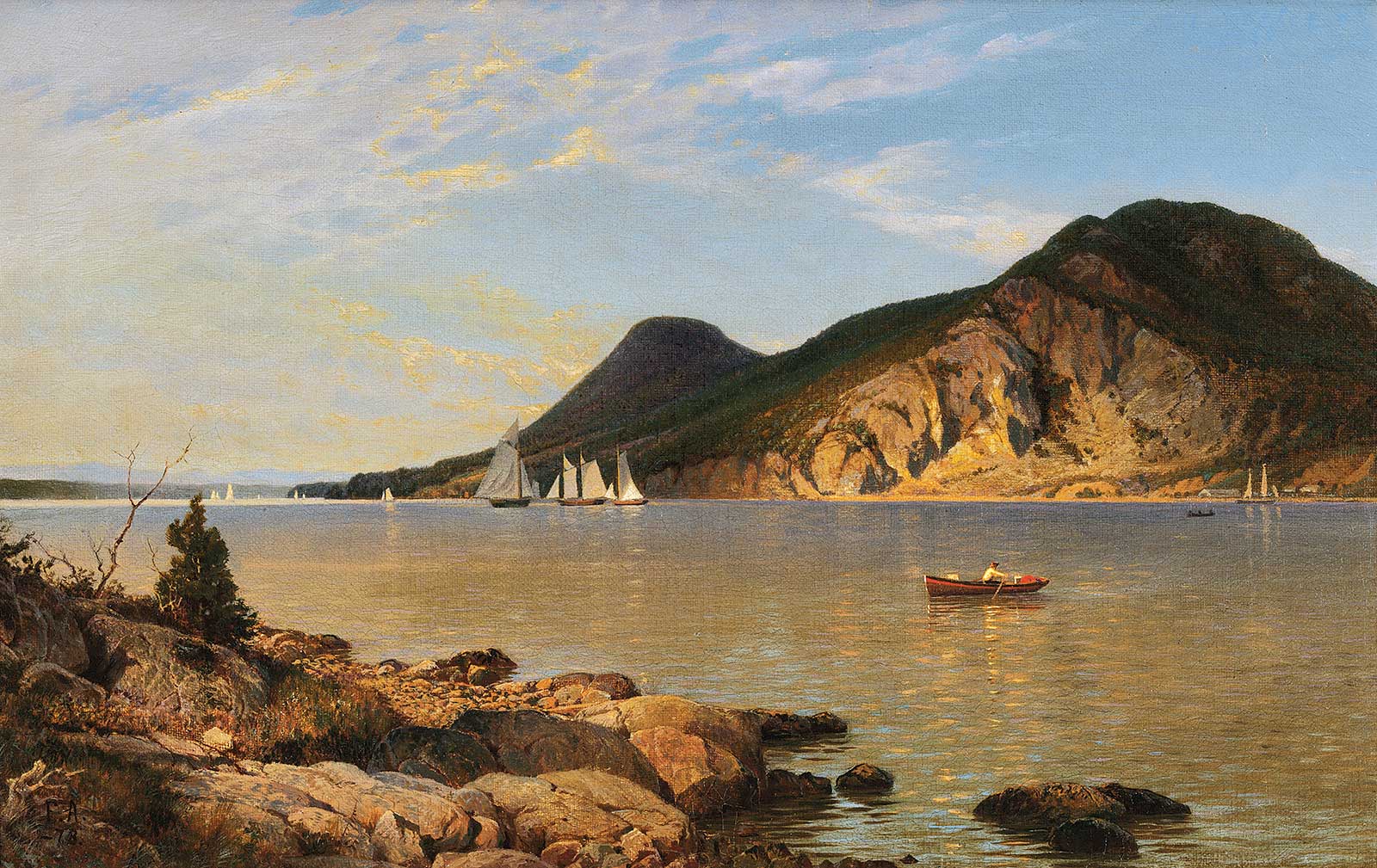 Frank Anderson (1844-1891), Breakneck Mountain, Hudson Highlands, 1878. Oil on canvas, 10 x 163⁄8 in. Collection of Laura and David Grey.
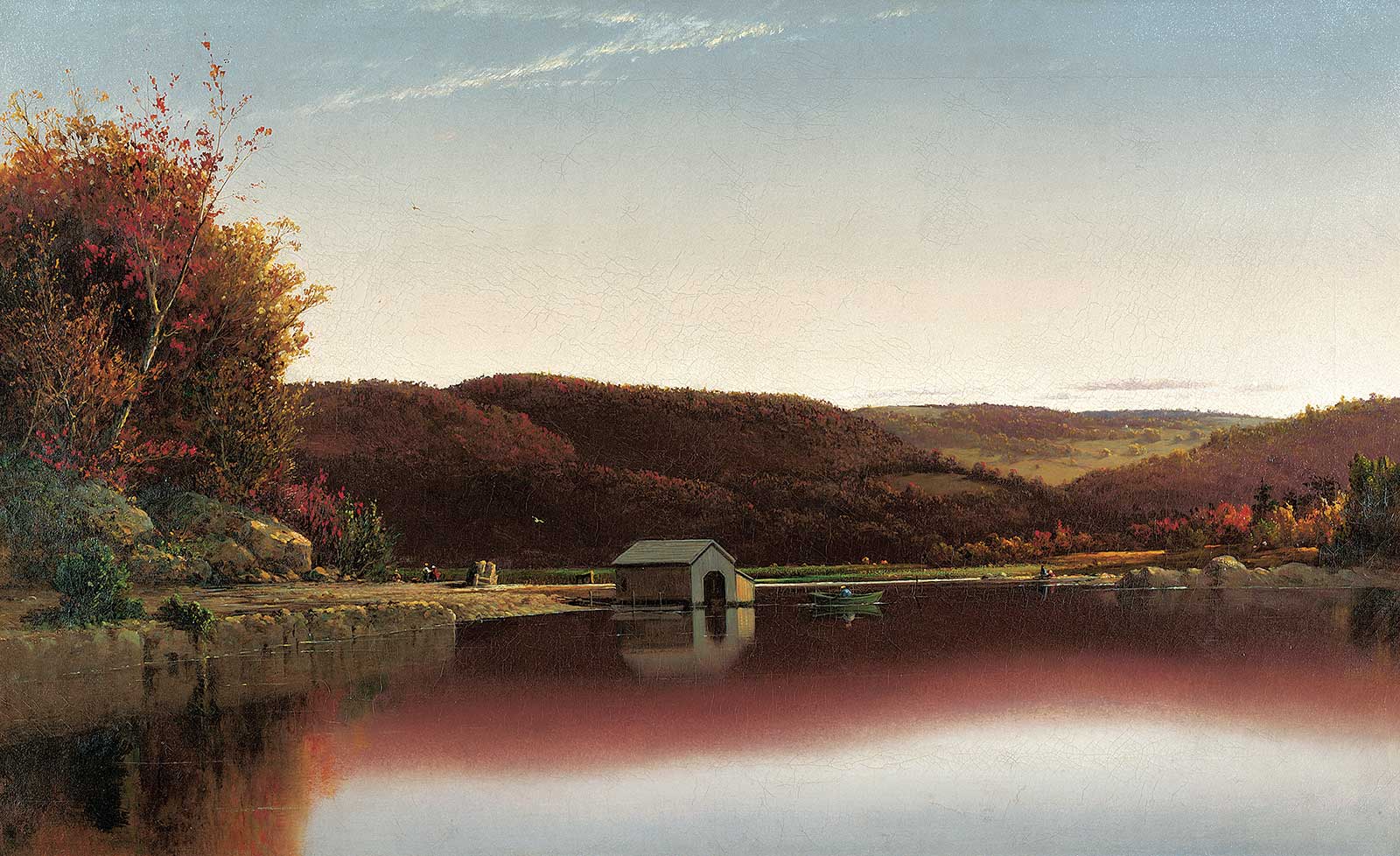 Lemuel Wiles (1826-1905), Cove Near West Point, 1867. Oil on canvas, 22 x 36 in. Collection of Laura and David Grey.
Another work with a dramatic sense of light is Whittredge’s 1870s oil Trout Stream. The work shows two figures fishing in a stream, but around them Whittredge has painted a dense alleyway of trees and shadow. “Fishing began as a means of obtaining food for survival but by the 1870s it evolved into an organized sport with clubs, specialized equipment and guidebooks identifying where to catch salmon or trout,” writes Manthorne. “As Whittredge shows in his painting of two anglers existing in harmony with the woodland interior, the goal was now to immerse oneself in nature and relax with rod and reel in hand. The artist may have read the new magazine Forest & Stream (founded 1873) associating sportsmen and conservation advocacy. This link continues today as Florida’s Fish and Wildlife Commission promotes fishing as a way of both managing and appreciating wildlife resources.”
Transitional Nature will remain on view in Miami through May 17. —
Powered by Froala Editor