Arthur D. Hittner’s latest book is The Caroline Paintings: An Art Novel, which features on its cover a painting from his art collection—The Dreamer by Stan Poray (1888-1948). Now retired after 34 years as an attorney, he turned his writing talents to his first book in the early 1990s. The prize-winning Honus Wagner: The Life of Baseball’s ‘Flying Dutchman’ was published in 1996.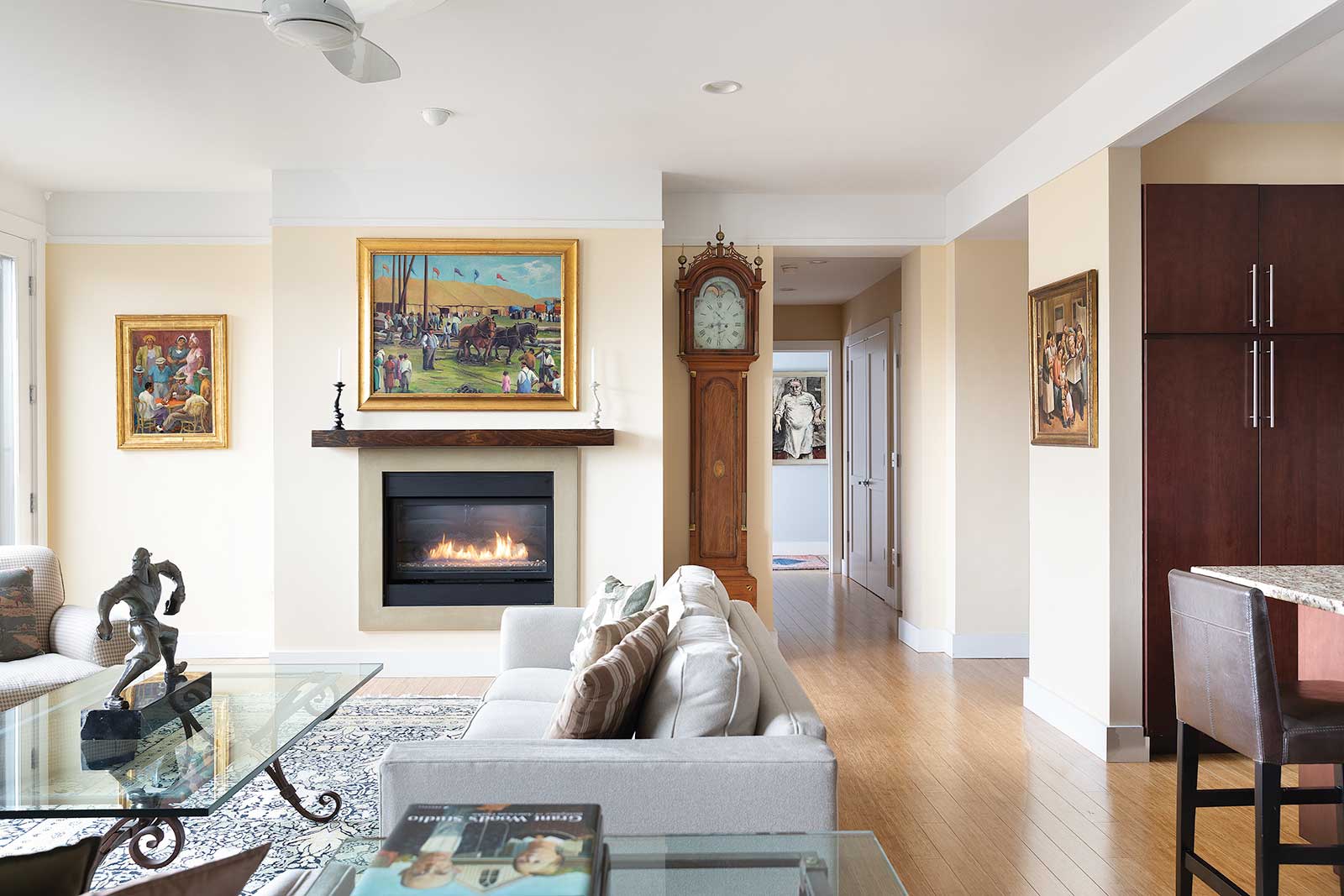 On the coffee table is Fastball, 1979 (cast 1987), bronze, by Albert Wein (1915-1991). To the left of the fireplace is Poker, 1937, oil on Masonite panel, by Helen Farr (Sloan) (1911-2005). Above the fireplace is Setting Up the Circus, 1935, oil on canvas, by Vermadel Griswold (1891-1967). The mahogany tall case clock is by William Cummens (1768-1834), Roxbury, Massachusetts. At the end of the hall is The Baker, 1945, encaustic on canvas, by Karl Zerbe (1903-1972). On the right is Reading the News, circa 1936-1939, by Daniel R. Celentano (1902-1980).
He and his wife, Peggy, had become interested in American painting of the ’30s and ’40s having visited the New York City gallery of Janet Marqusee, who was an artist, collector and scholar in her own right. He says, “Her stock was energetic—ripe with scenes of urban activity, boldly painted people and places depicting the heights and depths of life in America during the Great Depression and the war years that followed. It was immediately clear to me that my own discovery of American Scene painting presented a wondrous opportunity and a concomitant challenge. Along with the chance to collect dramatically undervalued work of often astounding quality by once highly-regarded artists was the challenge to contribute in some way to a renewed appreciation of their accomplishments.”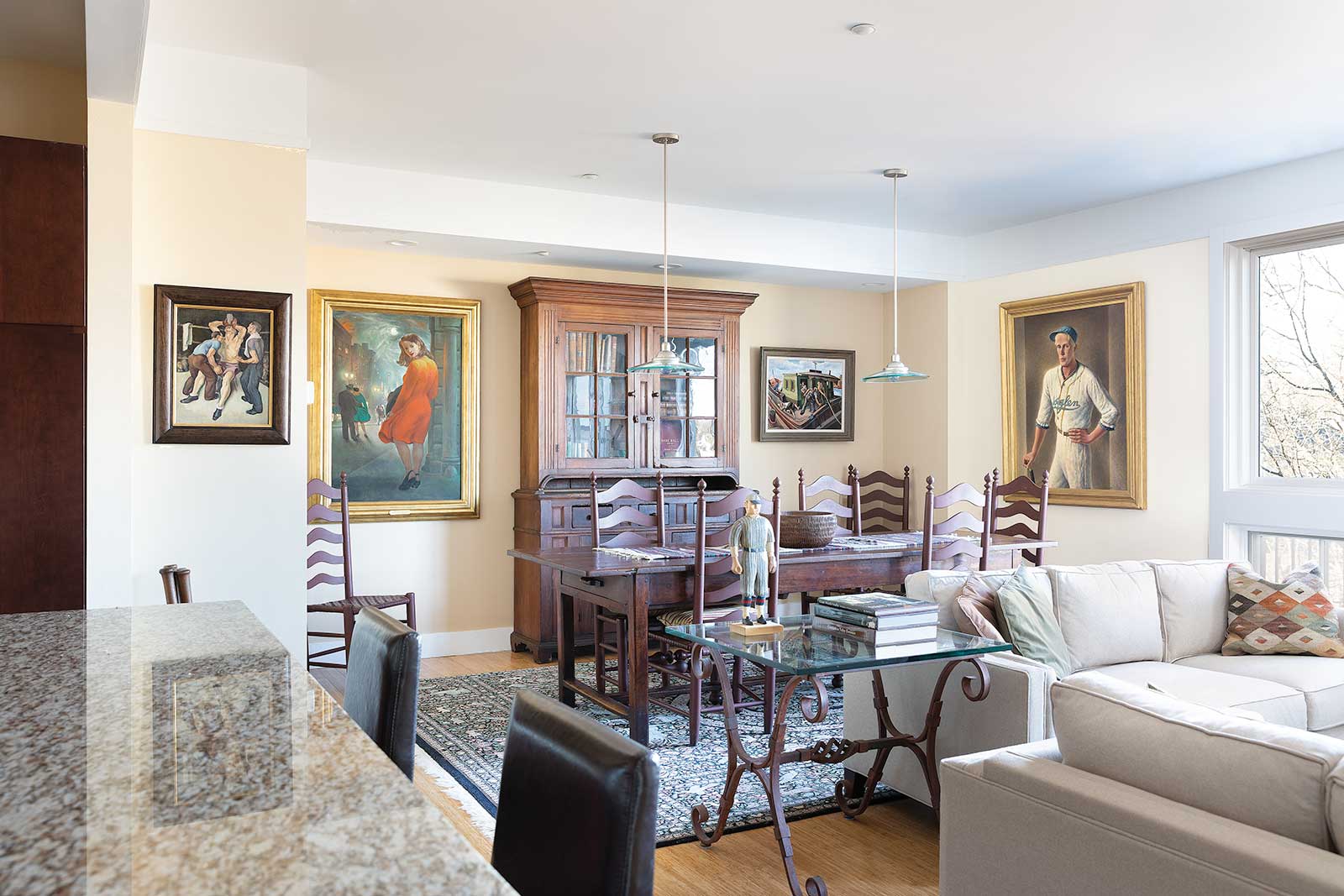 In the dining and living area are, left to right, Between Rounds, late 1930s, by Daniel R. Celentano (1902-1980); Street of Dreams, circa 1945, oil on canvas, by Douglas Gorsline (1913-1985); Celentano’s oil on canvas, The Houseboat, circa 1937; and Young Ball Player, 1933 (with later additions), oil on canvas, by James Chapin (1887-1975). The sculpture on the end table is a folk carving of Honus Wagner, a gift from Peggy to Art after the publication of his biography of Wagner. In the background is a pine, two-piece Pennsylvania German cupboard, circa 1770-1800. The dining table is a 19th-century French farm table.
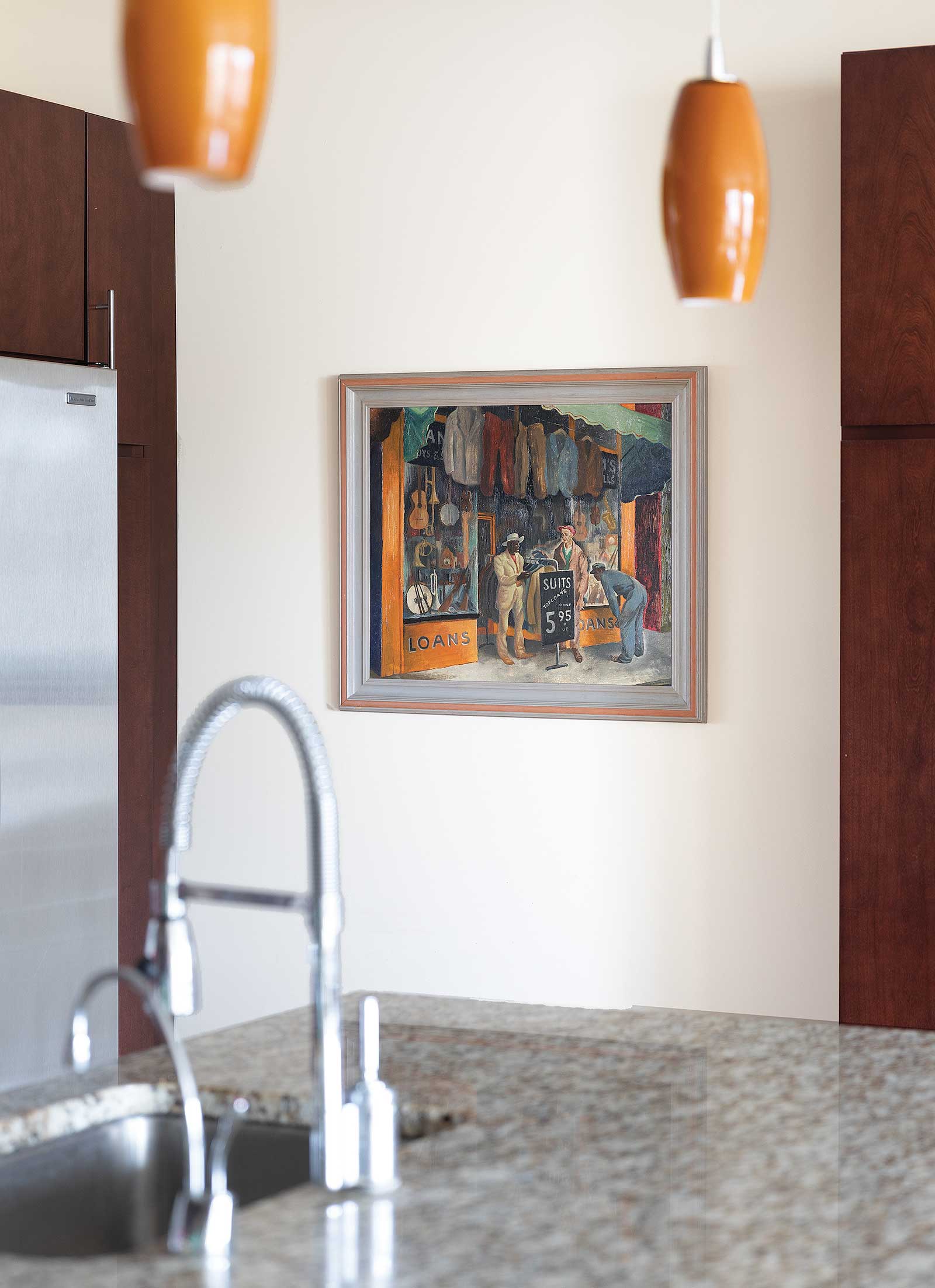 In the kitchen is Suits and Loans, 1942, oil on Masonite, by Earl B. Holdren (1912-1989).
Their collection actually began with antique furniture influenced by Peggy’s aunt and uncle who had an antique shop in Brookline, Massachusetts. Art realized they could buy antique furniture at the time more reasonably than contemporary furniture and that it could appreciate in value. Their first paintings were portraits from the 1820s to the 1840s, a pair of which were signed by an itinerant artist, Spencer P. Bancroft with his name and the names of the sitters. It inspired Art to begin his research into the artists in their collection. “When I buy a painting,” he says, “I try to learn everything I can.”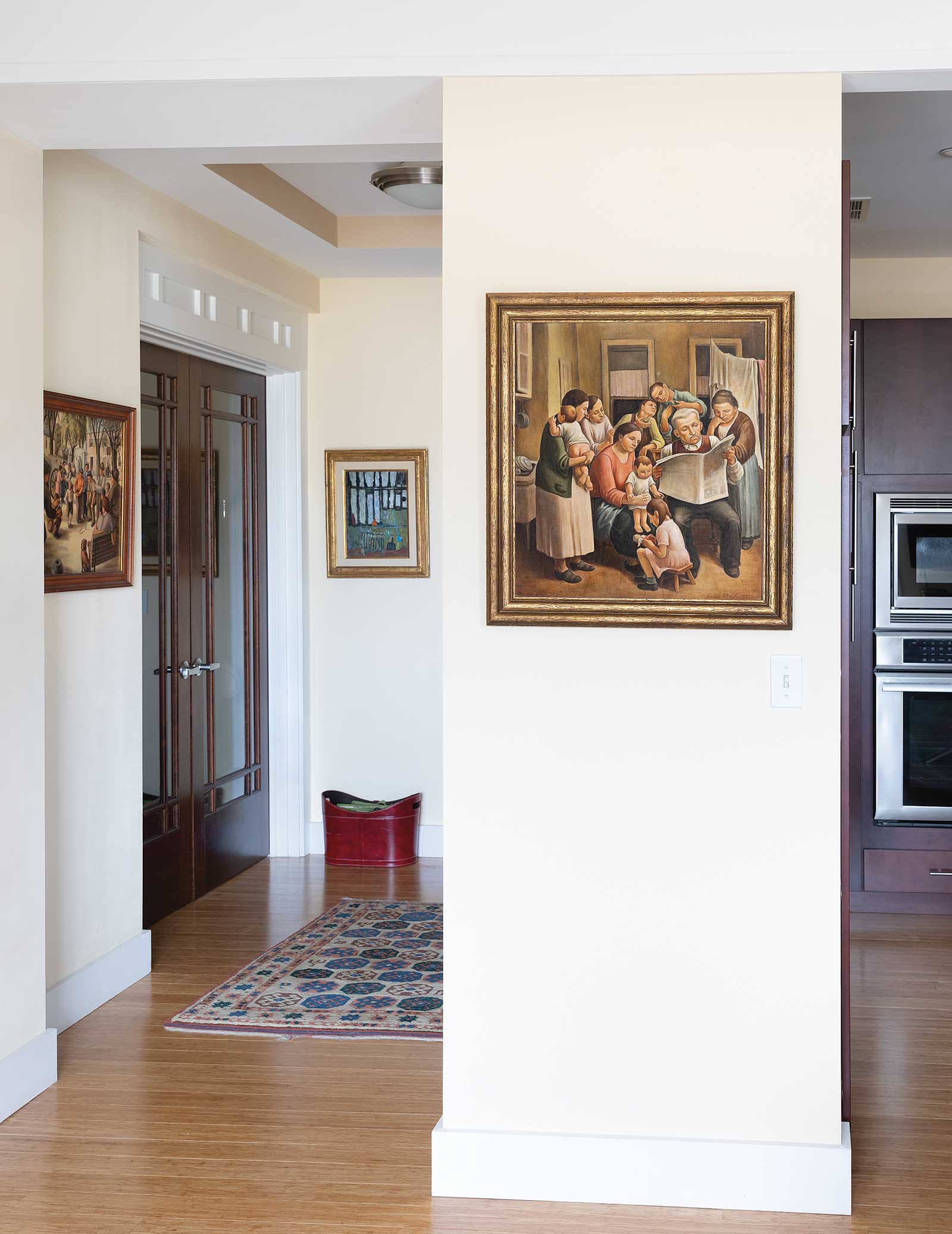 In the hall are, left to right, Horseshoes on Uxbridge Common, 1937, oil on canvas board, by Ludvik (Louis) Durchanek (1902-1976); Interior Gray Day, early 1960s, oil on Masonite, by Joseph Solman (1909-2008); and Reading the News, circa 1936-1939, by Daniel R. Celentano (1902-1980).
He doesn’t recall visiting museums as a boy, but in his last year at Dartmouth he took an art survey course on a lark. It was taught by John Wilmerding whom he remembers as a “dynamic” professor. Wilmerding went on to become a renowned scholar, curator and art collector.
The Hittners bought their first American Scene painting at auction in 1998—Working Girl, circa 1940, by Jerry Farnsworth (1895-1982). They have since donated the painting to the Northern Arizona University Art Museum.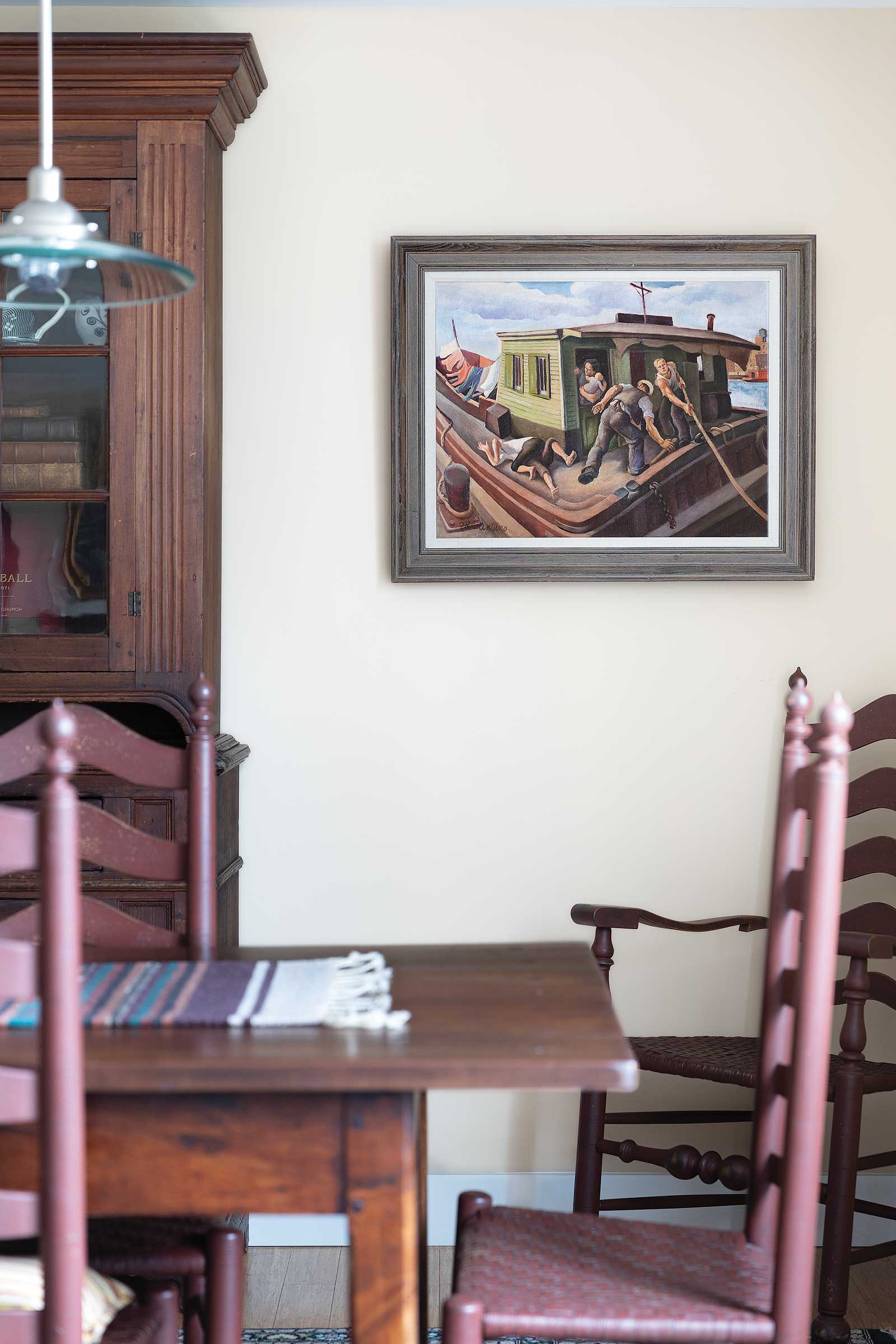 In the dining room is The Houseboat, circa 1937, oil on canvas, by Daniel R. Celentano (1902-1980).
Art writes, “While the thrill of the chase has always been a primal motivator to collectors, it is often, at least to me, mere prelude to the real fun: uncovering what I can of the lives of the artists and, where possible, the histories behind the individual works we’ve been fortunate enough to acquire.” The results of the chase and his careful scholarship can be seen on the collection’s website at
www.paintingtheamericanscene.com.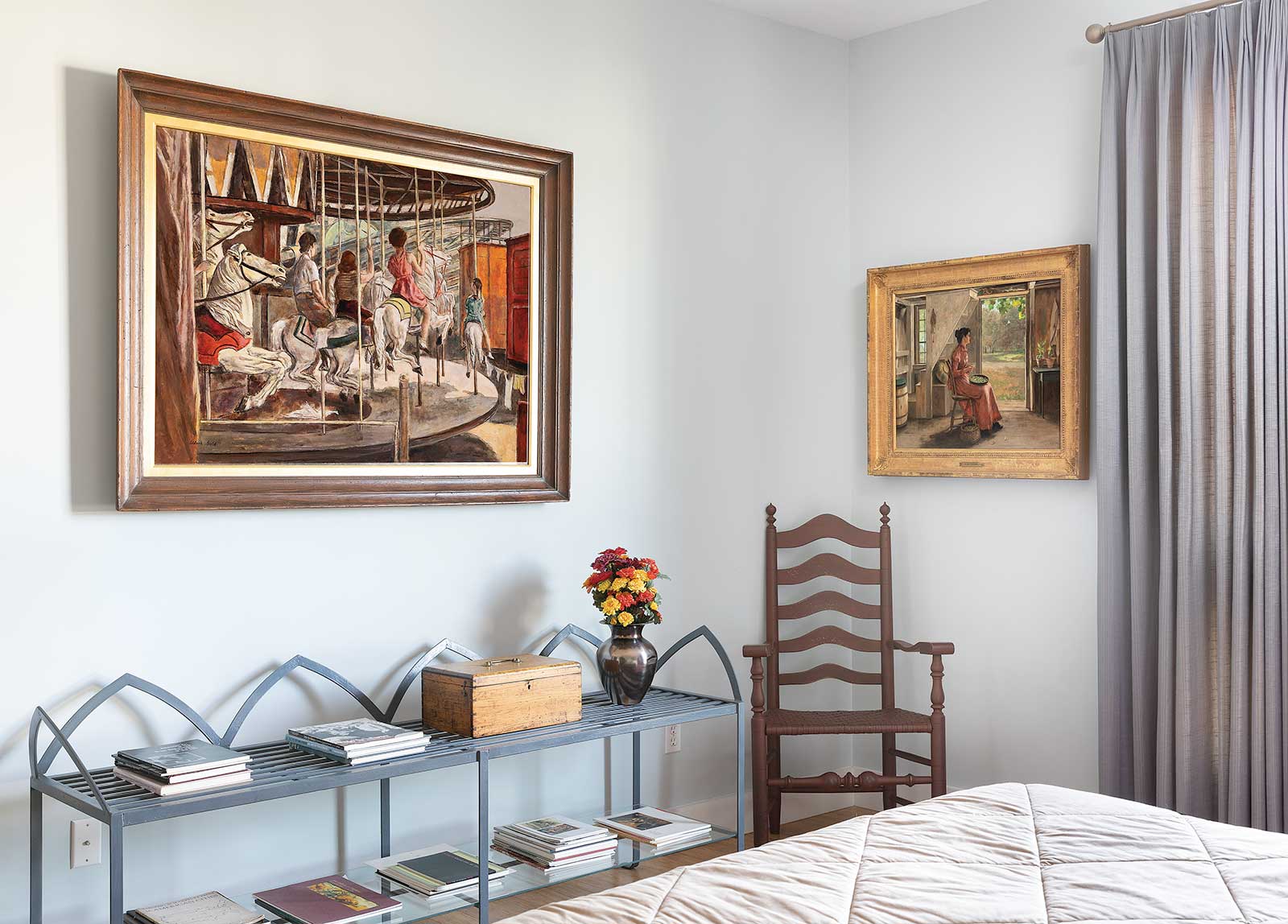 Carousel, circa 1939, oil on board, by Albert Gold (1916-2006), is on the left. On the right is Shelling Peas, late 1880s, oil on canvas, by Clement Rollins Grant (1848-1893), the first significant painting the collectors acquired, purchased on the installment plan from Vose Galleries in 1979.
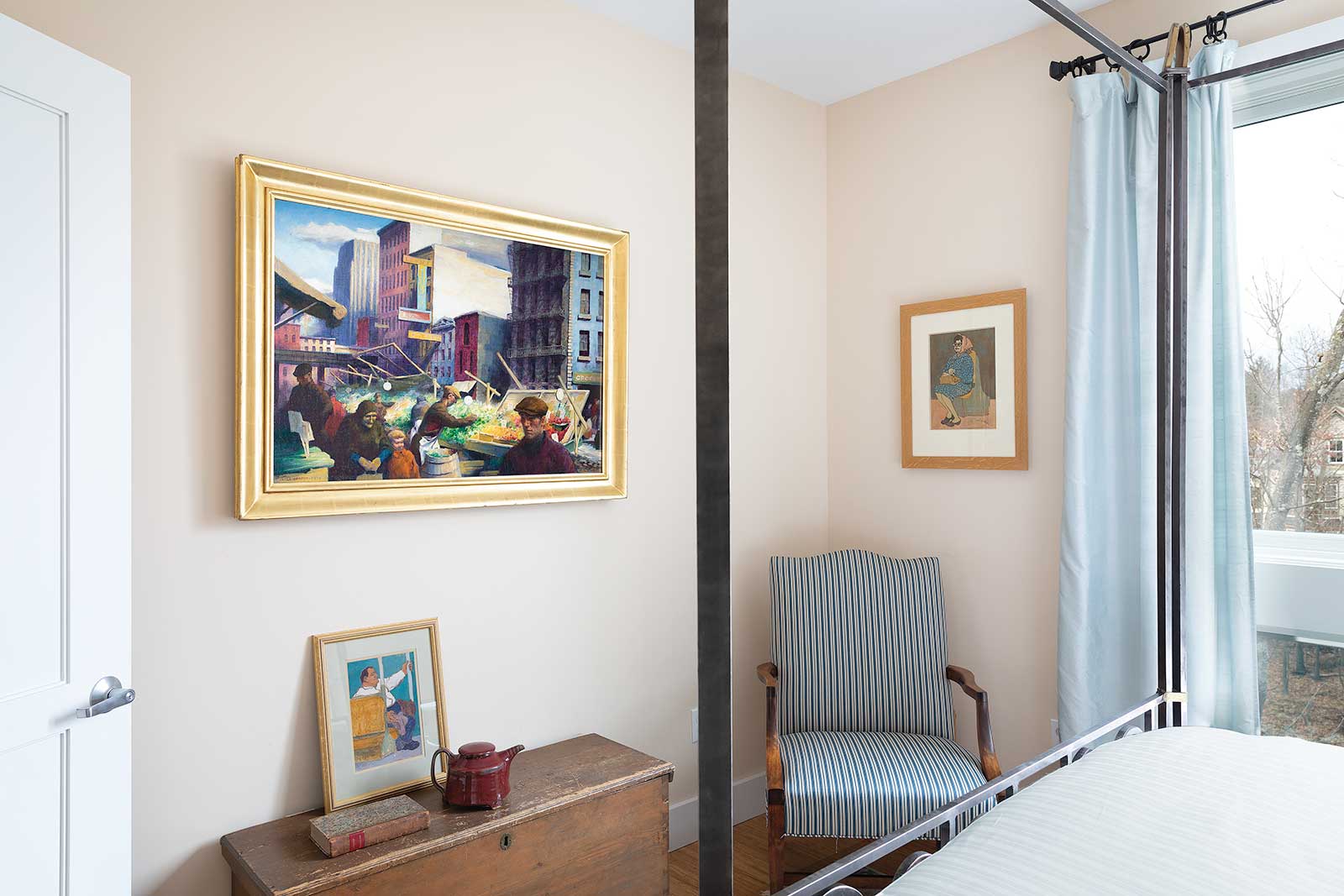 Above the chest is Street Market, 1933, oil on canvas, by James Chapin (1887-1975). The two small paintings are gouache and graphite on newsprint from the Subway Series by Joseph Solman (1909-2008). They are, left to right, Man with Brown Jacket, 1972/1980 and Lady in Blue Polka Dot Dress, 1967.Hanging in the master bedroom of their Massachusetts home is Katharine (Portrait of Katharine Bigelow Higgins), 1939, oil on canvas, by Umberto Romano (1906-1982). When the couple purchased the painting, it was believed to be a portrait of the artist’s wife. Art contacted the artist’s son who informed him of the true subject, and subsequent correspondence with the subject’s daughter revealed stories about her mother’s life and the significance of details in the painting. He notes, “According to the artist’s son, Katharine is holding a book of her own poetry; the landscape is believed to be a view of Dorset, Vermont, a summer retreat during her childhood and later adult years.”
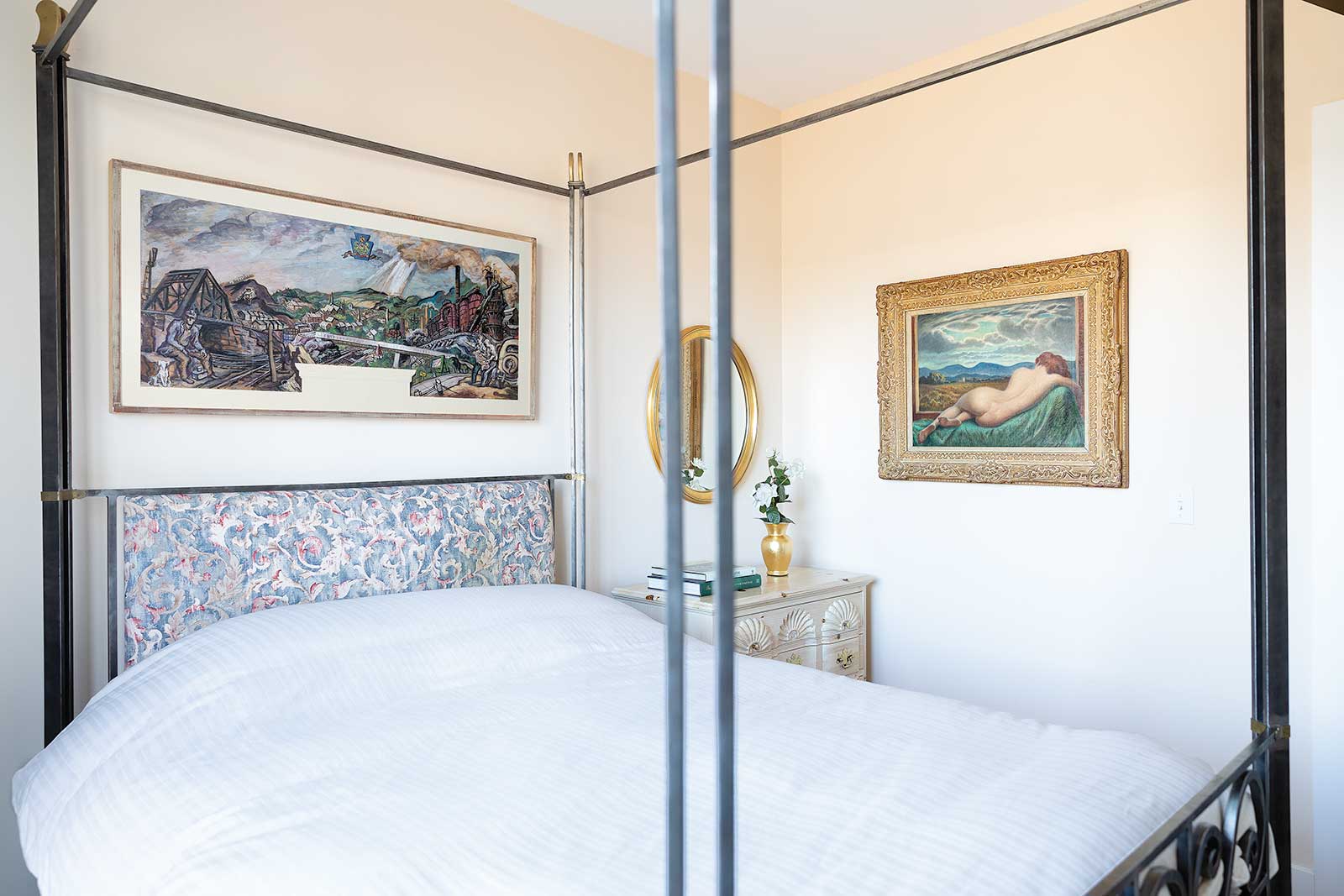 Hanging above the bed is Coal Town, 1939, tempera on paper, an unrealized WPA mural study by Philip Reisman (1904-1992). On the right is The Dreamer, probably 1935, oil on canvas with artist-carved frame, by Stan P. Poray (1888-1948).
In their Arizona home is a painting by Harold J. Rabinovitz (1915-1944). Art notes, “Once in a while, a masterpiece comes along by an artist lost to obscurity. Such is the case with Harold J. Rabinovitz’s Eventide, a regionalist tour de force completed by a once precocious but now unheralded artist before his 21st birthday.” His research into Rabinovitz resulted in Art’s biography and catalogue raisonné, At the Threshold of Brilliance: The Brief but Splendid Career of Harold J. Rabinovitz. To reach a wider audience, he wrote Artist, Soldier, Lover, Muse, a fictionalized version of the artist’s brief but fascinating life.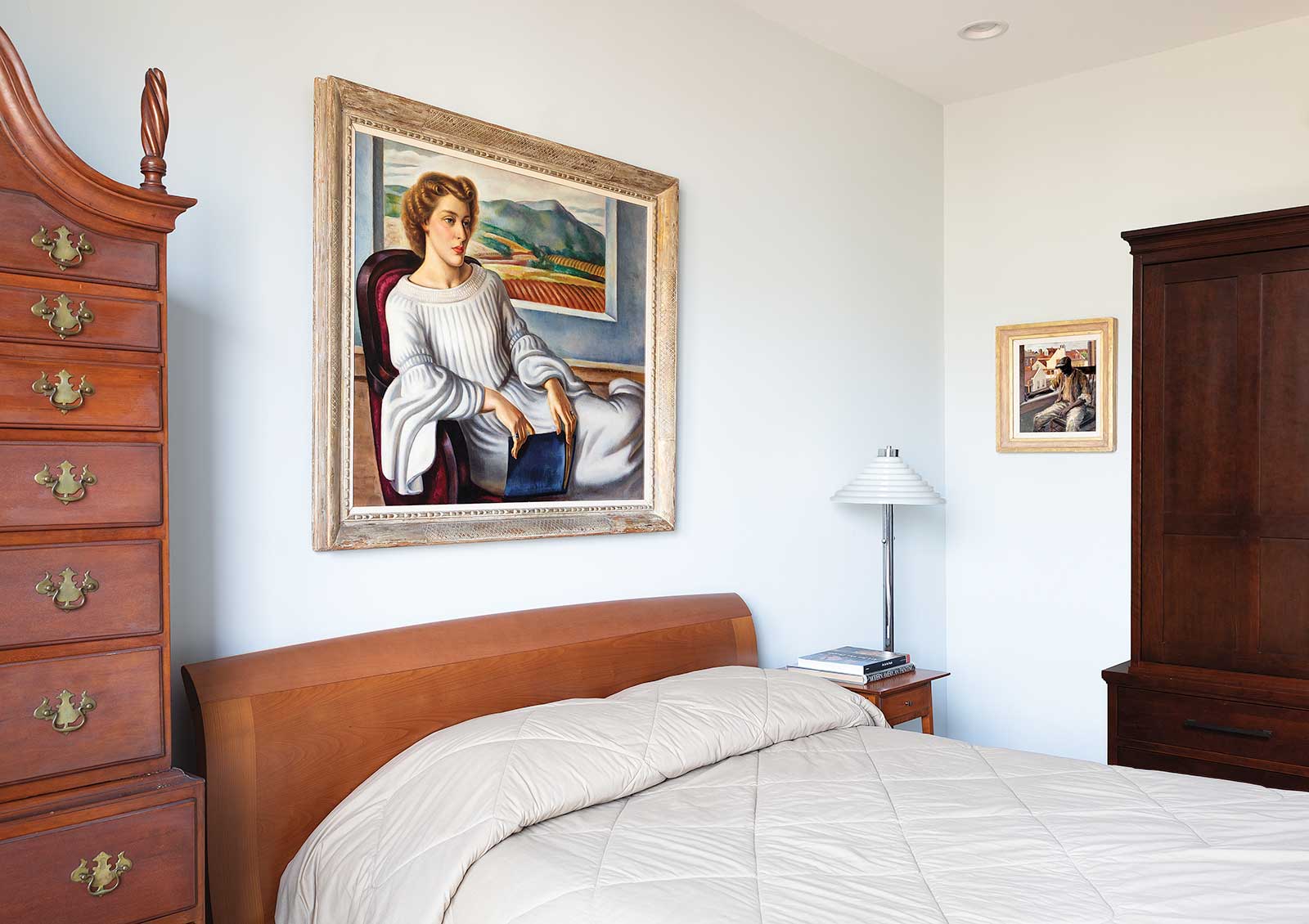 Katharine (Portrait of Katharine Bigelow Higgins), 1939, oil on canvas, by Umberto Romano (1906-1982), hangs above the bed next to a cherry Connecticut River Valley chest-on-chest, circa 1770-1790. Next to the armoire is Black Boy at a Window, circa 1938-40, oil on Masonite panel, by Wells Moses Sawyer (1863-1960).
Sometimes the thrill of discovery takes an unexpected turn. Art had acquired a copy of Marqusee’s catalog on the work of Daniel R. Celentano (1902-1980) and, as he says, he “devoured” it. When New York dealer Arlene Berman contacted him to say she had several Celentanos for sale, he was ready. He and Peggy went to see the two paintings and a drawing at Berman’s gallery and were struck by all three. They left to consider their options and planned to return the next day. Art says, “That night, we debated what, if anything, we should choose. Unable to decide and haunted by the regret I knew I’d feel in turning any of the works down, I proposed (to my wife’s horror) that we acquire all three.” Berman had considered keeping one for herself and as Art explains, she was “crushed” that they wanted all three. A good business person, she let them go. He adds, “Losing all three was painful, she recalled, and (in retrospect) we can certainly relate. The two oils, in particular, are among Celentano’s best works and remain pillars of our collection.”
He says, “It’s fascinating to live with the paintings and to develop the history behind them. I enjoy looking at them and regularly stop to look at them and to absorb the vibe they’re giving off.” —
Powered by Froala Editor