Since 2016, the National Museum of Women in the Arts has asked its social media followers if they can name five women artists. The prompt is more challenging than you’d think—most people start off with Georgia O’Keeffe, move on to Frida Kahlo and then they draw a blank. That gap in knowledge makes more sense after you learn that from 2008 to 2018, works by women represented only 11 percent of museum acquisitions and 14 percent of exhibitions in museums in the United States.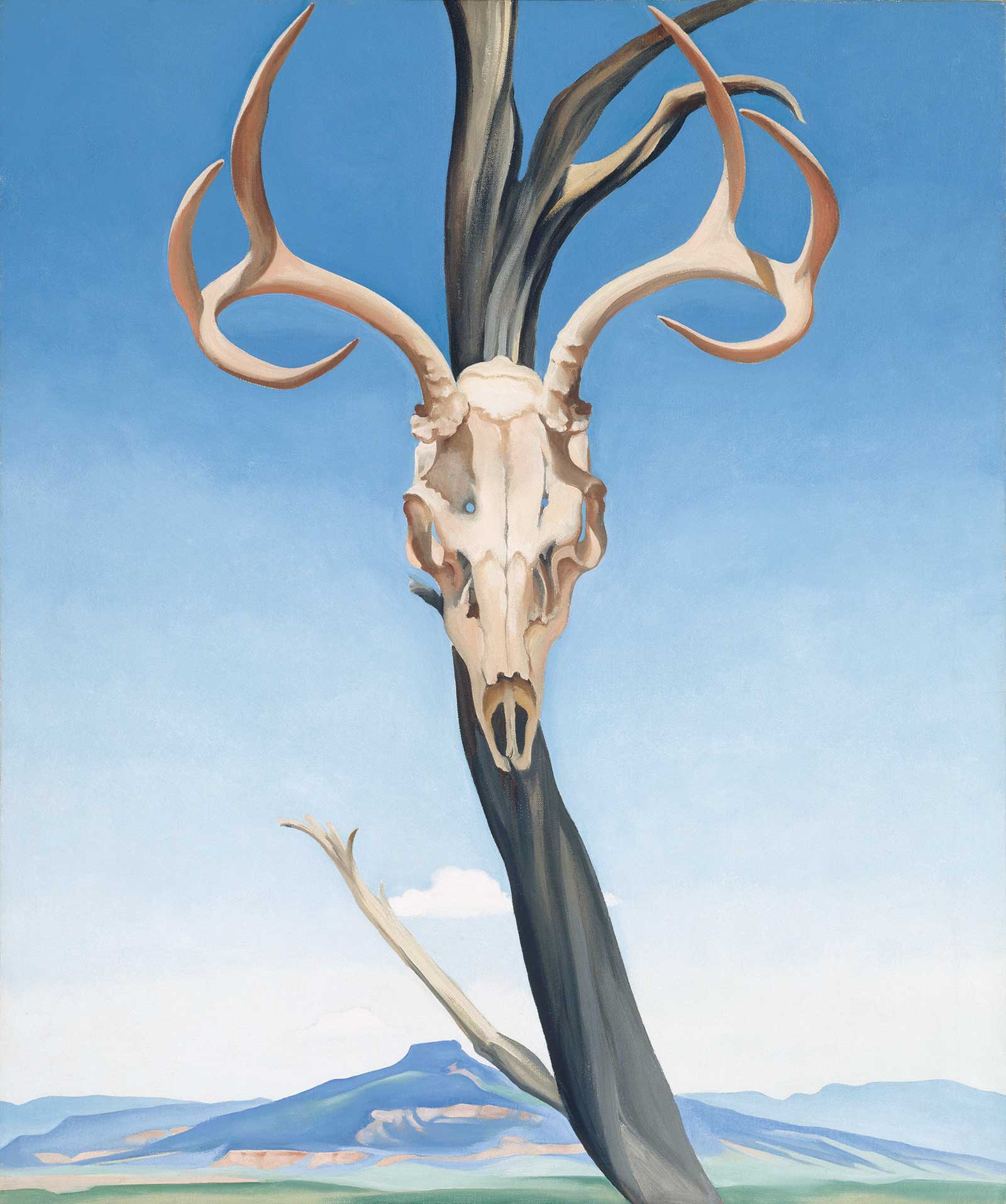 Georgia O’Keeffe (1887-1986), Deer’s Skull with Pedernal, 1936. Oil on canvas. Gift of the William H. Lane Foundation. © Georgia O’Keeffe Museum / Artist Rights Society (ARS), New York. Photograph © Museum of Fine Arts, Boston. On view in Women Take the Floor at Museum of Fine Arts, Boston.
This year marks an important anniversary in American women’s history: the centennial of the ratification of the 19th amendment, which granted women the right to vote. As the nation reflects on the progress women have made in the last century, many museums are committing to highlighting the works of women artists who have been underappreciated and under-collected throughout the years. The Baltimore Museum of Art has pledged to only acquire works by women artists in 2020, while other museums are taking a hard look at their existing collections to identify and celebrate women artists who may have been overlooked.
The anniversary of women’s suffrage looms large in the Museum of Fine Art, Boston’s exhibition Women Take the Floor, on view through May 3, 2021. The expansive show takes over all seven galleries on the second floor of the Art of the Americas wing and draws from the museum’s expansive collection to tell the story of women in the arts from 1920 to now.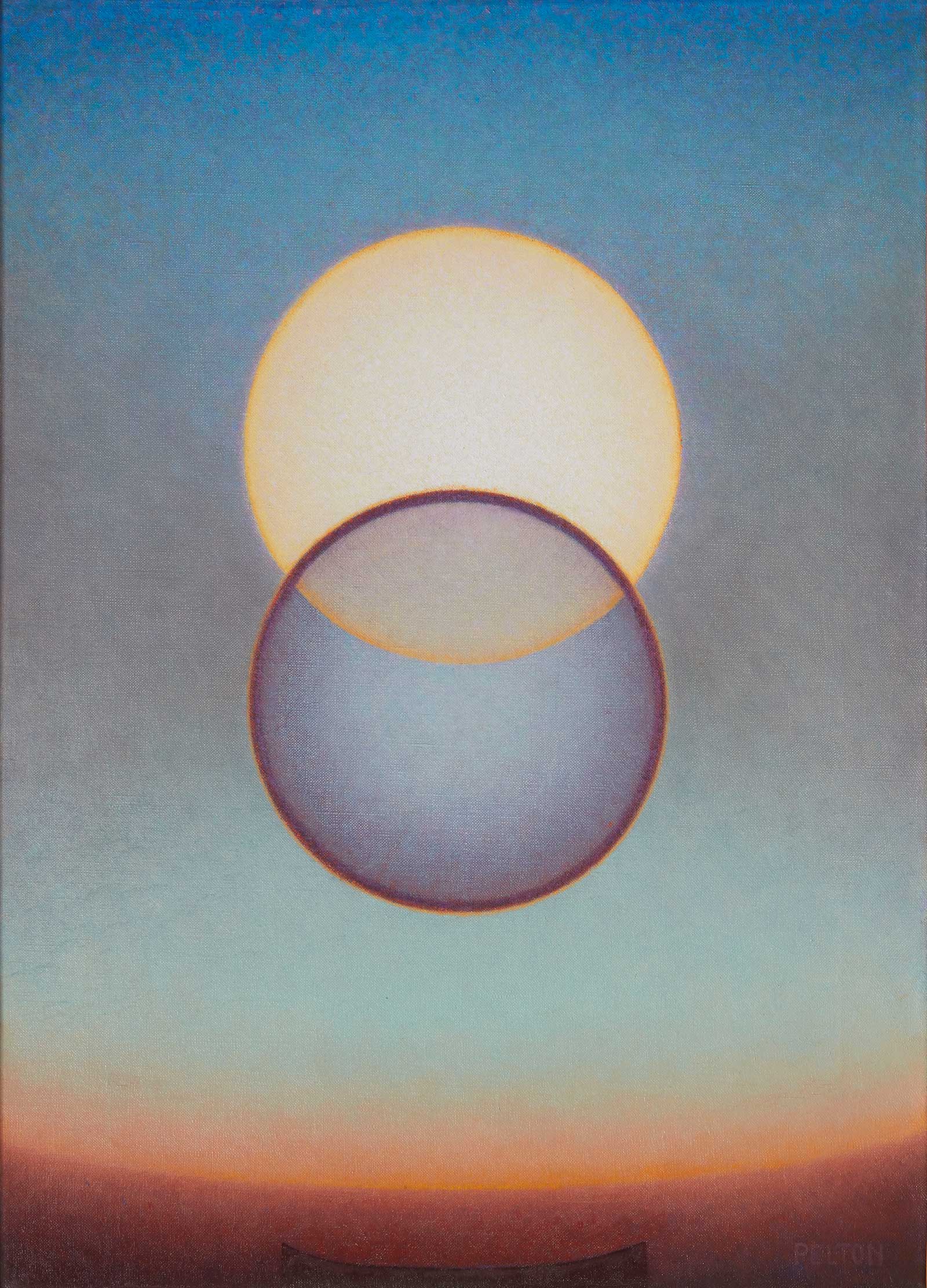 Agnes Pelton (1881-1961), Departure, 1952. Oil on canvas, 24 x 18 in. Collection of Mike Stoller and Corky Hale Stoller. Photography by Paul Salveson. On view in Agnes Pelton: Desert Transcendentalist at Whitney Museum of American Art.
Though the concept of the exhibition seems simple, Nonie Gadsden, Katharine Lane Weems Senior Curator of American Decorative Arts and Sculpture, says, “As I dove into it, I recognized the very complicated nature of this premise.” The goal of the exhibition was to provide a corrective to centuries of gender discrimination without tokenizing, and making it even more complicated, Gadsden says, “I didn’t want it to seem that we were celebrating women’s suffrage. We’re marking the anniversary of women’s suffrage because it’s an important milestone, but it also wasn’t a movement that was inclusive.”
With those challenges in mind, the MFA’s collection was looked over to find the best pieces for the exhibition. “I don’t think that anyone had ever taken a look at the collection focusing only on the women artists, to see where our strengths and weaknesses were,” Gadsden says. While most museums spotlighting women artists tend to focus on works from the latter half of the 21st century, the MFA found it had a strong collection of works spanning from the 1920s to the 1970s.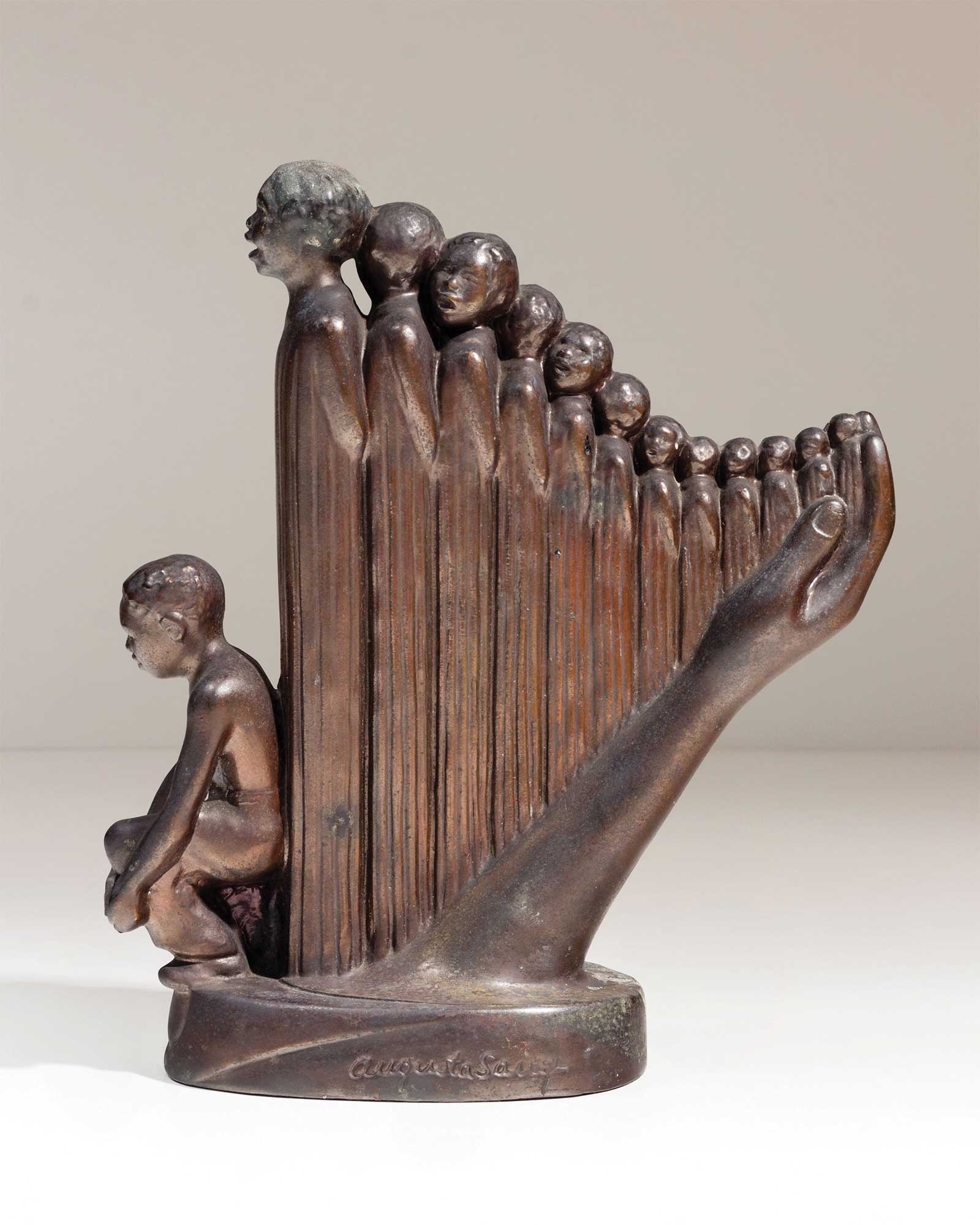 Augusta Savage (1892-1962), Lift Every Voice and Sing, 1939. Bronze, 10¾ x 9½ x 4 in. University of North Florida, Thomas G. Carpenter Library Special Collections and Archives, Eartha M. M. White Collection. ©1939 World’s Fair Committee and the Artist. On view in Augusta Savage: Renaissance Woman at Dixon Gallery and Gardens.
While those familiar names like O’Keeffe and Kahlo make appearances in the show, viewers will also be introduced to women artists that aren’t household names. “I didn’t want to diminish O’Keeffe’s and Kahlo’s importance, but I also wanted to balance it out and not let them suck all the air out of the room,” Gadsden says.
In “Women of Action,” the gallery devoted to action painting, visitors will be introduced to Grace Hartigan’s Masquerade and Joan Mitchell’s Chamonix, which are displayed beside works by more familiar names like Helen Frankenthaler.
Ceramics by Toshiko Takaezu are the centerpiece in the exhibition’s large central gallery. “She considered herself an abstract expressionist, which is against everything Clement Greenberg ever said about abstract expressionism. But he had a very narrow definition,” Gadsden says. “By trying to broaden the canon and showing the women artists of the movement, we can show the different media and forms it took.”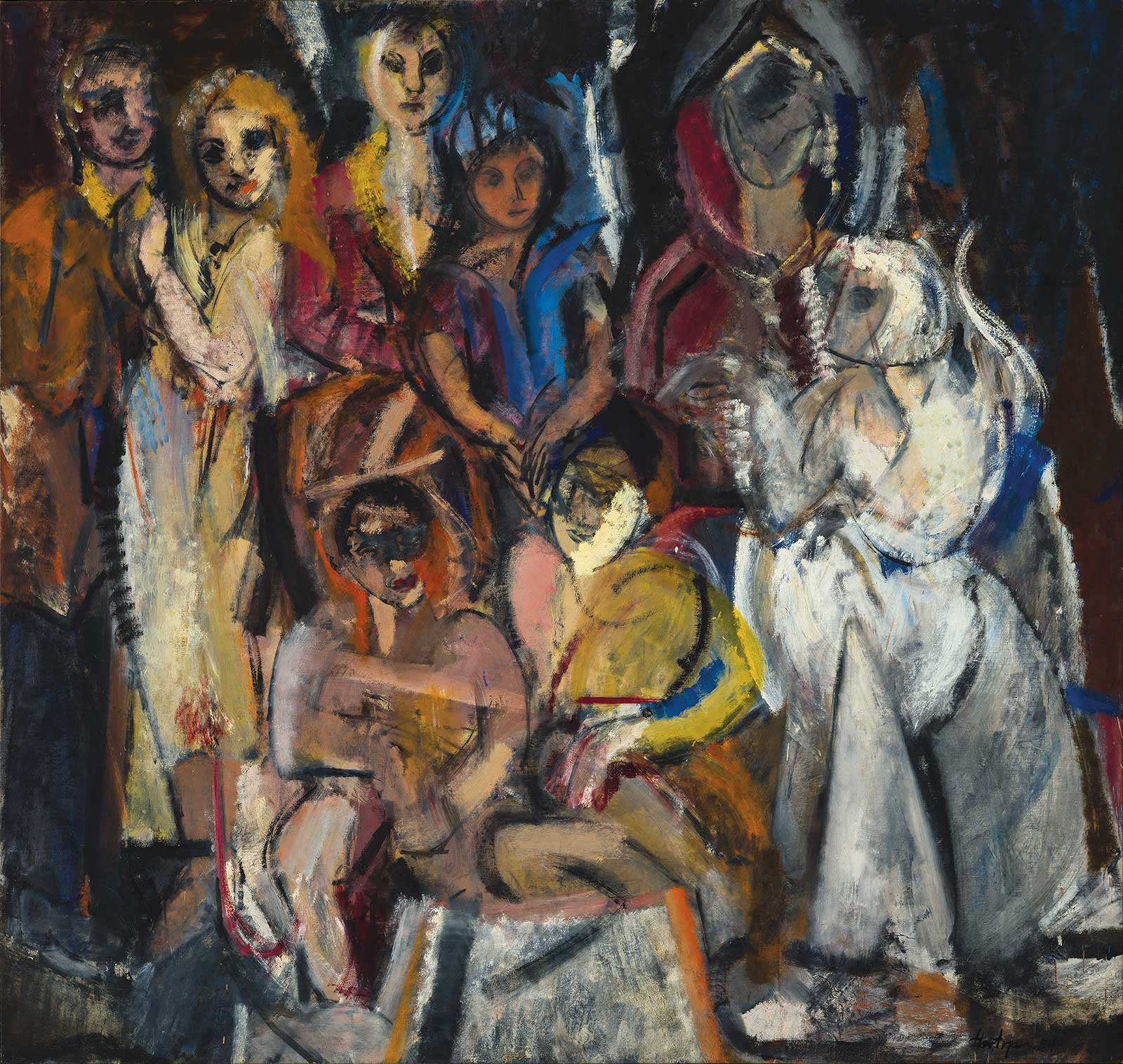 Grace Hartigan (1922-2008), Masquerade, 1954. Oil on canvas. Collection of Lizbeth and George Krupp. © Grace Hartigan. Courtesy, Museum of Fine Arts, Boston. On view in Women Take the Floor at Museum of Fine Arts, Boston.
Gadsden hopes that Women Take the Floor will introduce visitors to new artists and start to bring name recognition to those who didn’t have it before. “So much about what draws people to exhibitions is whether they recognize the name,” she says. “I would love to get the names out, and I want people to recognize that it’s not because of a lack of talent that these artists haven’t gotten attention. It’s very much been an effect of art historians and museums that some of these artists that had tremendous reputations during their lifetime but somehow have been written out of the history books.”
Social change and political organizing also played a part in inspiring the exhibition Augusta Savage: Renaissance Woman, originally shown at the Cummer Museum of Art and Gardens and now on view at the Dixon Gallery and Gardens in Memphis, Tennessee.
“When we started conversations about the show, Black Lives Matter was at a very visible moment,” says curator Jeffreen Hayes. “Most of the folks that were talking about the movement were black men, but the movement was founded by black women. They were black women leading the way who were being erased, and that’s how I saw Augusta Savage’s legacy.”
Savage made a name for herself as a sculptor. She was primarily known for the portrait busts she made of everyday black people, and in 1939, she was the only black woman to be commissioned to create artwork for the 1939 World’s Fair, and her sculpture Lift Every Voice and Sing became the most photographed work during the fair.
But in addition to sculpture, Savage also had a reputation as an arts educator. “She made space in her own personal studio to teach black residents of Harlem art, from youth to adults, and she had a special place in her heart for teaching the next generation of black children through art,” says Hayes.
Norman Lewis and Jacob Lawrence both studied with Savage, and while they both acknowledged her influence on them, many of her students didn’t. Hayes laments, “She had this incredible career and she led Harlem’s next generation, and all of a sudden this person who has been so instrumental has been forgotten.”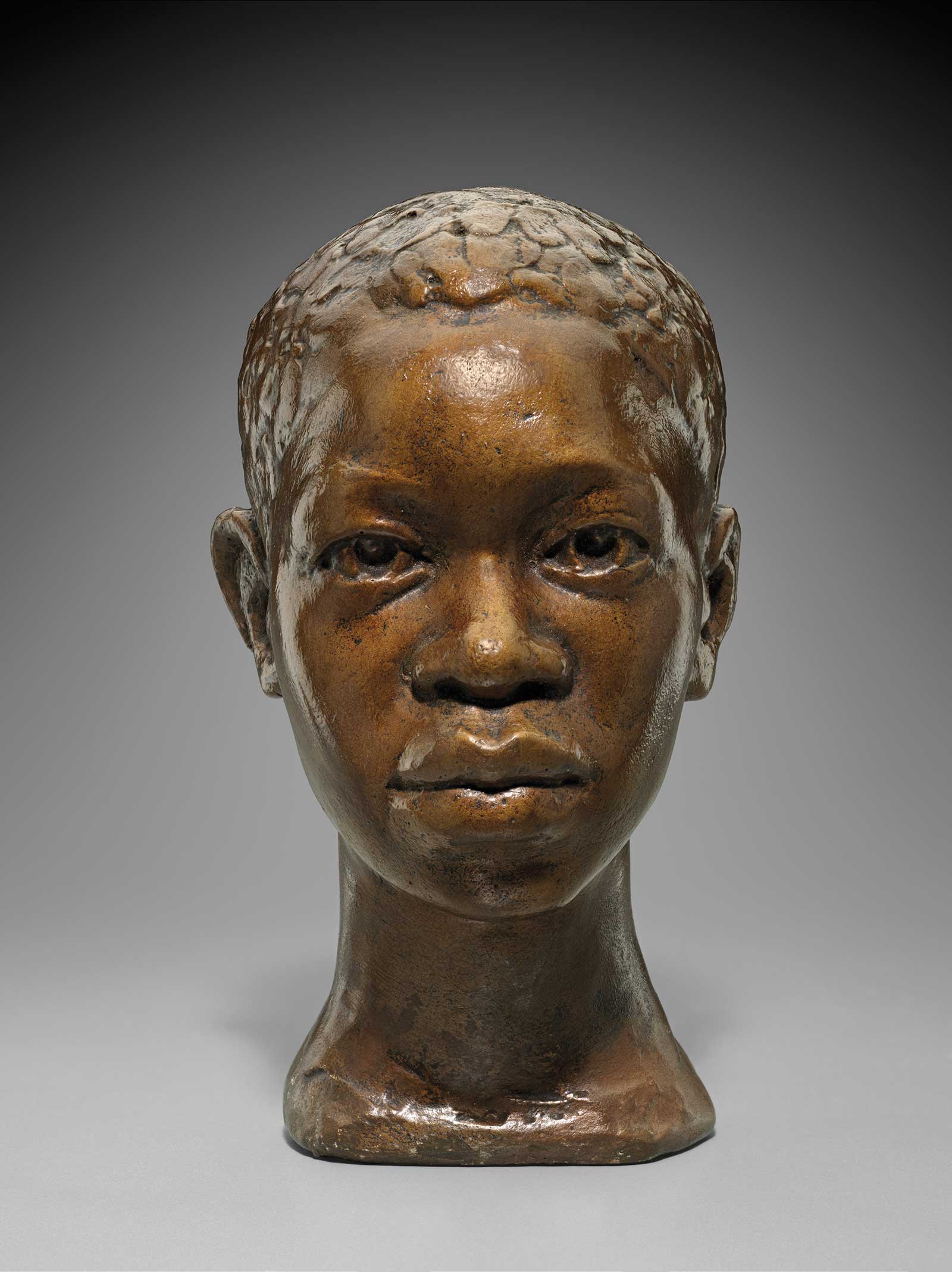 Augusta Savage (1892-1962), Portrait Head of John Henry, ca. 1940. Patinated plaster, 65/8 x 3½ x 4¾ in. Museum of Fine Arts, Boston. The John Axelrod Collection—Frank B. Bemis Fund, Charles H. Bayley Fund, and The Heritage Fund for a Diverse Collection, 2011.1813. On view in Augusta Savage: Renaissance Woman at Dixon Gallery and Gardens.
Renaissance Woman reasserts Savage’s legacy as both an artist and a community-based educator 80 years after she made a splash at the World’s Fair. The Cummer Museum in Jacksonville was the perfect location to originate the exhibition as Savage herself was originally from northern Florida. Hayes explains, “At that time, the museum was looking to pivot to be more accessible and accepting of Jacksonville. They understood there was a huge segment of the community that hadn’t seen themselves represented in the institution.” The show centers on the black experience, which helped to bridge the gap between the museum and its surrounding community.
That effect has been echoed as the exhibition has traveled to museums around the country, and Hayes hopes that museum leaders learn from the experience and take a leap of faith by presenting more works that reflect the demographics of their communities. “A show like this, that reclaims a black woman who has been considered a footnote, has an impact,” she says. “To see black audiences who may not have visited the museum before walk through the show and connect with the story, the work, the artist and walk away feeling like they have been seen has been really powerful.”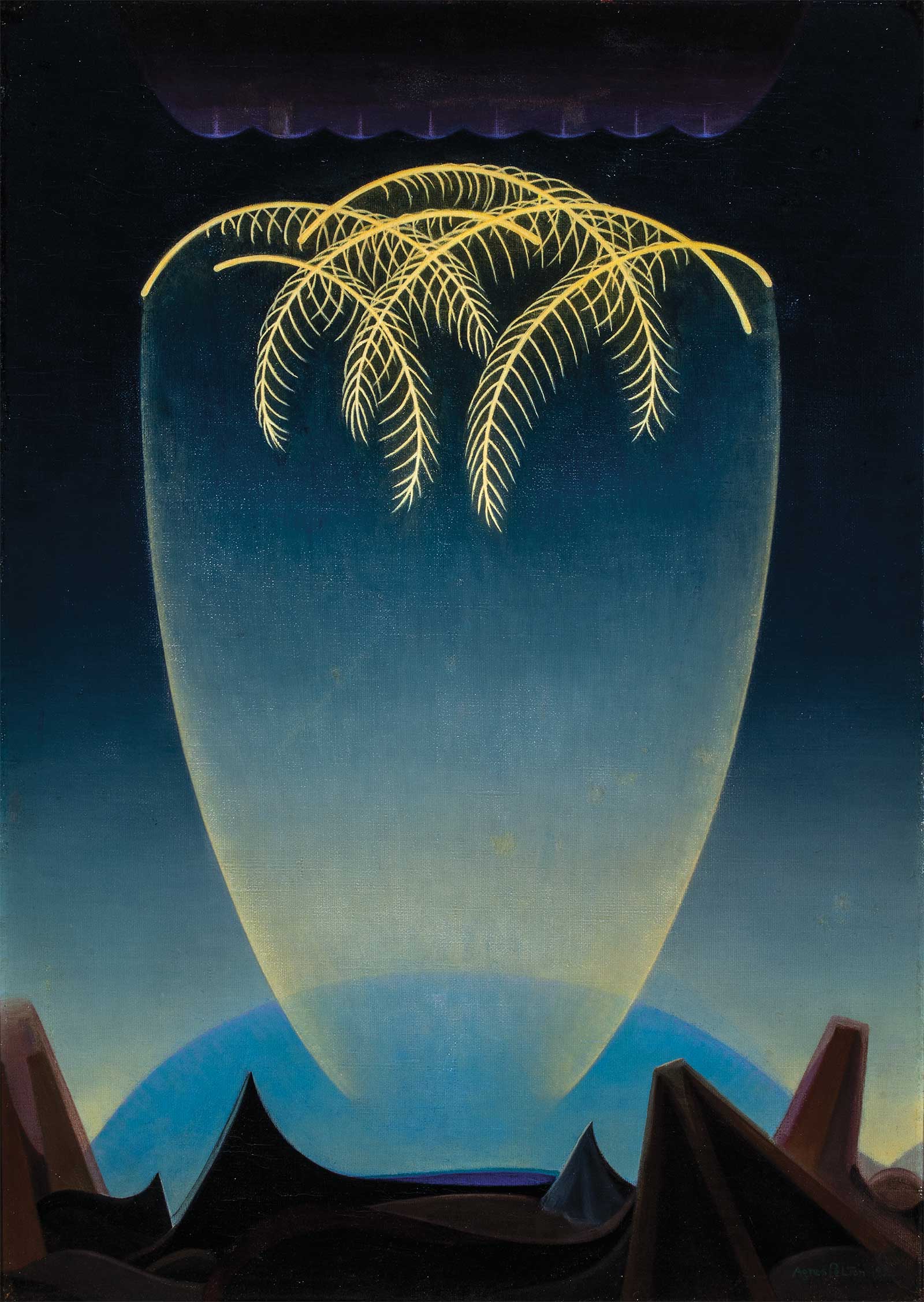 Agnes Pelton (1881-1961), Messengers, 1932. Oil on canvas. Collection of Phoenix Art Museum. Gift of The Melody S. Robidoux Foundation. On view in Agnes Pelton: Desert Transcendentalist at Whitney Museum of American Art.
Agnes Pelton: Desert Transcendentalist, traveling to the Whitney Museum of American Art from March 13 to June 28, also hopes to shed new light on an underappreciated woman artist. The show came to be after the Phoenix Art Museum’s chief curator Gilbert Vicario became fascinated with two of Pelton’s paintings that hung in the museum’s American art galleries.
“I quickly discovered that she was an artist that was better known among painters and among younger women artists,” Vicario says. “That made me want to tell her story.”
Pelton originally had an East Coast art education. She studied at the Pratt Institute with Arthur Wesley Dow and exhibited two paintings at The Armory Show. But it was after she began reading theosophist texts that Pelton really began to define her artistic style. She moved west to Cathedral City, California, and began working toward “spiritual union,” and those inner journeys are reflected in her abstract paintings. While she was associated with a group of New Mexico transcendentalist painters, Barbara Haskell, curator at the Whitney, explains, “Her work is different. It’s more luminous and has a softer sense of attainment. Her edges are not totally crisp, and all have a sense of air.” Messengers, which graces the cover of the exhibition catalog, depicts a bright field of energy over a mountain landscape.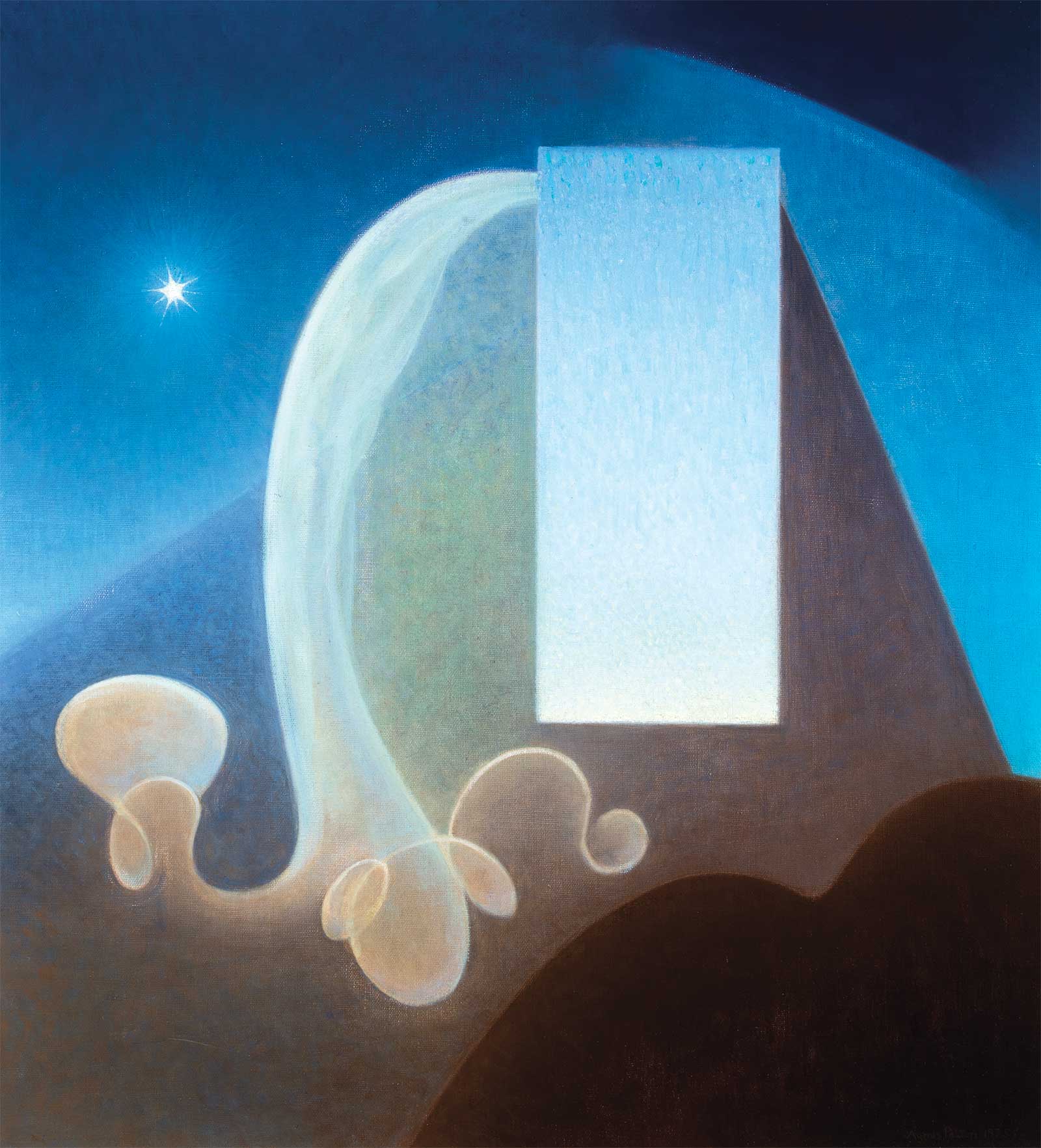 Agnes Pelton (1881-1961), Day, 1935. Oil on canvas. Collection of Phoenix Art Museum. Gift of The Melody S. Robidoux Foundation. On view in Agnes Pelton: Desert Transcendentalist at Whitney Museum of American Art.
Pelton painted desert scenes for tourists to make a living, and Haskell says that “her abstractions were really something she did for herself. She didn’t have many shows, and because she was outside of the mainstream, her work was almost invisible to the art world.”
When she died, her abstract paintings filtered out into the world via secondhand shops and garage sales, but in the 21st century, her visionary approach is finally being appreciated. Vicario says, “Those of us in museums know that people struggle with abstractions that aren’t anchored in reality, but the reception the exhibition got was incredible, which I think signifies that on an intuitive level, people got a lot of satisfaction from seeing this beautiful, contemplative work.”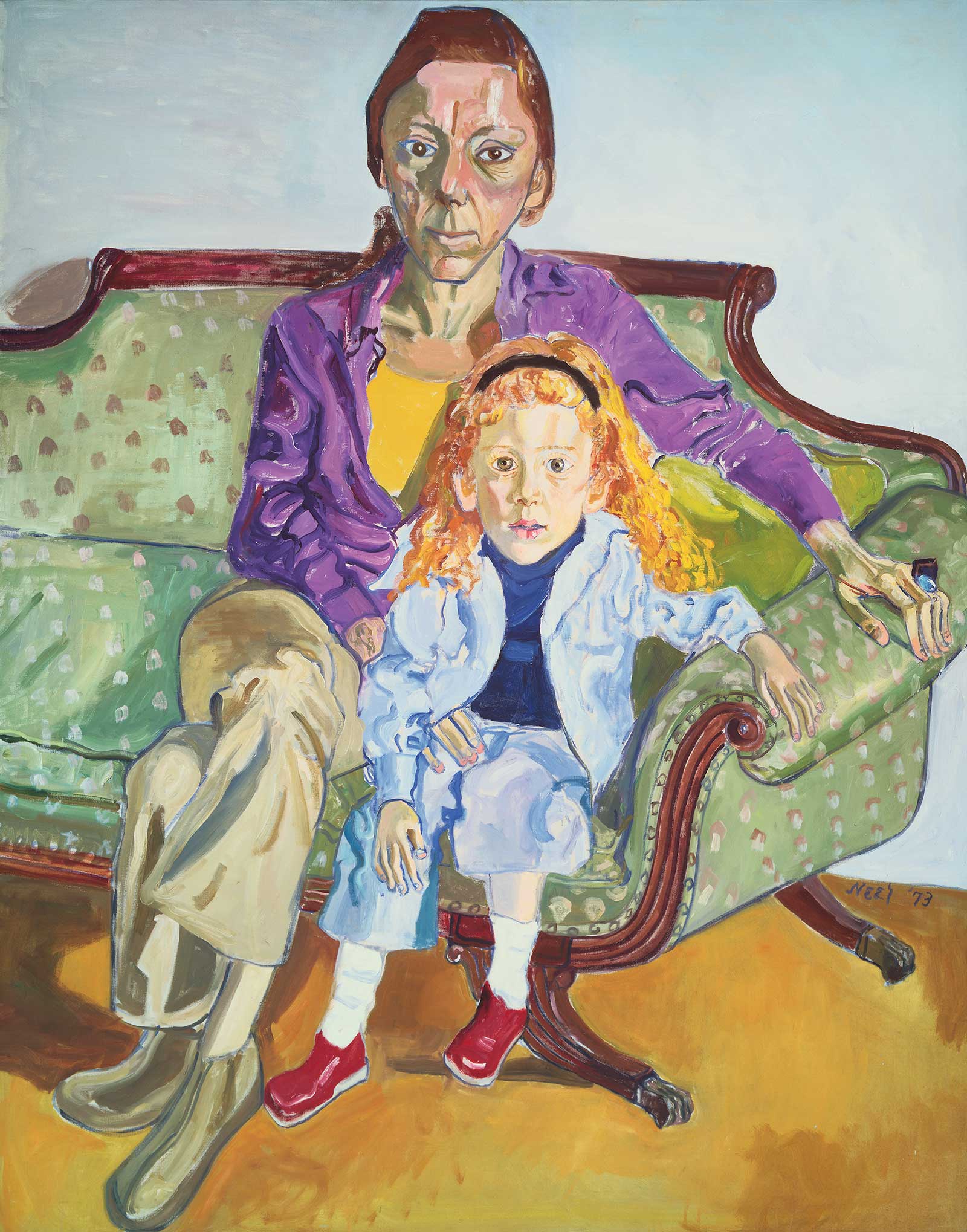 Alice Neel (1900-1984), Linda Nochlin and Daisy, 1973. Oil on canvas. Seth K. Sweetser Fund. © The Estate of Alice Neel. Courtesy David Zwirner, New York/London. Photograph © Museum of Fine Arts, Boston. On view in Women Take the Floor at Museum of Fine Arts, Boston.
While artists like Pelton, Savage and other women struggled for recognition during their lifetimes, newfound attention to their work gives curators, art historians and museum visitors a chance to correct the record. “Right now, people are responding to the fact that modern art history as we know it is being shifted and realigned by new scholarship, and there’s a new interest in artists that have been overlooked in some cases simply because they were women or because of the nature of their work,” Vicario says. “I think that people will begin to take away that there is a greater depth and a greater breadth to the artwork that will ultimately define the 20th century.” —
March 13-June 28
Agnes Pelton: Desert Transcendentalist
Whitney Museum of American Art
New York, NY
t: (212) 570-3600
www.whitney.org
Through March 22
Augusta Savage: Renaissance Woman
Dixon Gallery and Gardens
Memphis, TN
t: (901) 761-5250
www.dixon.org
Through May 3, 2021
Women Take the Floor
Museum of Fine Arts, Boston
Boston, MA
t: (617) 267-9300
www.mfa.org
Powered by Froala Editor