The second definition in Merriam-Webster’s dictionary defines automatism as “the moving or functioning (as of an organ, tissue, or a body part) without conscious control that occurs either independently of external stimuli (as in the beating of the heart) or under the influence of external stimuli (as in pupil dilation).” The fourth definition brings us to art: “suspension of the conscious mind to release subconscious images.”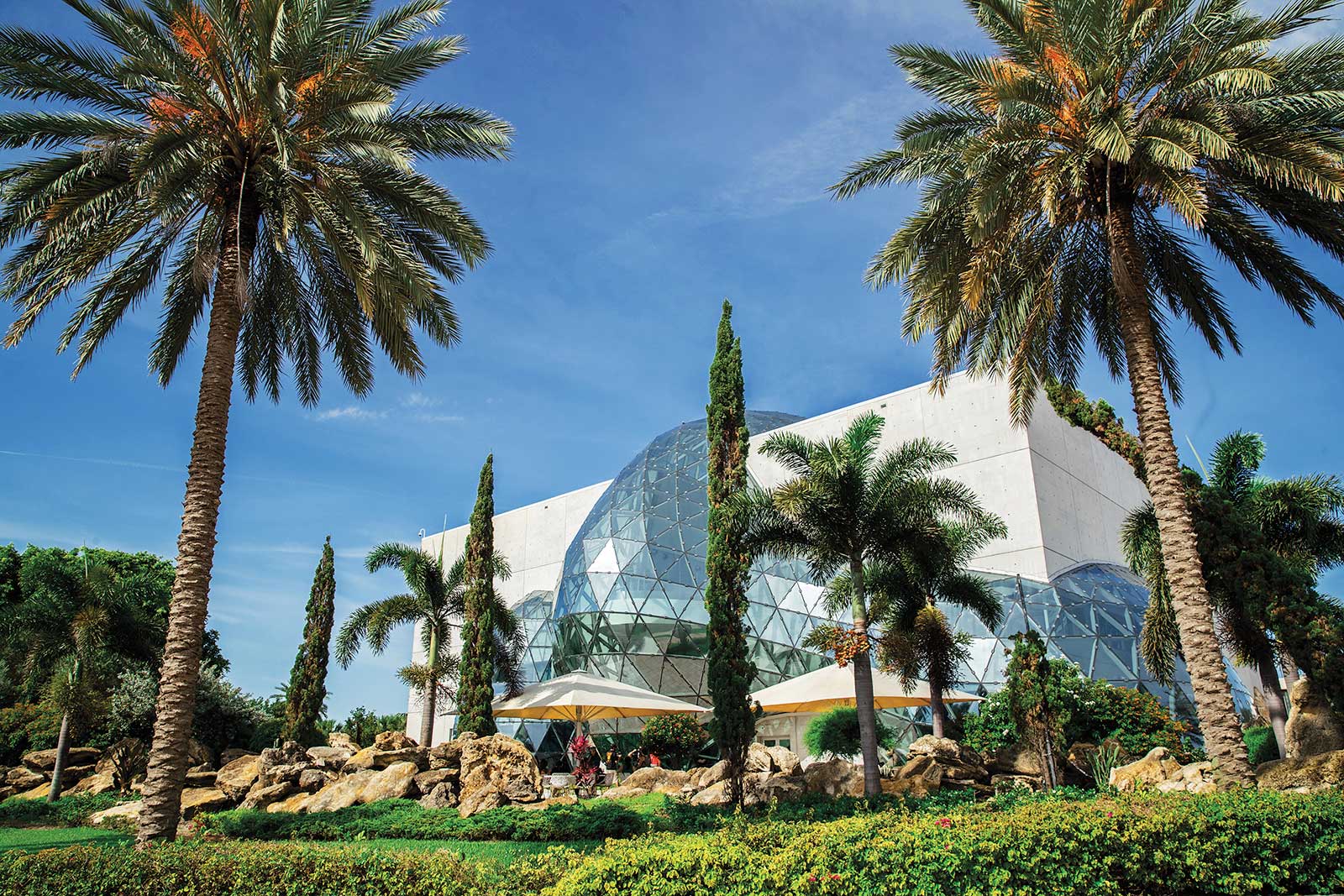
In 1924, the French poet André Breton wrote the Manifesto of Surrealism in which he professed his belief in “pure psychic automatism, by which one proposes to express, either verbally, in writing, or by any other manner, the real functioning of thought. Dictation of thought in the absence of all control exercised by reason, outside of all aesthetic and moral preoccupation.”
Surrealism began as a literary movement and soon included the visual arts where artists and photographers allowed their creations to be automatic or carefully-created illusionary images.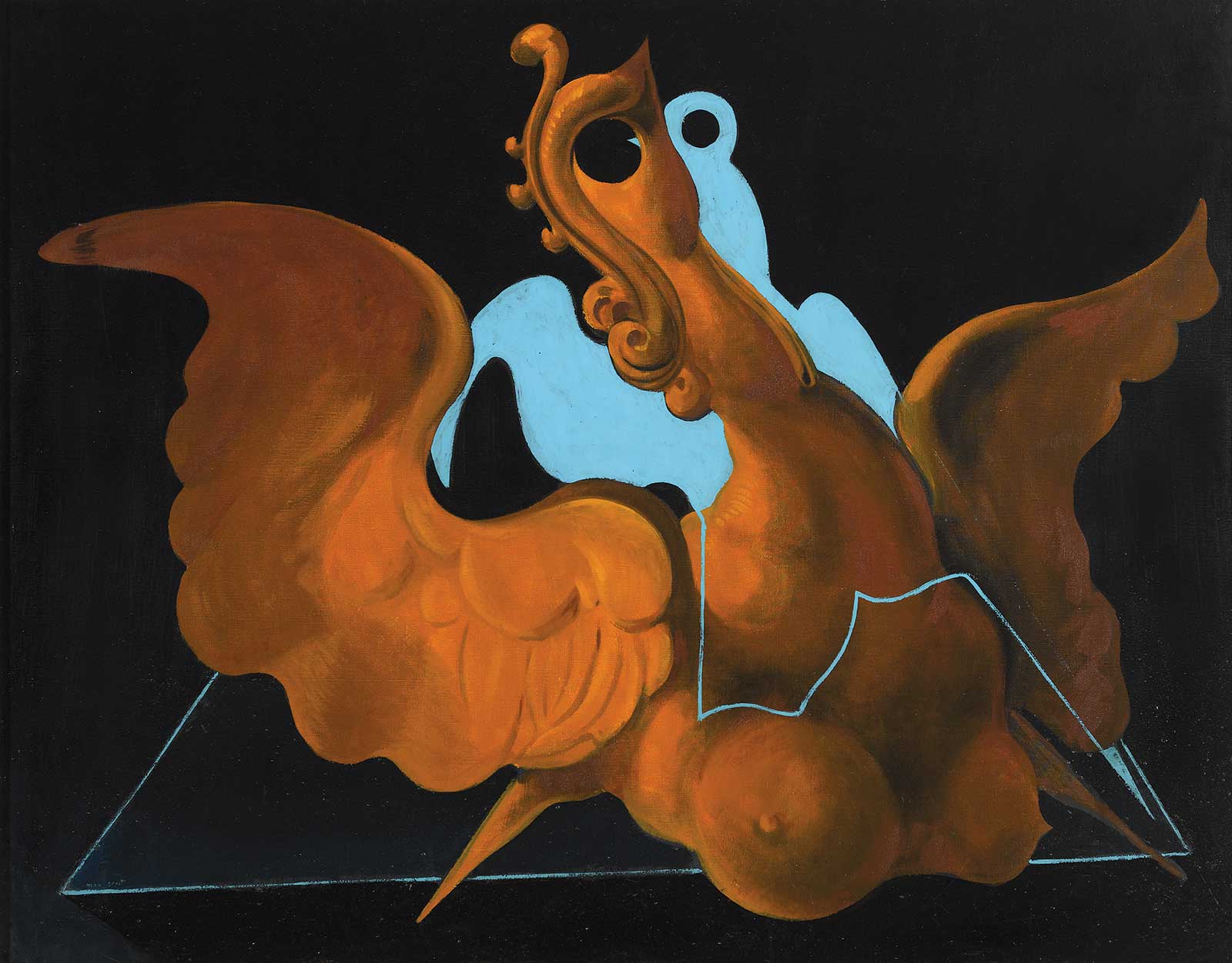 Max Ernst (1891-1976), Chimère, 1928. Oil on canvas. 1983-47. Centre Pompidou, Paris, Musée national d’art moderne/Centre de creation industrielle. Photo by © Adam Rzepka - Centre Pompidou. © Artists Rights Society (ARS) / New York / ADAGP, Paris.
The Salvador Dalí Museum in St. Petersburg, Florida, examines the movement and its protagonists in the exhibition Midnight in Paris: Surrealism at the Crossroads, 1929, through April 9. Drawing from the museum’s own collection and the collection of the Centre Pompidou in Paris, it “immerses audiences in this particularly rich and vital creative awakening by examining the work, friendships and clashes of over 20 artists of the era. That tumultuous year also marked a crucial watershed in particular for Salvador Dalí, who first appeared on the scene with the film Un Chien Andalou. The Dalí Museum’s special exhibition will feature works by artists who have defined the course of art for nearly a century, including Jean Arp, André Breton, Luis Buñuel, Alexander Calder, Giorgio de Chirico, Salvador Dalí, Max Ernst, Alberto Giacometti, René Magritte, Joan Miró, Francis Picabia, Man Ray, Yves Tanguy and others.”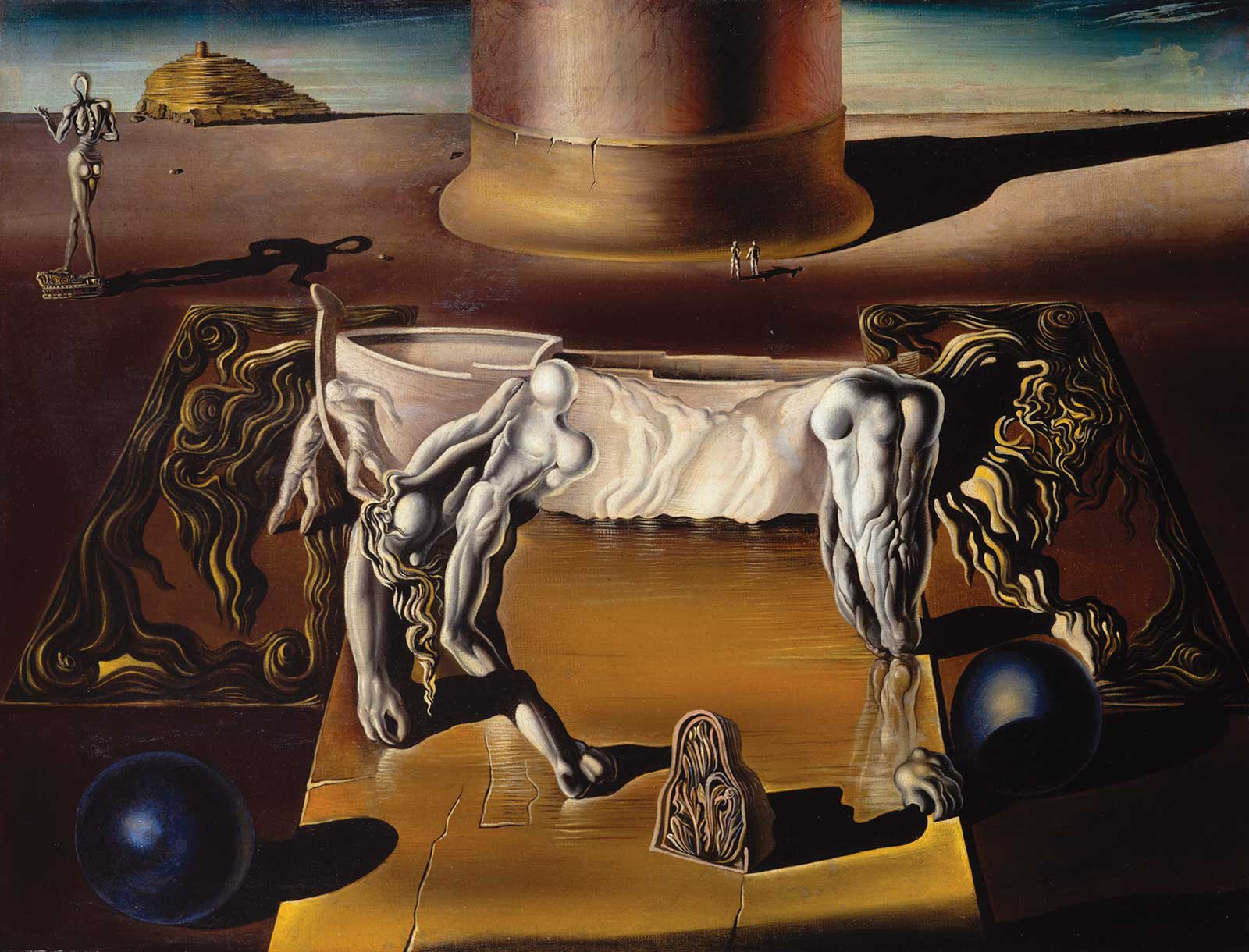 Salvador Dalí (1904-1989), Dormeuse, cheval, lion invisibles, 1930. Oil on canvas. 1993-26. Centre Pompidou, Paris, Musée national d’art moderne/Centre de creation industrielle. Photo by © Phillipe Migeat - Centre Pompidou. © Salvador Dalí, Fundació Gala-Salvador Dalí, (ARS), 2019.
The Dalí’s executive director, Dr. Hank Hine, explains “As the preeminent movement of its era, surrealism reached an innovative turning point in 1929, a crisis of consciousness that has had a sweeping impact on visual art ever since.”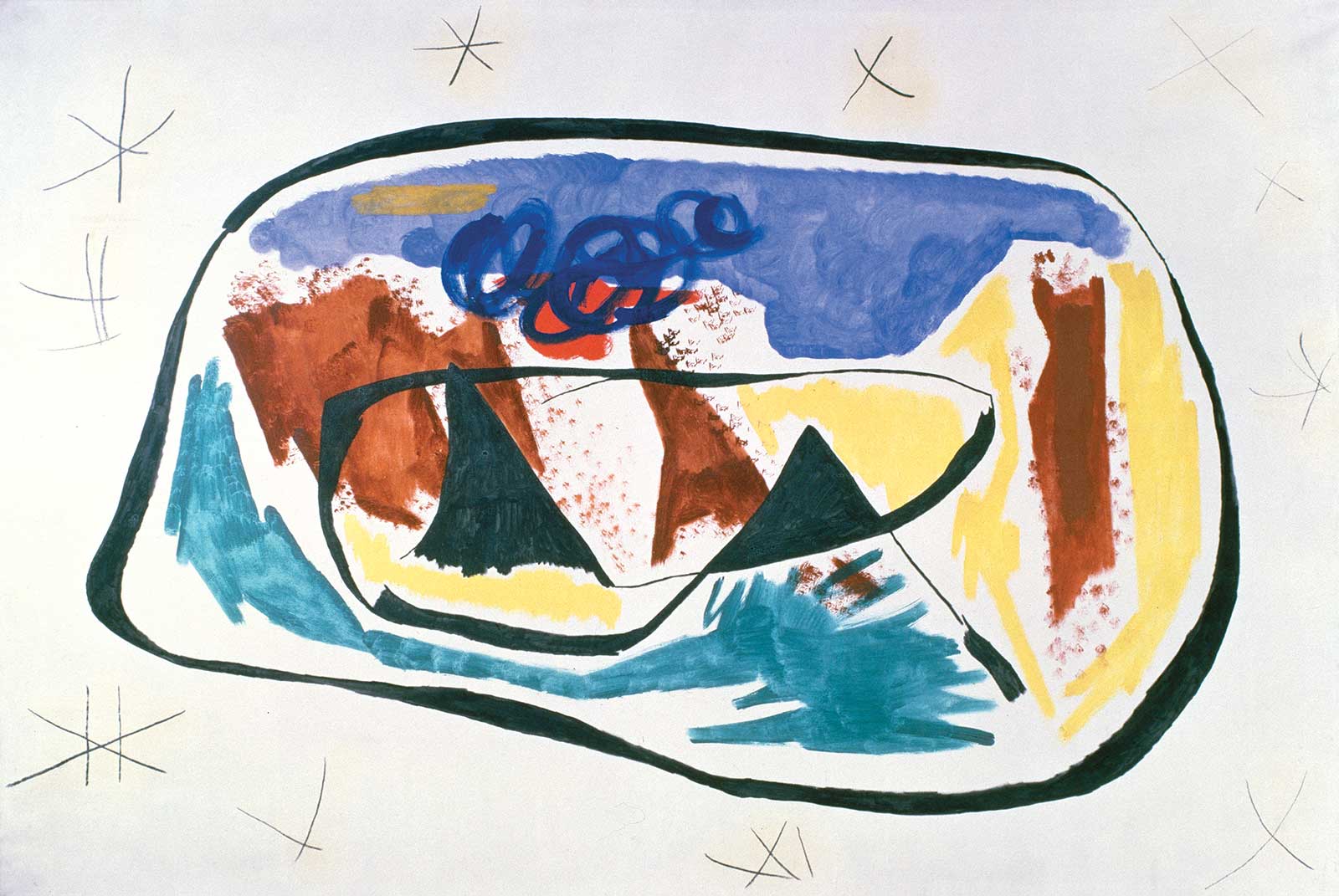 Joan Miró (1893-1983), Peinture, 1930. 2853 P. Centre Pompidou, Paris, Musée national d’art moderne/Centre de creation industrielle. © Successió Miró / Artists Rights Society (ARS), New York / ADAGP, Paris 2019.
Joan Miró (1893-1983), Dalí’s friend and fellow Catalan brought the young artist’s work to the attention of the Parisian surrealists and introduced him to the artists themselves when he arrived there in 1929. Dalí (1904-1989) had collaborated with the Spanish film director Luis Buñuel (1900-1983) on the script for Un Chien Andalou (An Andalusian Dog) which was released in Paris that same year. In his review of the film in 2000, Roger Ebert wrote, “It is useful to remember that Un Chien Andalou was made not by the Buñuel and Dalí that we see as crumbling old men in photographs, but by headstrong young men in their 20s, intoxicated by the freedom of Paris during the decade of the Lost Generation.” He also quoted Buñuel who, replying to a question of what he would do if he had only 20 years to live, said: “Give me two hours a day of activity, and I’ll take the other 22 in dreams—provided I can remember them.” 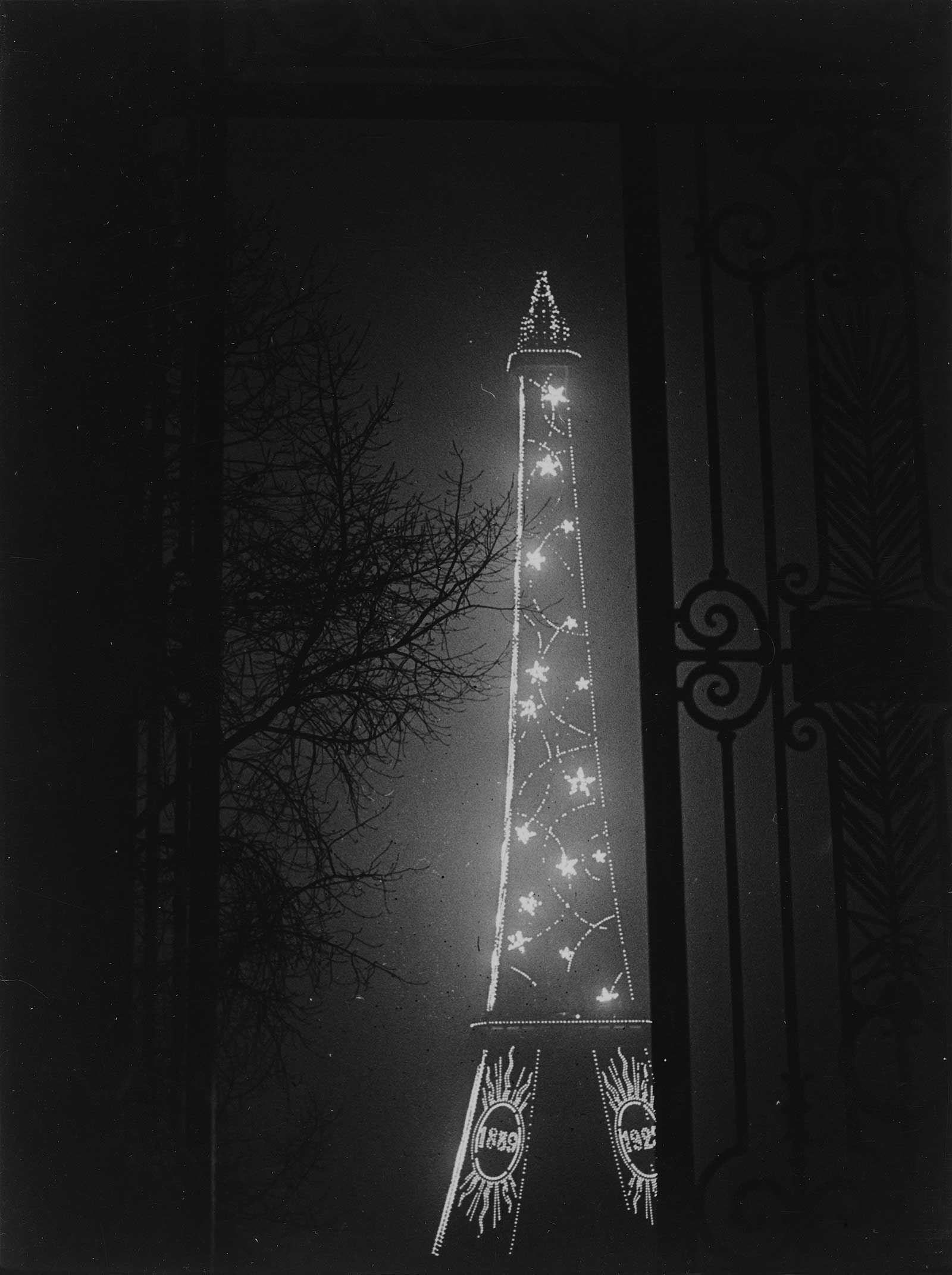 Brassaï (Gyula Halász) (1899-1984), Tour Eiffel, ca. 1930-32. Gelatin silver print. 1997-207. Centre Pompidou, Paris, Musée national d’art moderne/Centre de creation industrielle. Photo by © Phillipe Migeat - Centre Pompidou. © Estate Brassaï - RMN-Grand Palais.
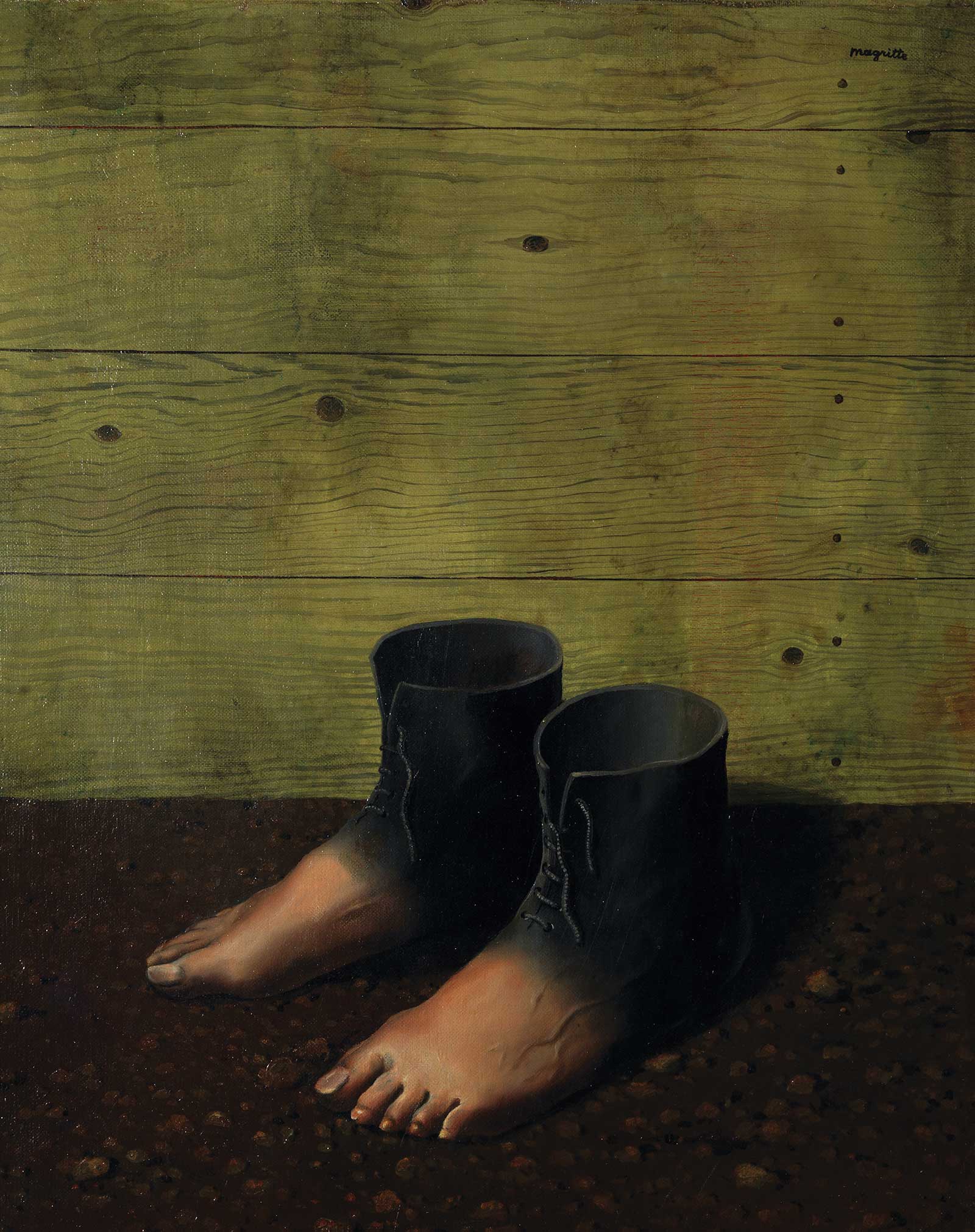 René Magritte (1889-1967), Le Modèle rouge, 1935. Oil on canvas mounted on cardboard. 1975-216. Centre Pompidou, Paris, Musée national d’art moderne/Centre de creation industrielle. Photo by © Phillipe Migeat - Centre Pompidou. © 2019 C. Herscovici / Artists Rights Society (ARS), New York.Invisible Sleeping Woman, Horse, Lion, 1920, is one of three paintings by Dalí of the same subject, one of which was destroyed during a riot at a screening of his and Buñuel’s second film, L’Age d’Or in 1930. It was painted in his “paranoiac-critical” technique which he described as a “spontaneous method of irrational knowledge based on the critical and systematic objectivity of the associations and interpretations of delirious phenomena”—the brain’s ability to make connections between things that are not connected rationally. —
Powered by Froala Editor