At the time of the 1936 exhibition of the works of John Marin at the Museum of Modern Art, its director, Alfred H. Barr Jr., wrote, “Not many American artists while they were still alive have had such extravagant admiration and so devout a following; and none perhaps has had such a persuasive advocate as Alfred Stieglitz. Indeed, though Mr. Stieglitz would not wish it said, this exhibition is in no small part a tribute to his devoted championship of Marin’s work. Now, however, with his paintings hung on the neutral walls of the museum, Marin must fight his own battle. Will he win? The writer, if he may be pardoned for taking sides in an official preface, believes positively that he will, and that the museum’s hospitality will be more than justified.”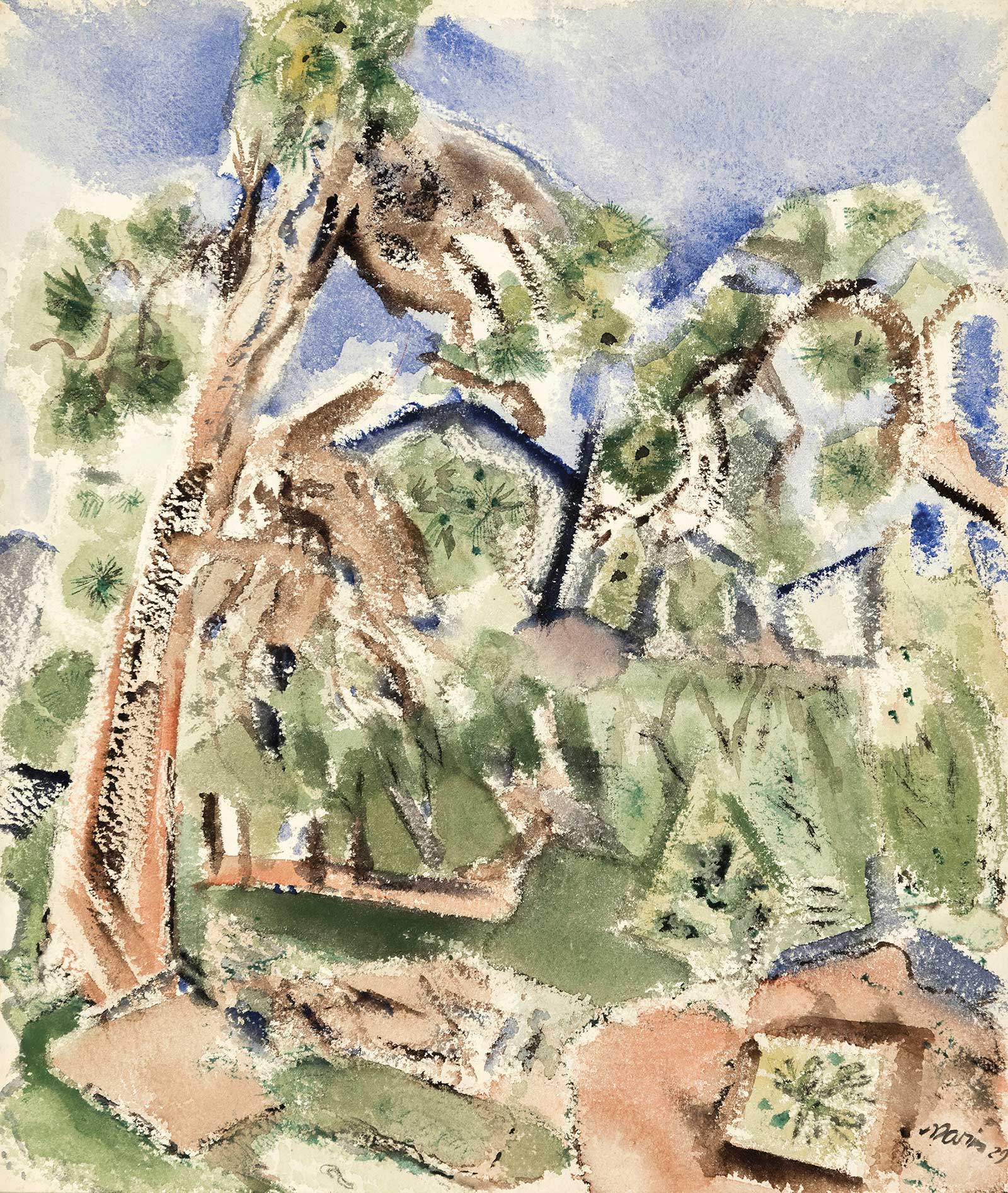 John Marin (1870-1953), Untitled (New Mexico Landscape), 1929. Watercolor on paper, 18¼ x 15¼ in., signed and dated lower right: ‘Marin 29’.
In his catalog text for the exhibition, which contained works from the Alfred Stieglitz collection, Marsden Hartley wrote, “You will find something you never saw before, you will find that Marin has lifted water colour painting out of the embroidery class, out of the class of minor accomplishments of the idle ladies and fussy bachelors—what’s that you are saying, one hears even now among the intelligent, and has made of it a major medium.”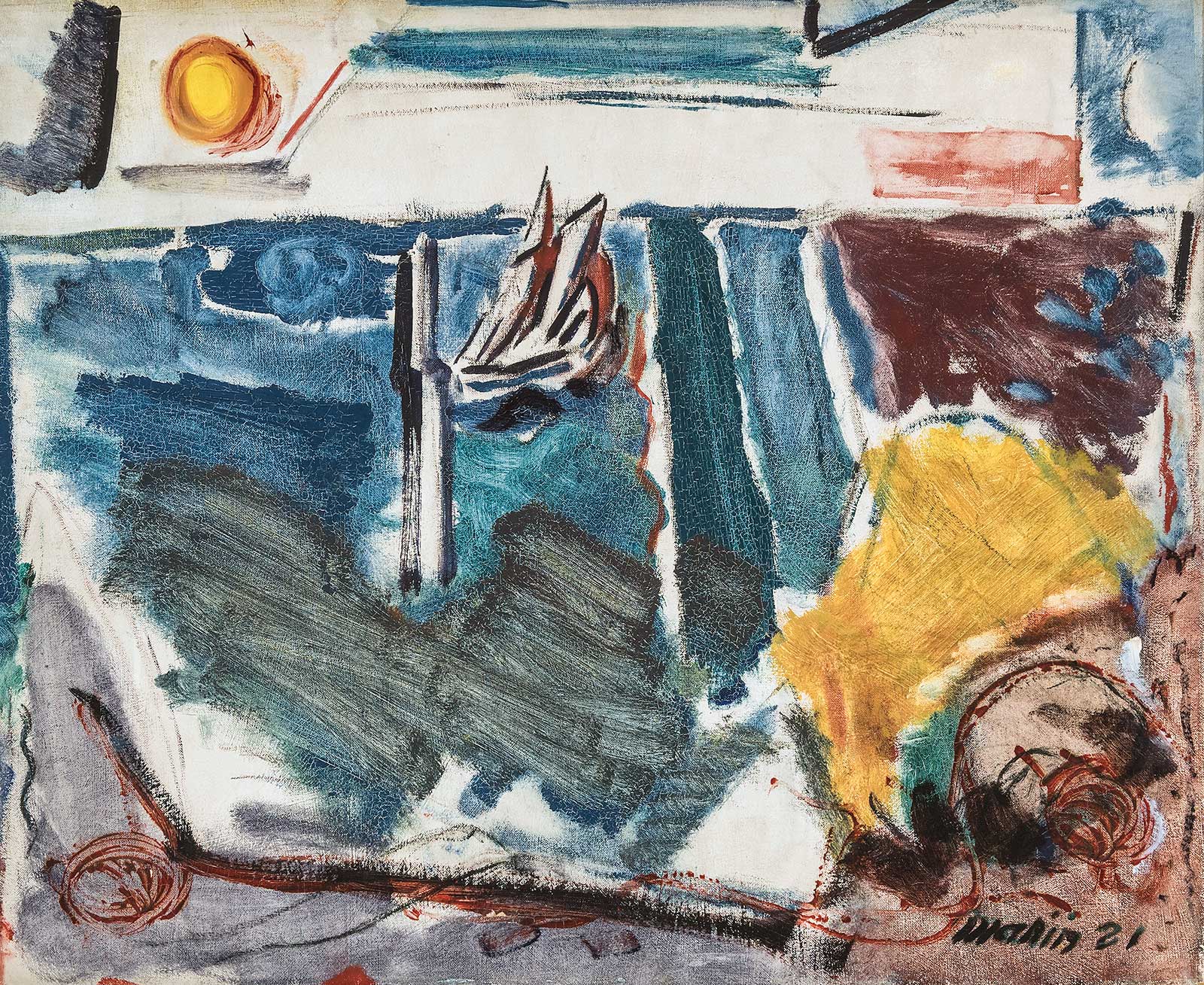 John Marin (1870-1953), Sailboat, Sea and Sun, 1921. Oil on canvas, 24¾ x 26¾ in., signed and dated lower right: ‘Marin 21’.
In 1948, the critic Clement Greenberg wrote, “If it is not beyond doubt that Marin is the greatest living American painter, he certainly has to be taken into account when we ask who is.”
In 1950, Barr selected Marin to be among the seven American artists to show at the 25th Venice Biennale. It was a 50-year retrospective of Marin’s paintings to which Duncan Phillips loaned 12 of the 55 paintings. Phillips, founder of what is now the Phillips Collection in Washington, D.C., commented, “In his 80th year, John Marin still paints with power, ecstasy and the most original brush work and design of any American artist. He is one of the most gifted and important painters since Cézanne and perhaps the best of all masters of watercolor.”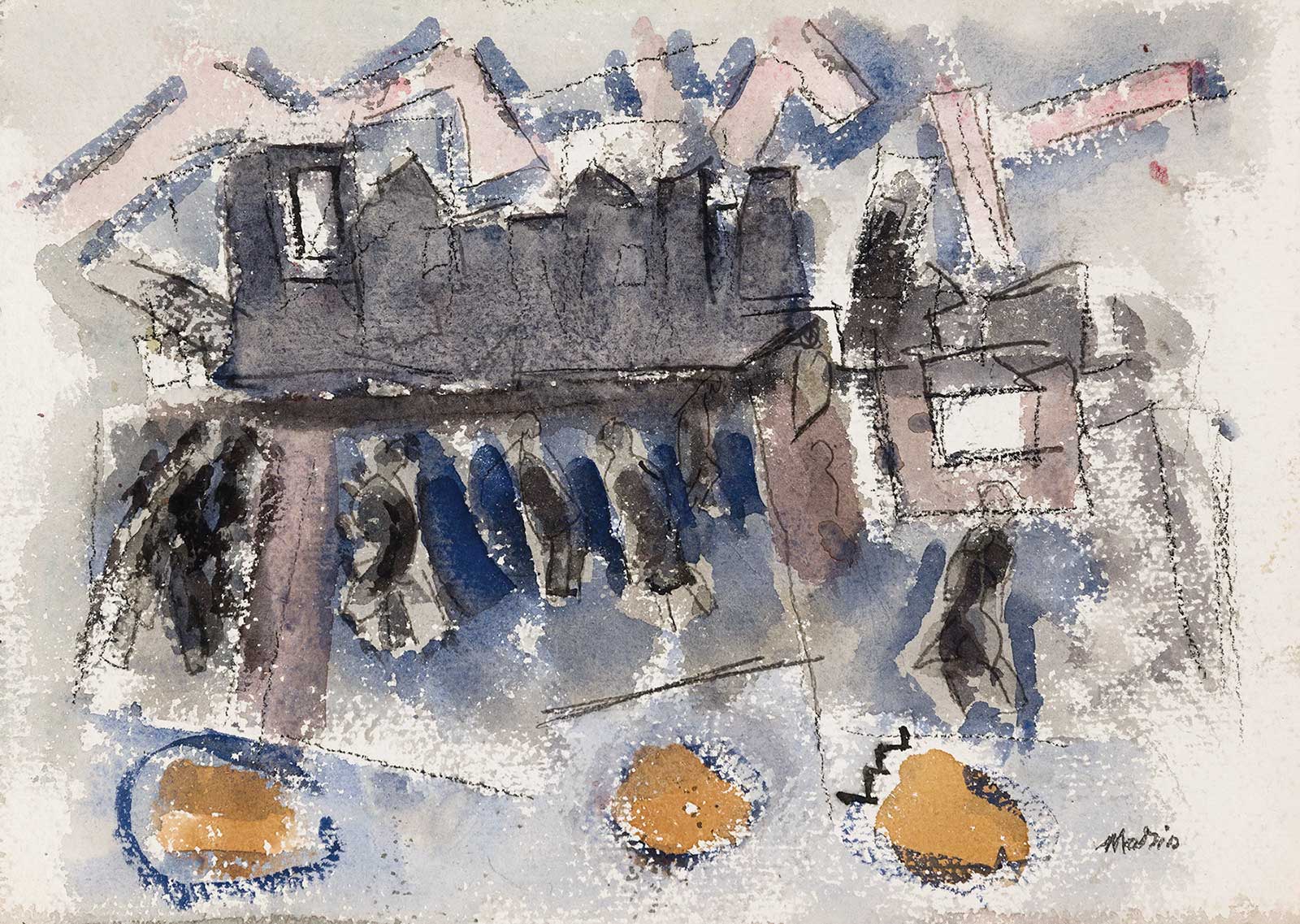 John Marin (1870-1953), City Movement, New York, ca. 1940. Watercolor on paper, 10½ x 15 in., signed lower right: ‘Marin’.
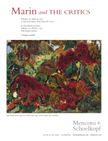
Menconi + Schoelkopf in New York presents the exhibition John Marin and The Critics, February 24 through April 24. The gallery notes, “Marin’s work made a complete commitment to modernism in the early 1910s and he was a commercial success throughout his career. The consistency of his vision highlights by contrast the shifting popular and critical embrace of modernism more broadly, as his work moved from Stieglitz-circle stalwart, to the master of his medium in the 1920s and ’30s, to the godfather of abstract expressionism that Greenberg would coronate.”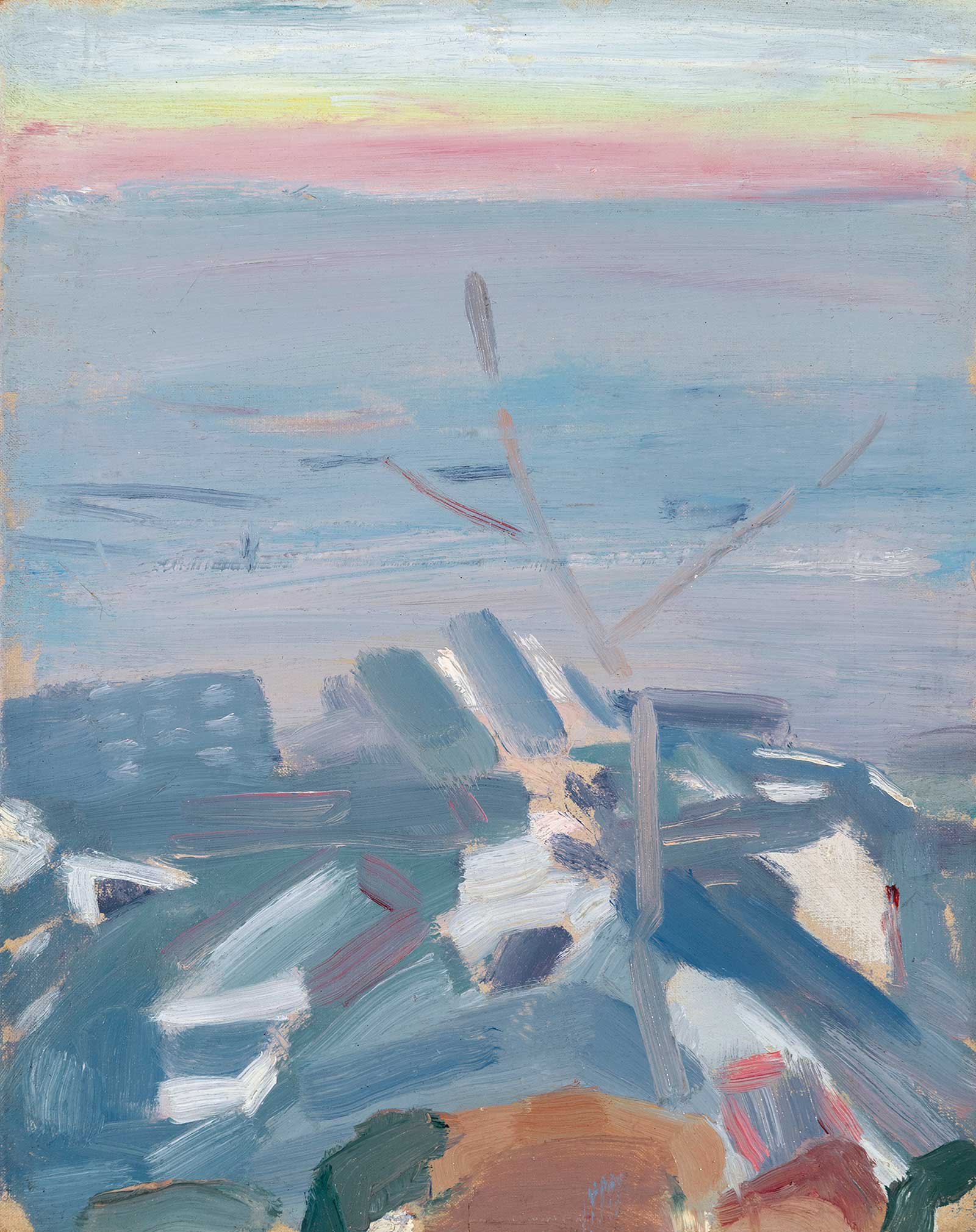 John Marin (1870-1953), Weehawken Sequence, ca. 1916. Oil on canvas board, 12¼ x 9½ in.
Marin (1870-1953) was born in Rutherford, New Jersey. He attended Stevens Institute of Technology and practiced architecture before turning to fine art. He attended the Pennsylvania Academy of the Fine Arts and, later, the Art Students League in New York. From 1905 to 1908 he lived in Paris creating etchings for the tourist trade and perfecting his unique style of watercolor. He was discovered there by photographer Edward Steichen, who introduced him to fellow photographer and gallerist Steiglitz, who had opened his gallery “291” in New York in 1905. Originally the center of photo-secessionist photographers, it became a mecca for American and European modernism. The gallery was the first to show Rodin, Matisse, Cézanne and Picasso in America. Stieglitz gave Marin his first show of watercolors in 1909.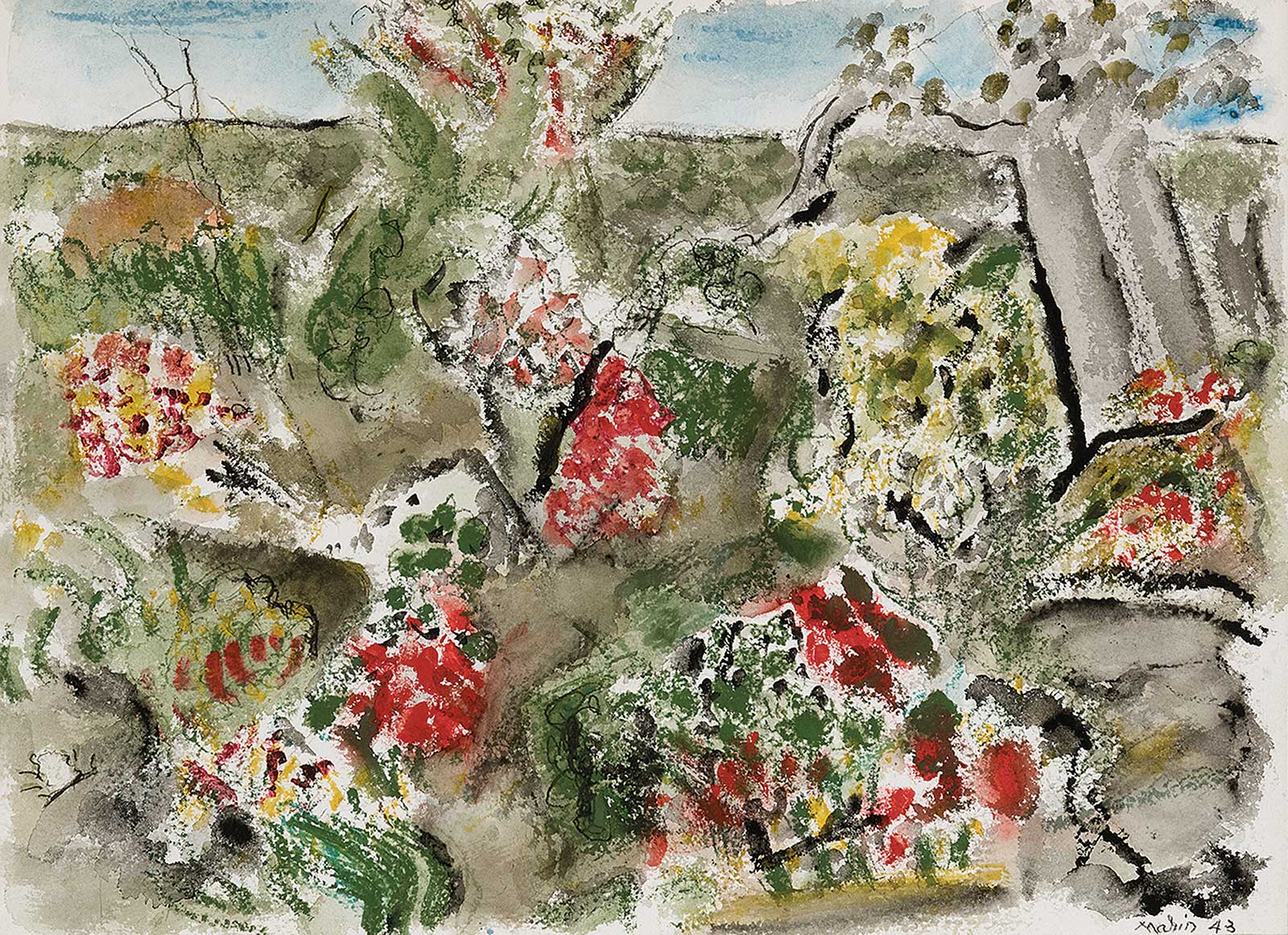 John Marin (1870-1953), Autumn Foliage, Northern New Jersey, 1943. Watercolor on paper, 15¼ x 20½ in., signed and dated at lower right: ‘Marin 43’.
Writing about the energy that he captured throughout his oeuvre, especially in his New York City watercolors, Marin commented, “Shall we consider the life of a great city as confined simply to the people and animals on its streets and in its buildings? Are the buildings themselves dead?…I see great forces at work: great movements; the large buildings and the small buildings; the warring of the great and the small; influences of one mass on another greater or smaller mass…While these powers are at work pushing, pulling, sideways, downwards, upwards, I can hear the sound of their strife and there is great music being played. And so I try to express graphically what a great city is doing.” —
Powered by Froala Editor