Now on view at the Morgan Library & Museum in New York City is John Singer Sargent: Portraits in Charcoal, which offers a rare glimpse into an often overlooked chapter of the painter’s distinguished career.
Sargent, who largely stopped doing oil portraits in 1907, turned instead to charcoal drawings to fulfill his portrait commissions. The artist, then at the peak of his career, could often complete the works in less than three hours and would frequently bring in friends to entertain his sitters to enliven their facial features. 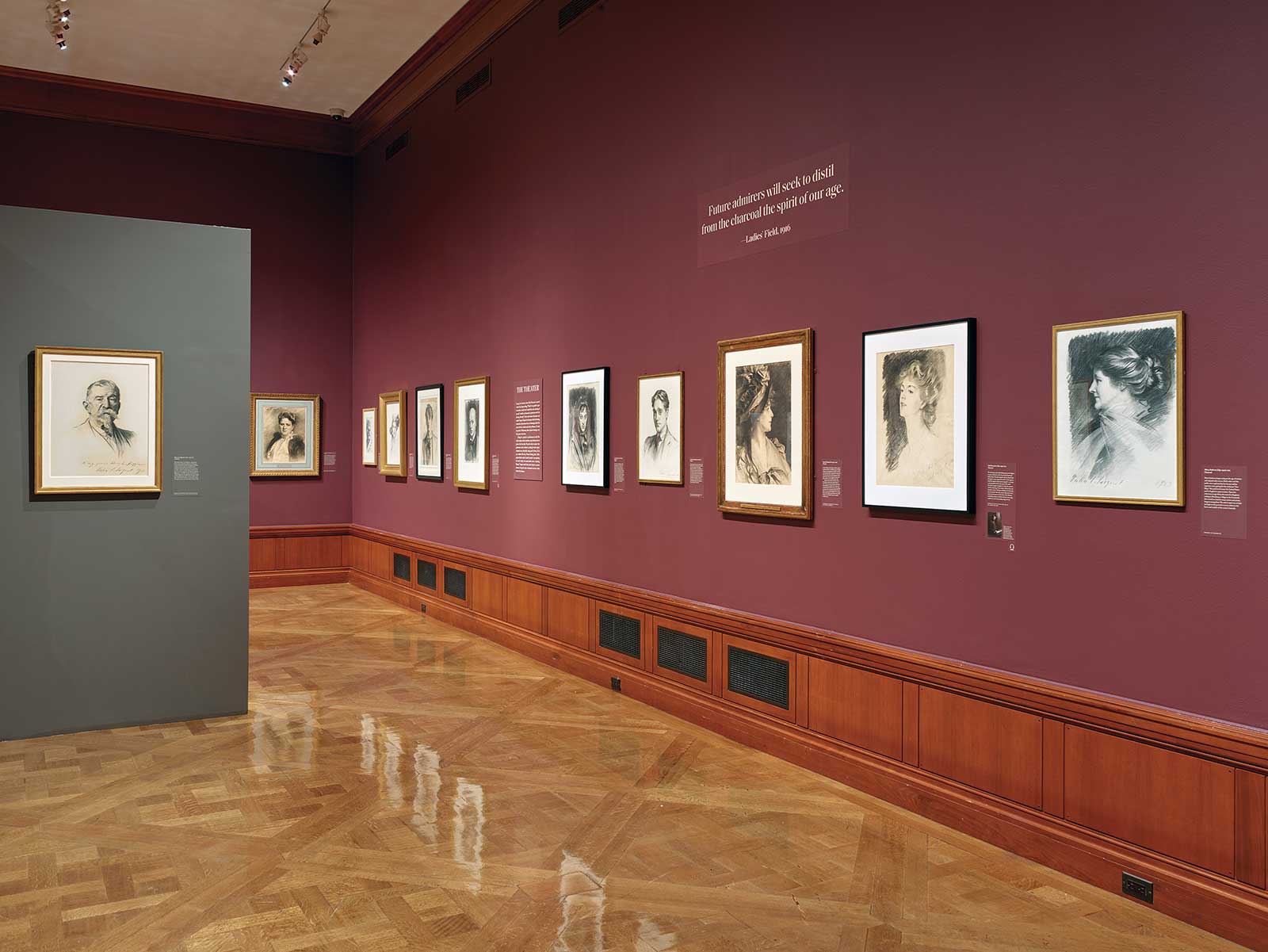
“He started doing charcoal portraits, with exception to a few in the 1890s, mostly in 1907. He saw that switching to charcoal from oil was a compromise to his many patrons who wanted portraits,” says Morgan curator Laurel Peterson, Moore Curatorial Fellow in the Department of Drawings and Prints. “He did them from 1907 until his death in 1925. Some years were more productive than others, but he was fairly consistent. He could do the charcoal works so much faster, most of them under three hours. He didn’t want to spend too much time on them because he wanted to focus on his mural paintings in Boston. He thought his legacy would be those murals.” 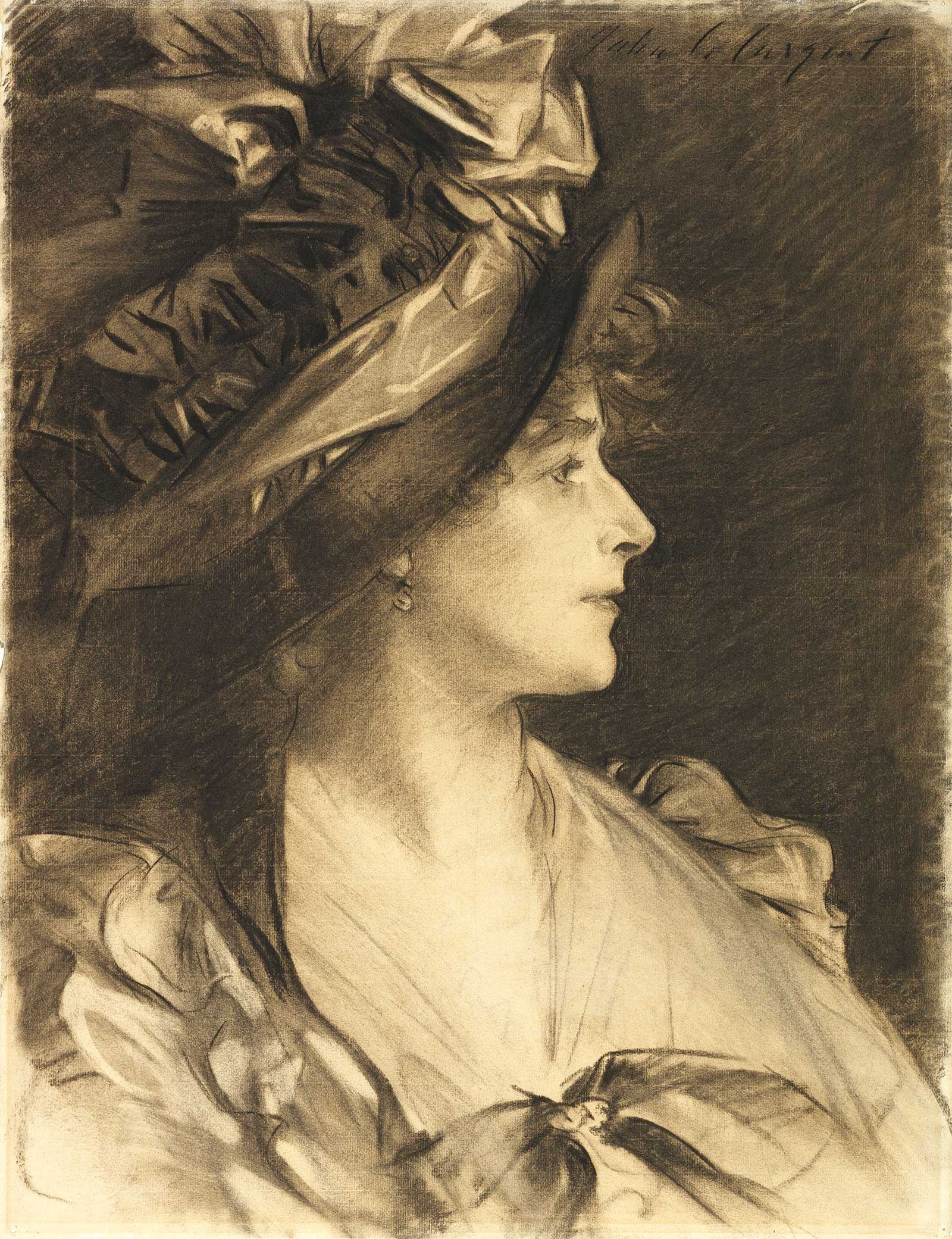 John Singer Sargent (1856-1925), Gertrude Kingston, ca. 1909. Charcoal, 235⁄8 x 189⁄16 in. By permission of the Provost and Fellows of King’s College, Cambridge, UK. Fitzwilliam Museum.
The exhibition, which will feature more than 55 portraits, draws from public and private collections, including one from the National Portrait Gallery and another from the Morgan’s own permanent collection. Nearly half the works come from the United Kingdom, where Sargent spent part of his career. The exhibition was conceived by Richard Ormond, the renowned Sargent scholar and the artist’s grand-nephew. 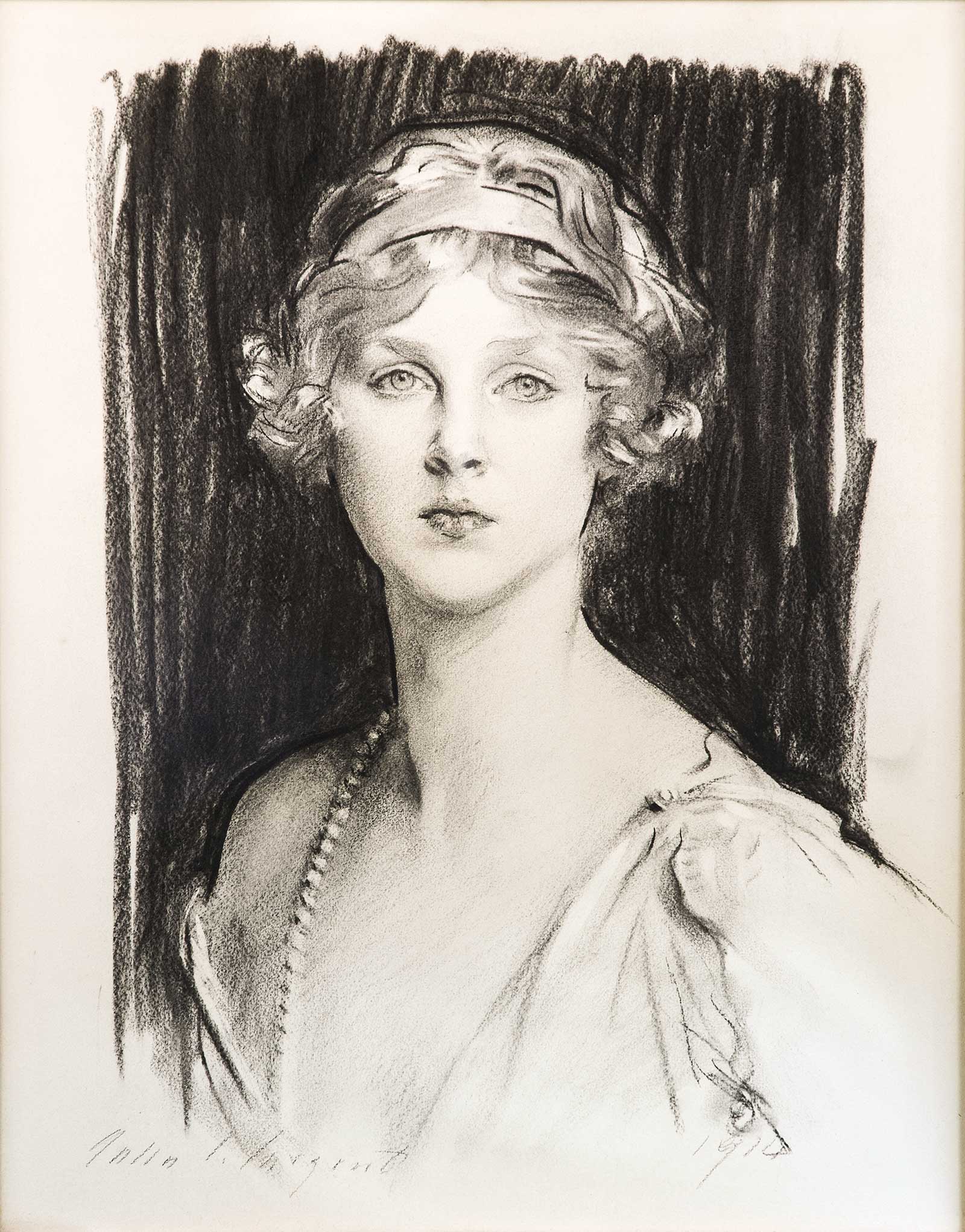 John Singer Sargent (1856-1925), Lady Diana Manners, 1914. Charcoal, 23½ x 18½ in. Private Collection. Photography by Christopher Calnan.
“What really struck me when we first saw them was how much variety there was from one portrait to the next—the poses, the papers, the tone of the paper, the way he used the charcoal, the personality of the sitter—it all came together in a wonderful way. You really get a sense for the group of individuals on the wall, and because they’re all in monochrome we weren’t sure how it would come together,” Peterson says. “One aspect that is fascinating was the charcoal itself. It was a relatively new invention. By the turn of the century, an artist could get much harder charcoal, more so than the natural charcoal that was popular before that. And charcoal is the only media he used to create these amazing works, with their exciting white highlights and great tonal range. He would often use a crust of dry bread as an eraser, and that technique really brings out white highlights on the paper.”
Peterson adds that Sargent rarely made any preparatory drawings. “Many of the sitters wrote about their experience with the artist, so we have their descriptions, as well as one or two photographs, so we do have a sense for how he worked,” she says. “From all the descriptions, he was a big man and he would kind of mutter to himself while he worked. And he was constantly moving, going back and forth in the room. He was described at one point as a bull, as he would come down on the paper and then back up again. When he needed a break he would dash over to the piano, play some music and then dash back.”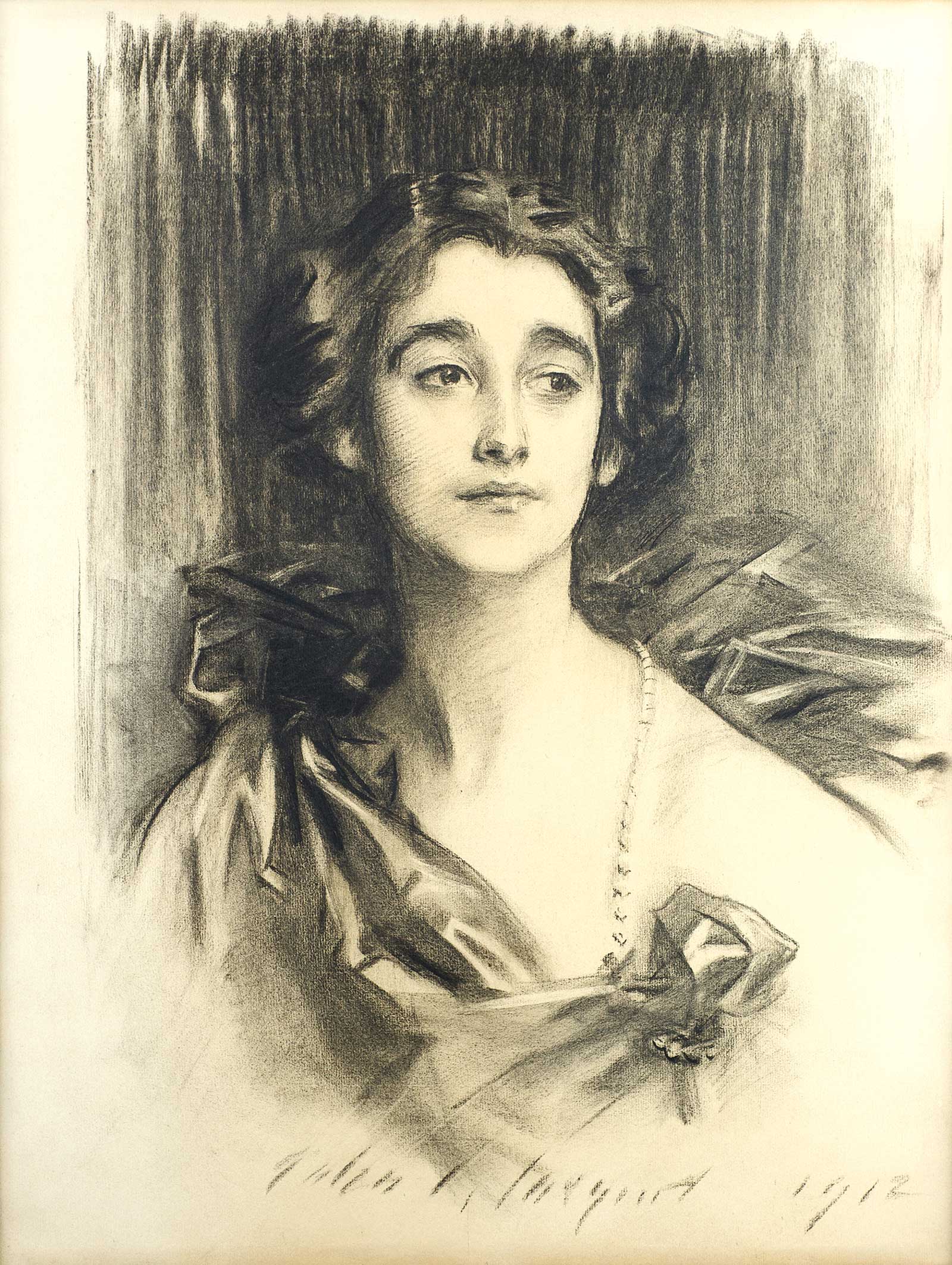 John Singer Sargent (1856-1925), Sybil Sassoon, 1912. Charcoal, 24 x 1811⁄16 in. Private Collection, Photography by Christopher Calnan.
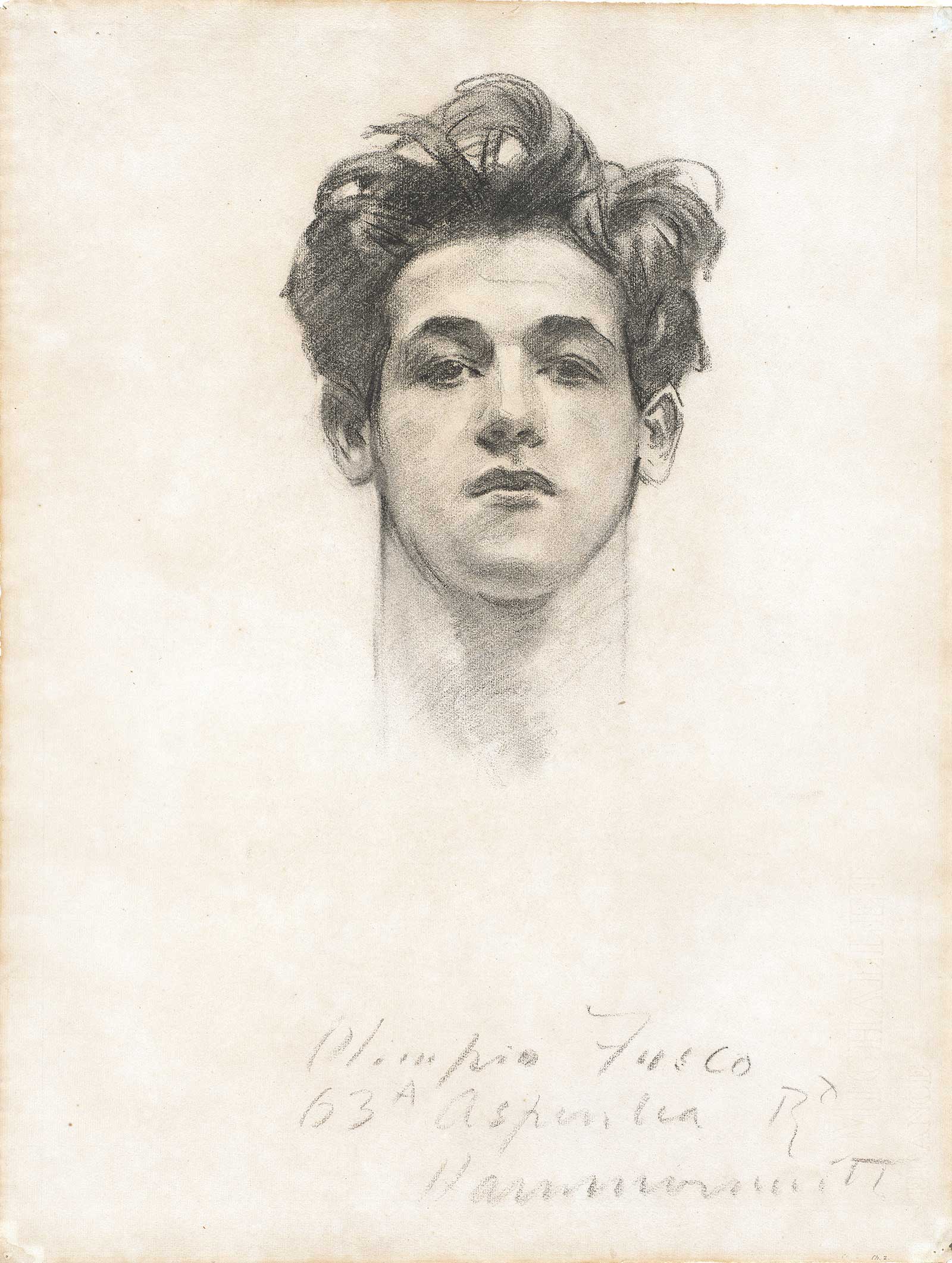 John Singer Sargent (1856-1925), Olimpio Fusco, ca. 1900-1910. Charcoal, 24½ x 18¾ in. Courtesy National Gallery of Art, Washington.Works in the exhibition include Gertrude Kingston, painted in 1909, which shows the British actress, who was first trained as a painter and also, like Sargent, studied under Carolus-Duran. Kingston was active in the suffrage movement and in 1916 performed with the Pioneer Players, a London-based suffragist theater company. This portrait initially hung in the foyer of the Little Theatre, in the Adelphi, which she founded in London in 1910. Another work, Sybil Sassoon, painted in 1912 and commissioned by the sitter’s brother, featured a member of the Sassoon family. Sargent painted her twice and drew her on at least four occasions, and once said she was the most beautiful woman he had ever drawn.
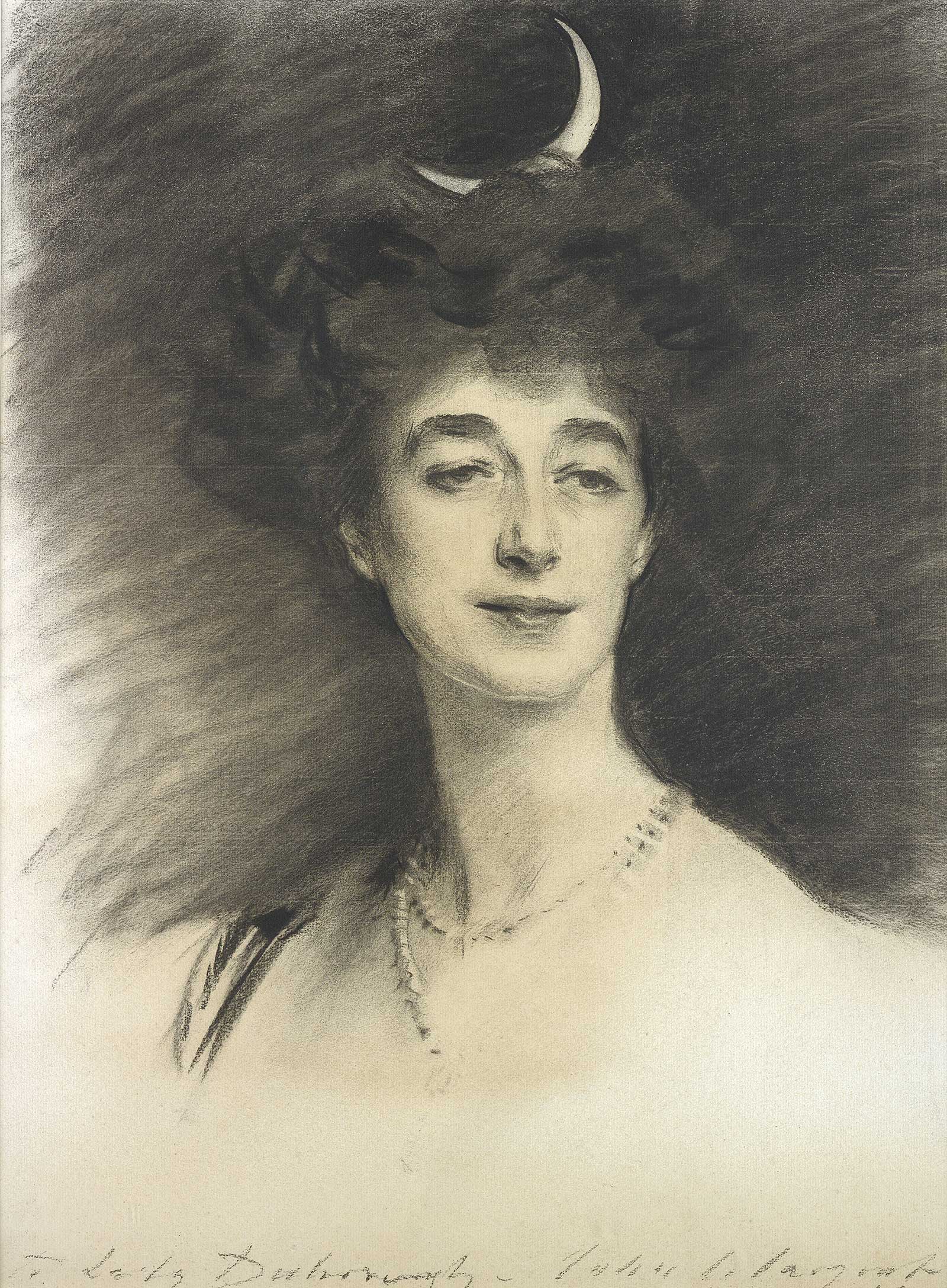 John Singer Sargent (1856-1925), Ethel, ‘Ettie’ Grenfell, Lady Desborough, 1909. Charcoal, 24 x 18½ in. Trustees of the Firle Estate Settlement, Firle, East Sussex, UK.
“It’s an experience walking into the gallery and seeing these pieces for the first time. It’s like having an intimate encounter with them. They are close to life-size, and they certainly feel life-sized when you’re in front of them. It feels very personal looking at them,” Peterson says. “The drawings have a freshness to them, a spontaneity, that is often hard to capture in oils. Some of them could step off the wall and almost greet us.” —
Powered by Froala Editor