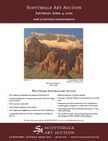
Eric Sloane (1905-1985) is often referred to as “the painter of barns.” Like anyone laboring under an easy sobriquet he was more than that. He left his well-to-do family in the east when he was 14 and became an itinerant sign painter. He eventually ended up in Taos, New Mexico, where he befriended the Russian immigrant painter Leon Gaspard. Painting planes at an airport, he learned to fly and was enraptured by clouds. He studied under George Luks and John Sloan at the Art Students League in New York. He studied meteorology at MIT and became the country’s first TV weatherman. 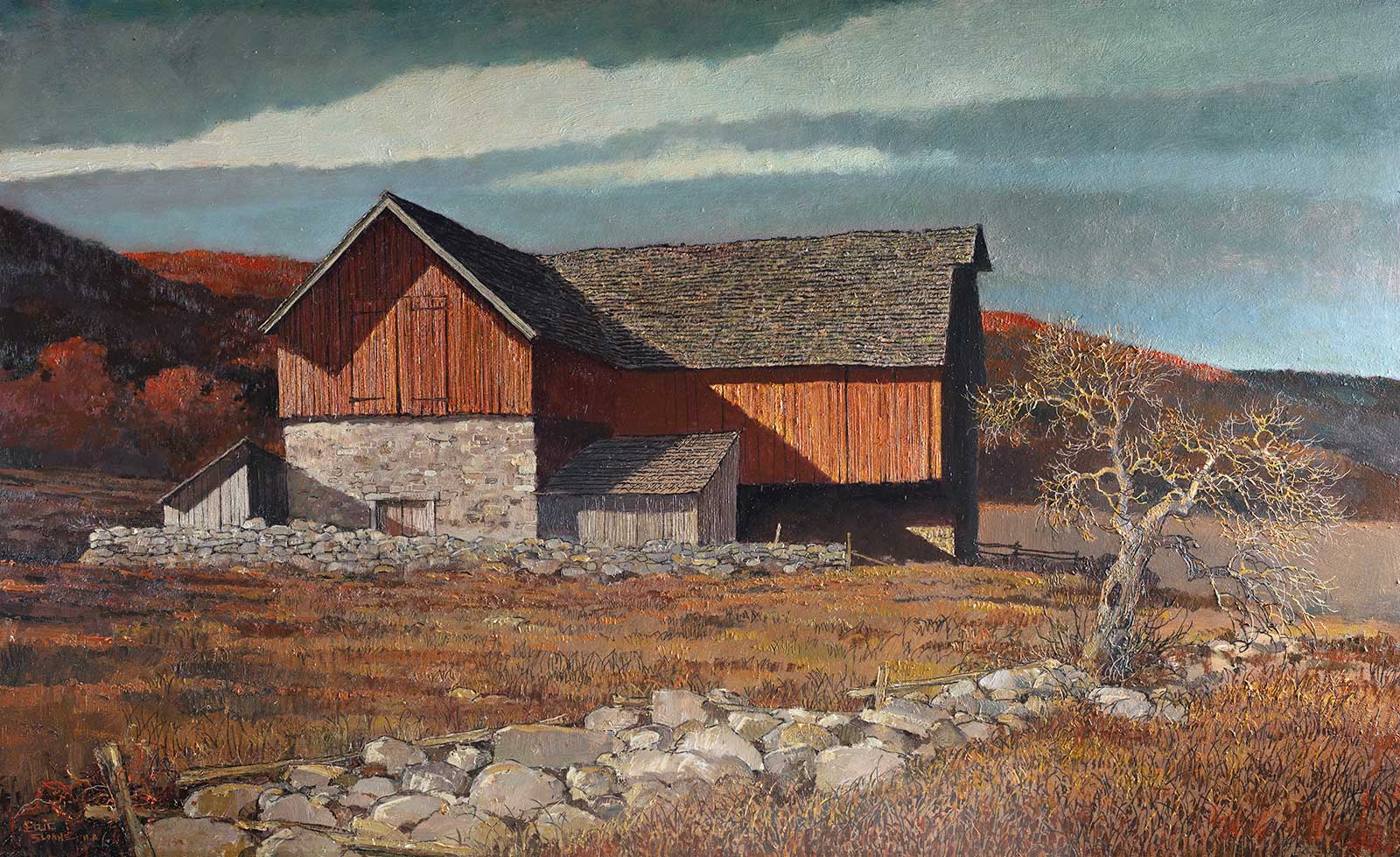 Eric Sloane (1905-1985), Bucks County Barn, Late Afternoon. Oil on board, 237/8 x 39¾ in., signed and inscribed lower left: ‘ERIC/SLOANE N.A’.
Along the way he became fascinated by rural culture. He found the diary of the 15-year-old Noah Blake in a library sale and later wrote and illustrated the book Diary of an Early American Boy - Noah Blake 1805. It was only one of his 38 books. Perhaps most people are familiar with Sloane having seen his giant mural, Earth Flight Environment, at the National Air and Space Museum in Washington, D.C., which he painted when he was in his ’70s.
Born Everard Jean Hinrichs, he changed his name in the 1930s to honor his mentor John Sloan (adding an “e” to negate any relationship) and Eric from the middle letters of “America.”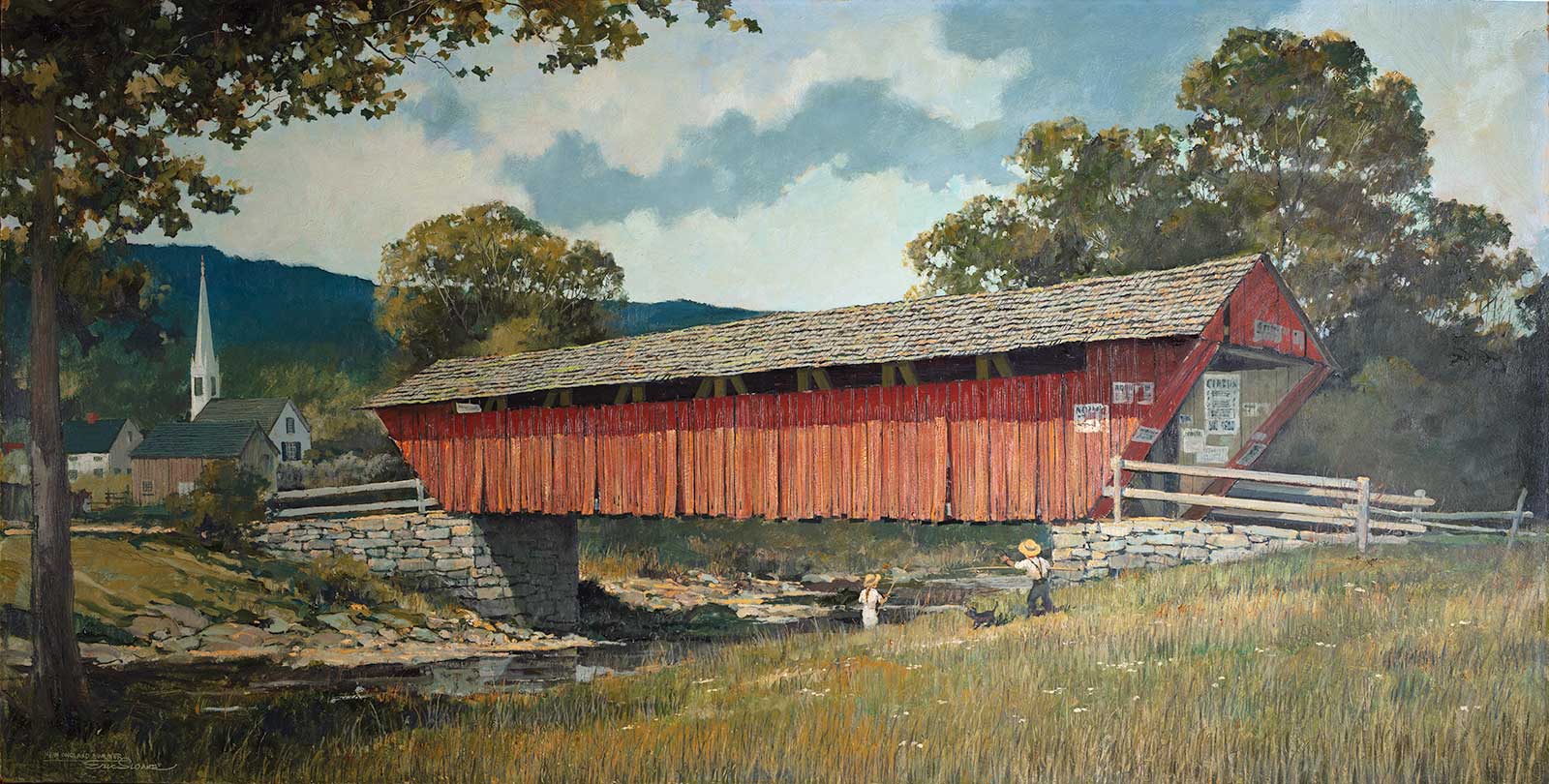 Eric Sloane (1905-1985), New England Summer. Oil on board, 237/8 x 47¾ in., signed and inscribed lower left: ‘NEW ENGLAND SUMMER / Eric SLOANE; signed verso: SKETCH FOR -PICTURESQUE AMERICA GROUP / Eric SLOANE / CORNWALL BRIDGE, CONN’.
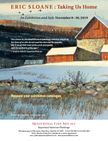
An exhibition and sale of his paintings, Eric Sloane: Taking Us Home, will be at Questroyal Fine Art in New York, November 8 through 30. The barns and buildings of the past have long outlived their builders. Sloane wrote, “Unfortunately, the only recognized relics of yesterday’s farmers are obsolete curiosities when the greatest relic, their philosophy of living, is seldom considered.”
Autumn Path depicts a lane leading to a covered bridge and covered in fallen leaves. A wagon has recently passed through. Sloane wrote about the autumn, “A few days ago I walked along the edge of the lake and was treated to the crunch and rustle of leaves with each step I made. The acoustics of this season are different and all sounds, no matter how hushed, are as crisp as autumn air.”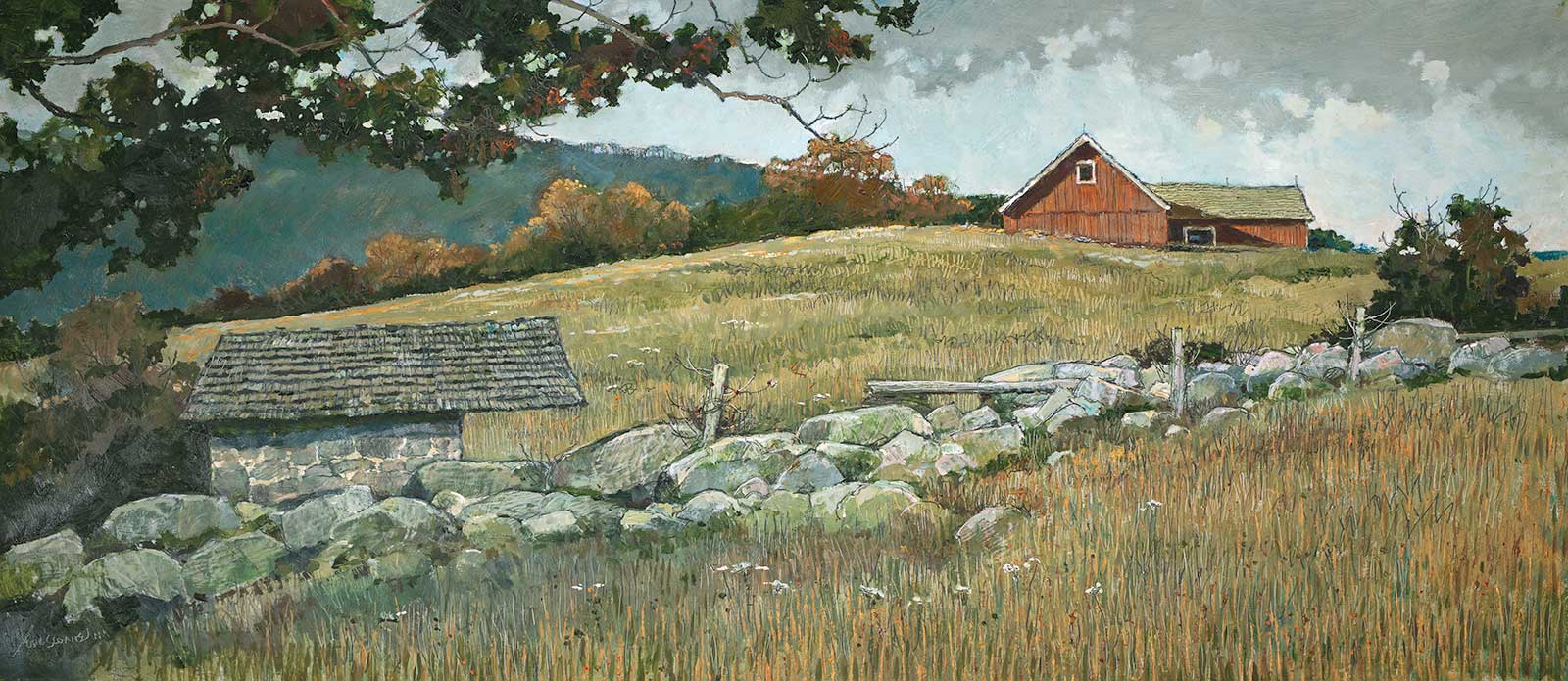 Eric Sloane (1905-1985), Queen Anne’s Lace. Oil on board, 211/8 x 48 in., signed and inscribed lower left: ‘/ Eric Sloane NA’; signed verso: ‘QUEEN ANNE’S LACE / Eric Sloane’.
The trees obscure the sky in this painting, a feature that often marks Sloane’s paintings. Since his first experience flying among the clouds, they, and the weather, became prominent features in his paintings. One of his early paintings of “just sky” was purchased by Amelia Earhart who recognized its accuracy.
Bucks County Barn is classic Eric Sloane. His interest in meteorology and his awareness of the subtleties of nature are evident in his treatment of the sky and the subtly encroaching shadows on the left. His choppy brush strokes and his outlining of stones in the wall and in the barn’s foundation remind us that they were built by hand and demonstrate his careful observation.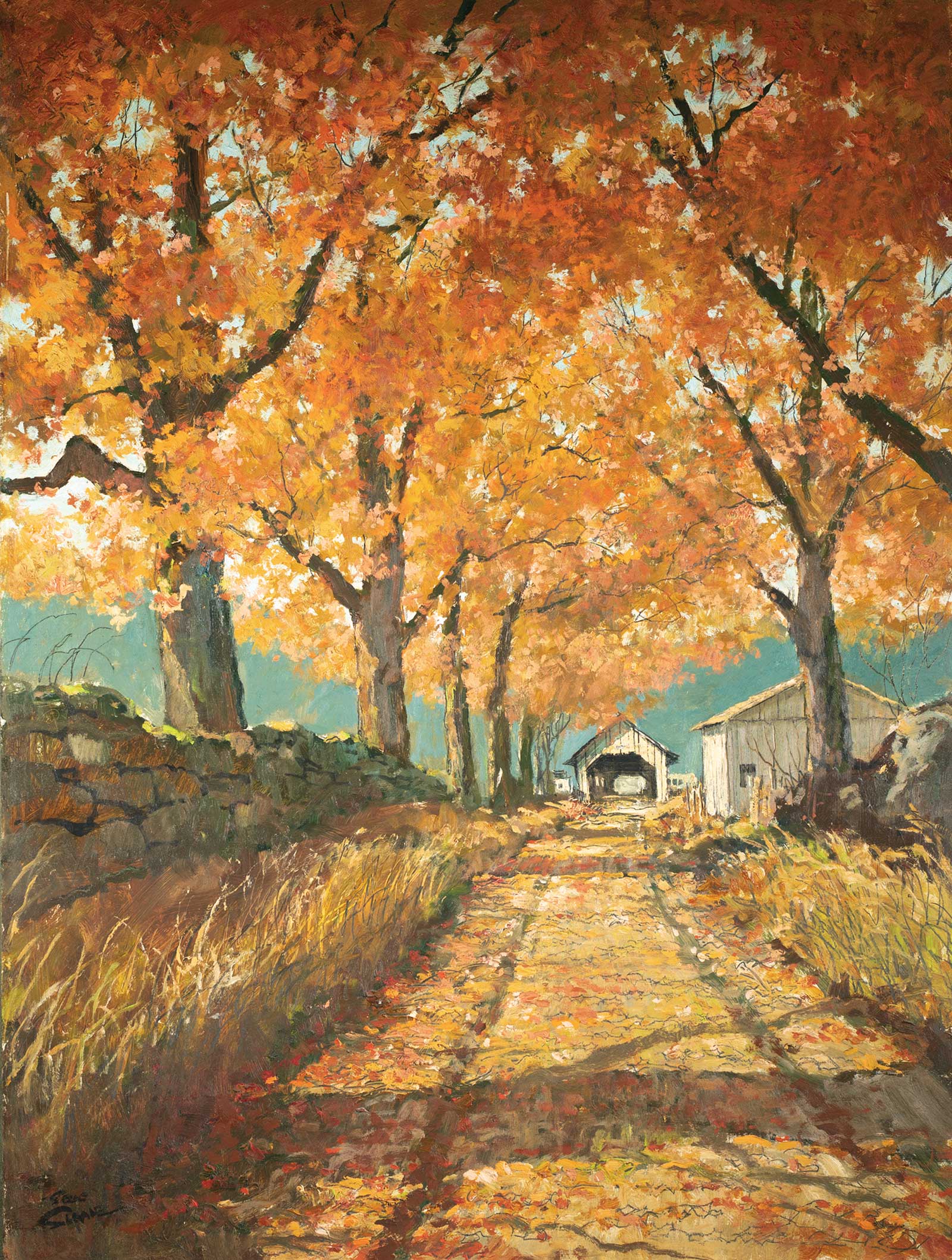 Eric Sloane (1905-1985), Autumn Path. Oil on board, 317/8 x 24 in., signed lower left: ‘-ERIC / SLOANE’.
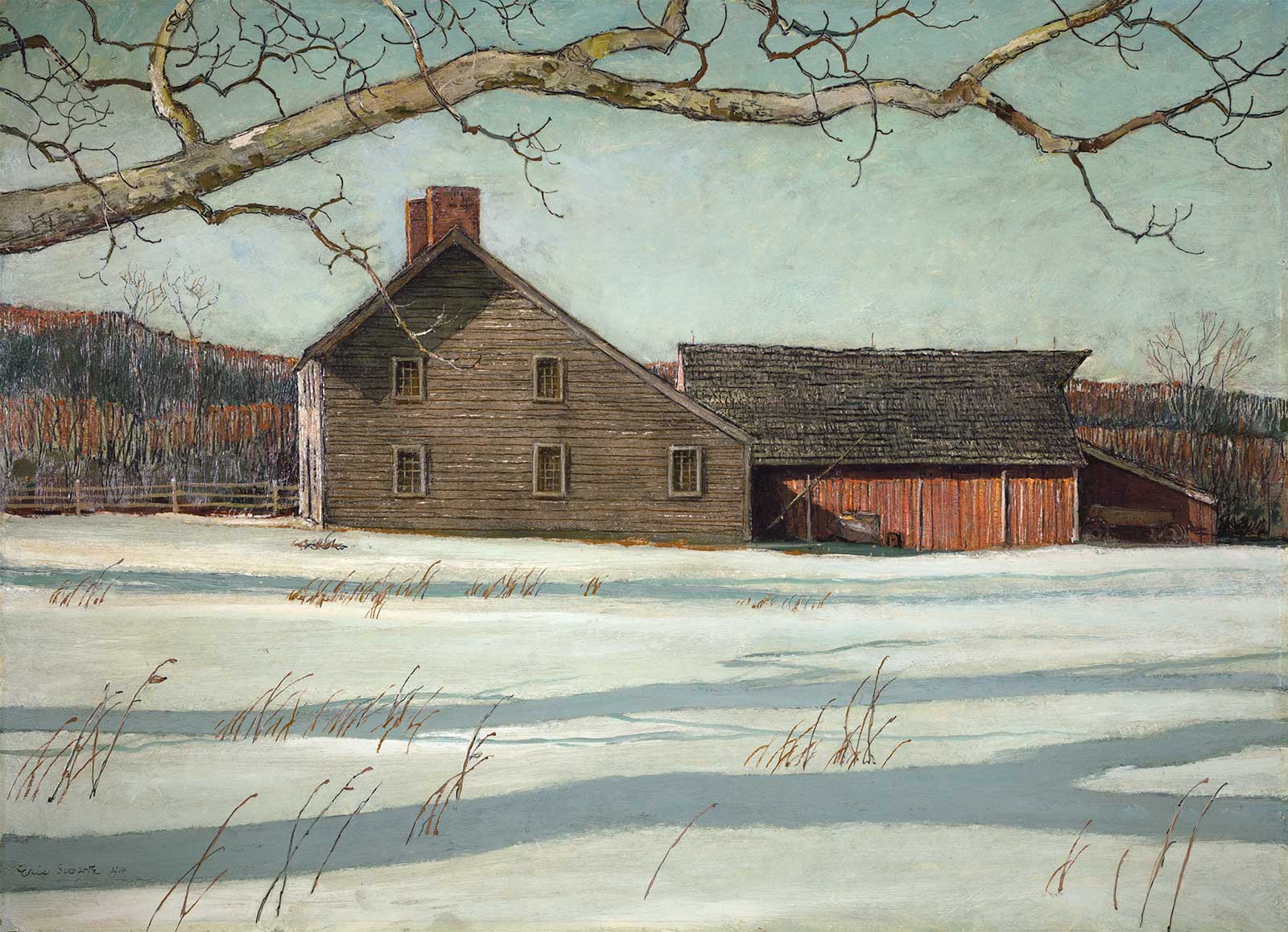 Eric Sloane (1905-1985), Old Saltbox, Danvers, Massachusetts. Oil on board, 20½ x 28 in., signed and inscribed lower left: ‘Eric SLOANE NA’; signed verso: ‘Eric SLOANE / 6500 / OLD SALTBOX / DANVERS MASS’.
In his book Seventeen Dollars a Square Inch: A Personal Tribute to Eric Sloane, Forrest Fenn cites a note Sloane left for him on his desk: “If I were to condense the essence of culture and art to one word,I would choose awareness. I am convinced that outside of pure craftsmanship, the only talent a real artist has is his awareness. The artist is gifted in sensitivity; he is more aware (seeing, hearing and feeling more than the average person), and his reason for existence is (by his art) to pass on that sensitivity and awareness to others and thereby enriching their existence.”—
Powered by Froala Editor