
This article is about discovering the unique voice in a work of art through an examination of the transformative interplay between inspiration and derivation: sources borrowed and transformed by an artist. It assumes the basic knowledge of artistic traditions necessary to make qualitative judgements. The sculpture of Elie Nadelman is ideal for this discussion as his stylistic evolution was inspired by the language of clear, yet quite different artistic traditions.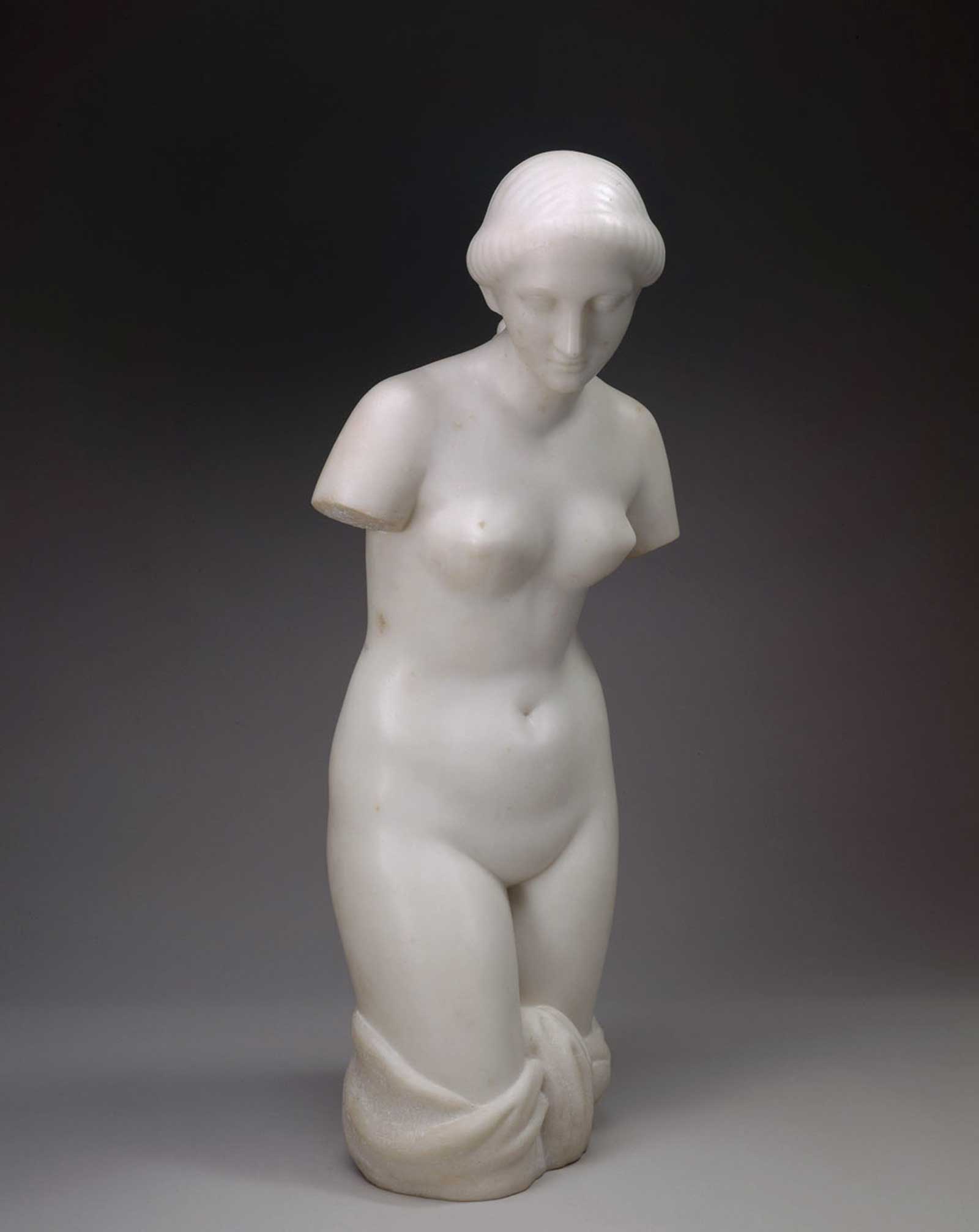 Illus. 1. Elie Nadelman (1882-1946), Classical Figure, 1909-10. Marble, 345/8 x 13½ x 15 in. Hirshhorn Museum and Sculpture Garden. Gift of Joseph H. Hirshhorn, 1966. Photography by Lee Stalsworth.
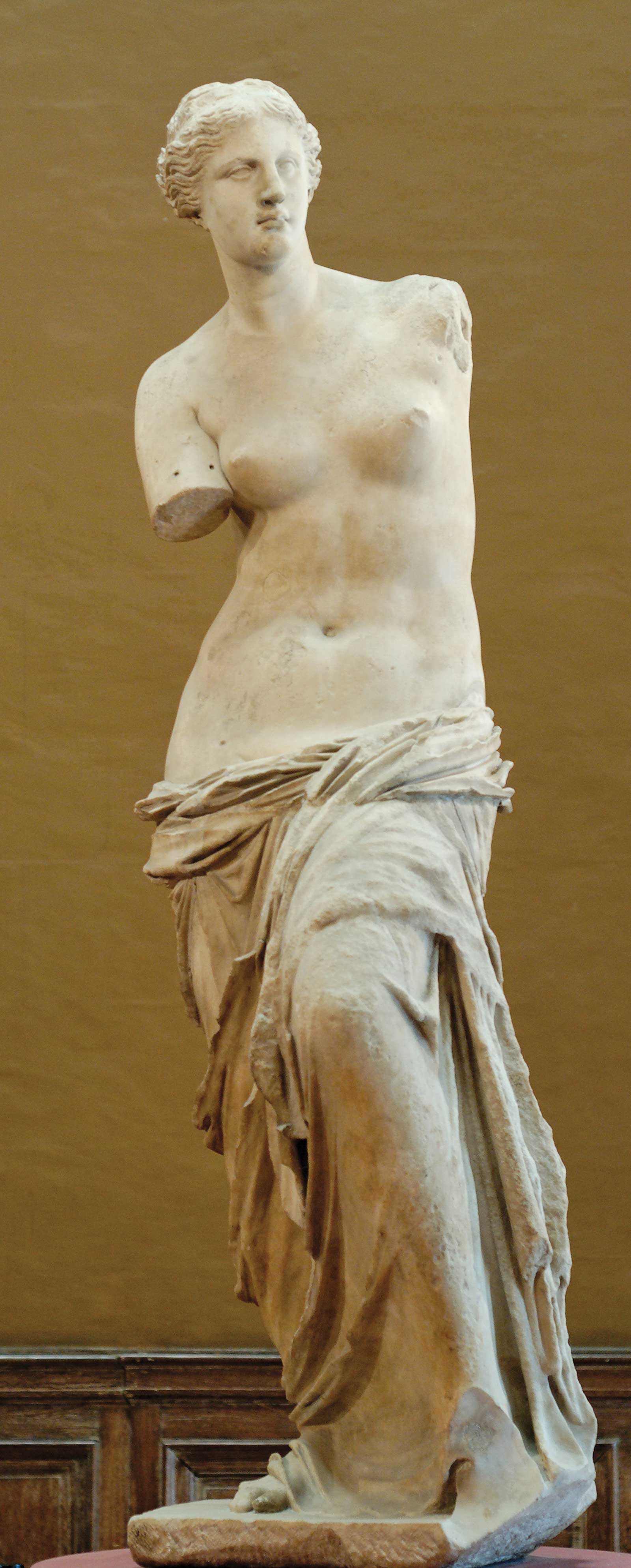 Illus. 2. Venus de Milo, ca. 130-100 BC, found in Melos in 1820. Parian marble, 79½ in. Louvre Museum. Gift of the Marquis de Rivière to Louis XVIII of France, 1821.
Given the multiplicity of directions in the art world today, formerly accepted art historical theories are no longer effective and a fresh approach to understanding works of art is needed. Placing Elie Nadelman’s work within the once popular “Grand Narrative” that traced the evolution of style from the Renaissance through Abstract Expressionism is no longer relevant (Danto, Arthur C. 1997. After the End of Art: Contemporary Art and the Pale of History. Princeton, Princeton University Press, p. xix). Current writings in social psychology investigating visual perception and aesthetic pleasure suggest a focus on how the human brain perceives works of art and derives pleasure from them (Bloom, Paul. 2010. How Pleasure Works: The New Science of Why We Like What We Like. New York, W.W. Norton; Dutton, Denis. 2009. The Art Instinct: Beauty, Pleasure, and Human Evolution. New York, Bloomsbury Press; Winner Ellen. 2019. How Art Works: A Psychological Exploration. Oxford, The Oxford University Press). These writers often center their discussions on the communication between the work of art and the perceiver rather than on art historical theory. In the words of Paul Bloom, “…for a human artifact such as a painting, the essence is the inferred performance underlying its creation.” (Bloom, p. 138). John Dewey’s 1934 book Art as Experience seems to anticipate today’s psychological research in its pragmatic approach to how an aesthetic experience might arise from a work such as Nadelman’s sculpture.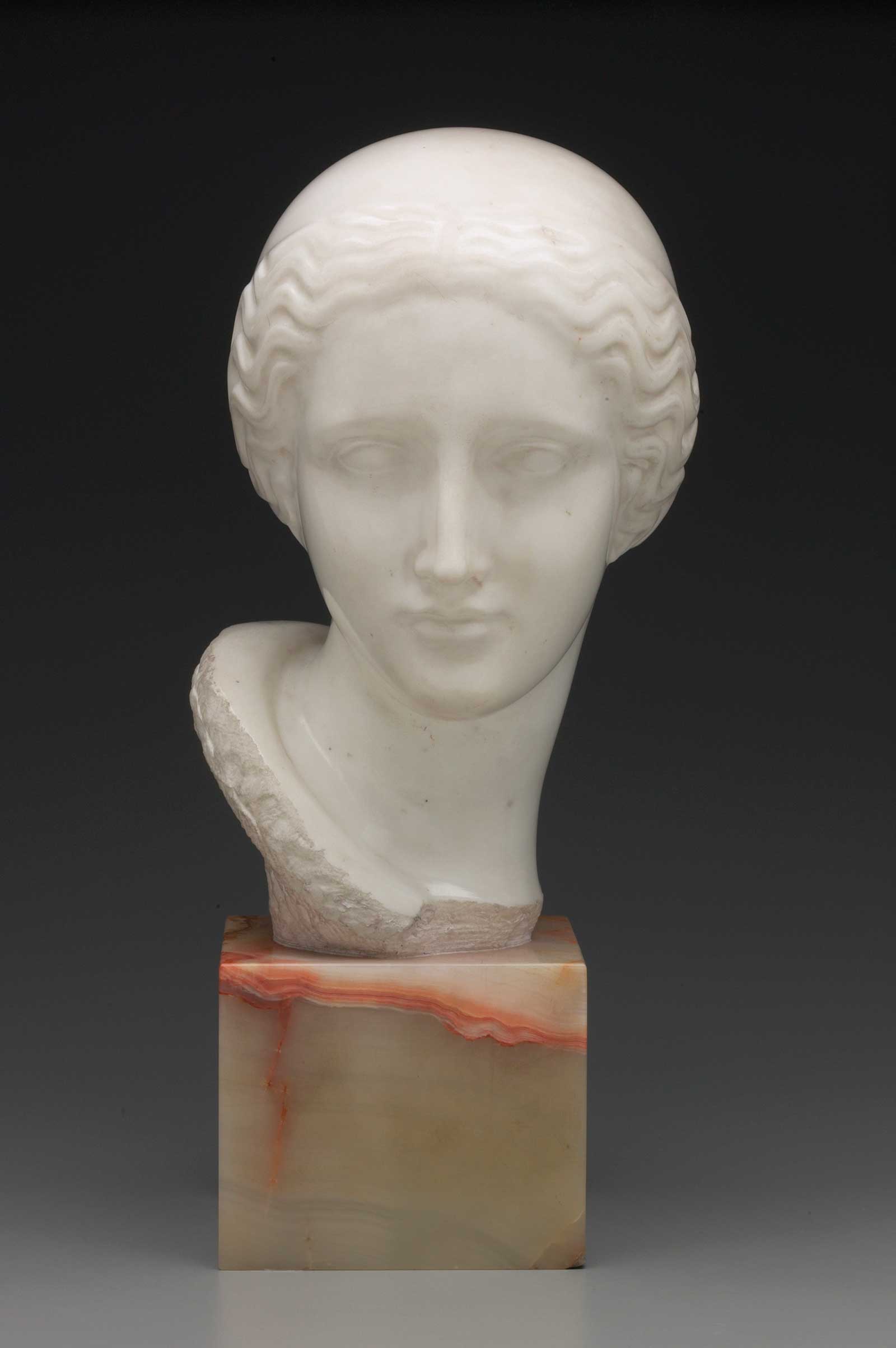 Illus. 3. Elie Nadelman (1882-1946), Classical Head, ca. 1916-17. Marble, 14½ x 9½ x 10¾ in. Yale University Art Gallery. Gift of Mrs. Francis P. Garvan, 1950.724.
Dewey describes the nature of an aesthetic experience with the following illustration (Dewey, John. 1934. Art as Experience. New York, Penguin Group, pp. 140-141). Several people on a ferry crossing the river to Manhattan are halfway across when one looks up from his newspaper at the approaching shore to gauge how much further they have to travel. Another surveys the buildings and ponders the cost of real estate in various sections of the city. A third takes in the physical grandeur of the tall buildings and the energy of the pulsating city, finding the scene enthralling. It is only this third person for whom the city functioned to create an aesthetic experience because of both an attraction to the scene and a willingness to engage their imagination with no specific agenda: what Immanuel Kant called “disinterested contemplation” (Bullough, Edward. 1912. “’Psychical Distance’ as a factor in art and as an Artistic Principle.” British Journal of Psychology, Vol. 5, pp. 87-117). This person perceived the city’s familiar features in a new way which led to the insight that brought them aesthetic pleasure. In contrast, the other two travelers lacked “disinterested contemplation.” They merely regarded the city in relation to their personal interests and while they might have gained new knowledge from the vantage point of the ferry, it was mainly utilitarian.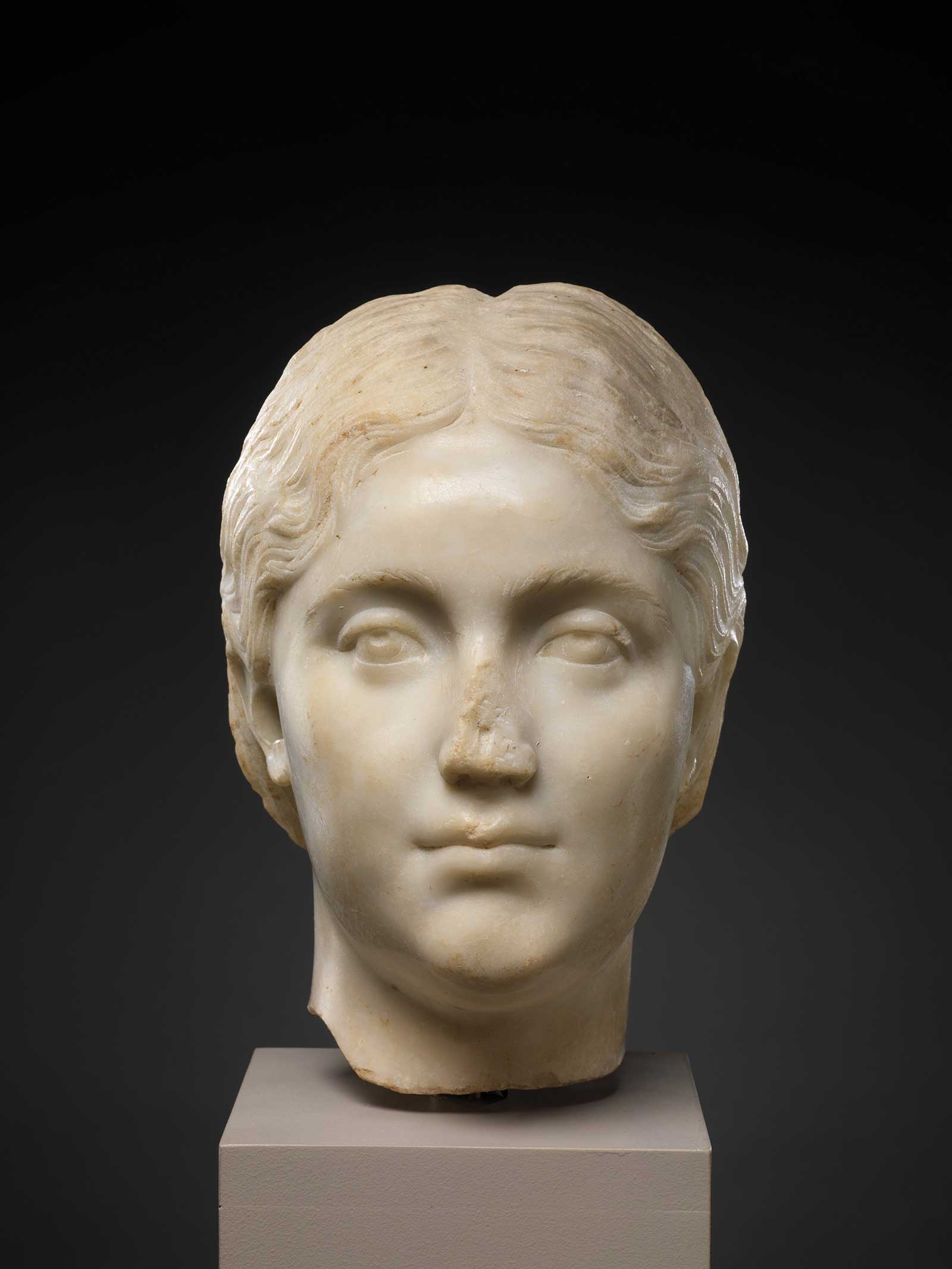 Illus. 4. Roman portrait of a young woman, ca. 150-175 AD. Marble, 103/16 in. The Metropolitan Museum of Art. Rogers Fund, 1923. 23.160.6.
Assuming the viewer has some knowledge of the subject at hand, Dewey outlines two steps in the process that would lead to the aesthetic experience he saw as the essential purpose of a work of art. First, the physical elements of a work must claim attention. Second, this attention must be sustained long enough to structure an experience that produces a new insight resulting in an emotional reaction. For Dewey, it is this emotional reaction that indicates a functioning work of art. He states: “Without emotion, there may be craftsmanship but not art” (Dewey, p. 92). A new level of understanding derived from the creative transformation of familiar material facilitates this aesthetic experience.
Dewey’s concept of the aesthetic process can help us understand today how the American Modernist Nadelman, referencing Classical Greek Sculpture and American Folk Art, restructured and expanded recognizable imagery into new and innovative creations.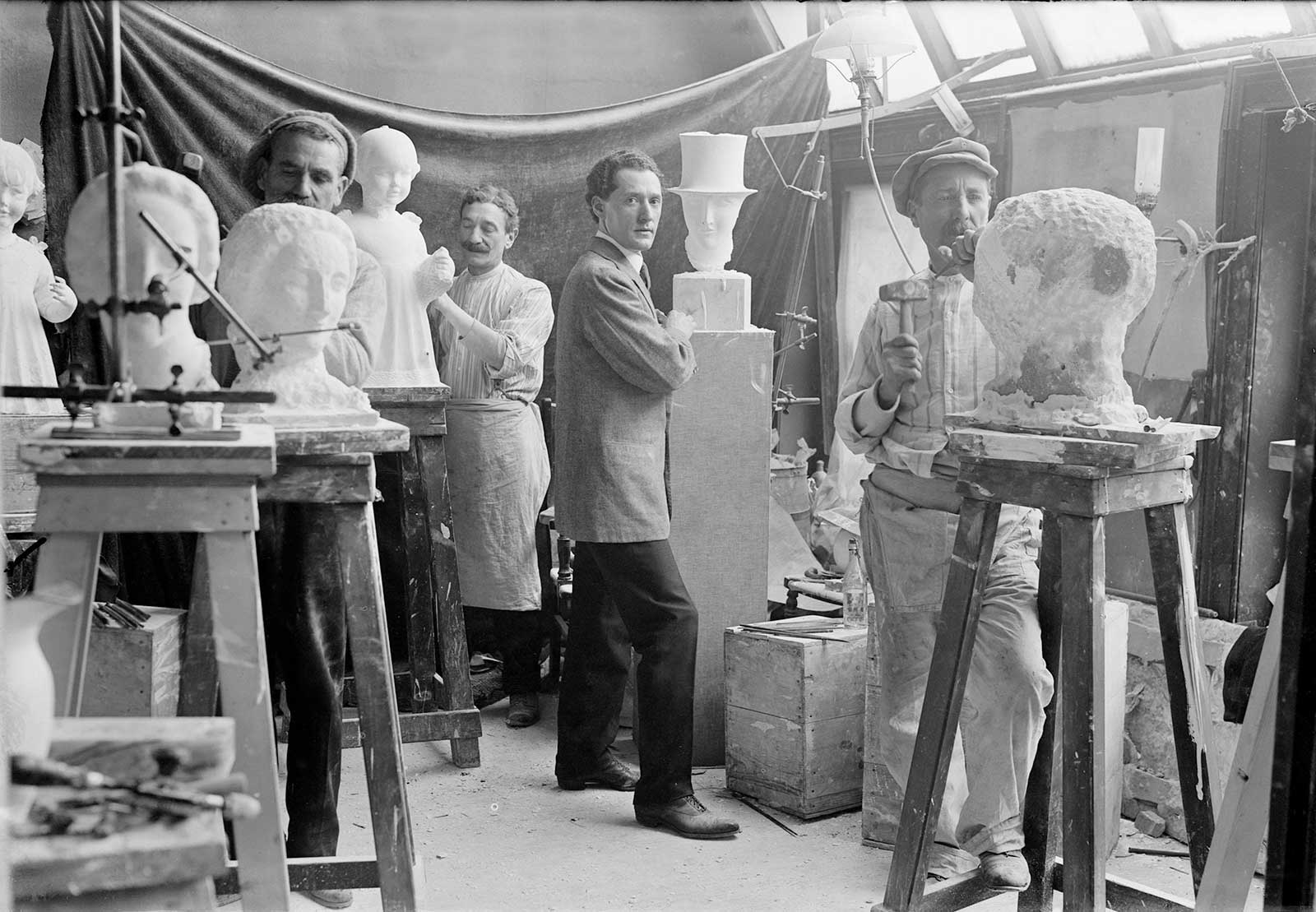 Elie Nadelman (1882-1946), Polish-born American sculptor standing beside his sculpture in an artists’ studio class, circa 1915. Courtesy Everett Collection Inc. / Alamy Stock Photo.
Classical Figure (illus. 1), circa 1910 to 1911, collection of the Hirshhorn Museum and Sculpture Garden, a work from early in Nadelman’s career in France, shows how the artist was at first unsuccessful in meeting Dewey’s requirements by failing to move beyond the merely derivative. Recalling the famous Venus di Milo (illus. 2), the work by the 28-year-old Nadelman fails to hold our attention in contrast to the iconic masterpiece because there is nothing compelling or transformative about Nadelman’s version. The tentative downcast aspect of her pose, lack of energy, and clumsy, ill-defined drapery fallen to her knees offer nothing beyond the imitative. In Dewey’s terms, attention fails to be sustained and no insights are to be gained.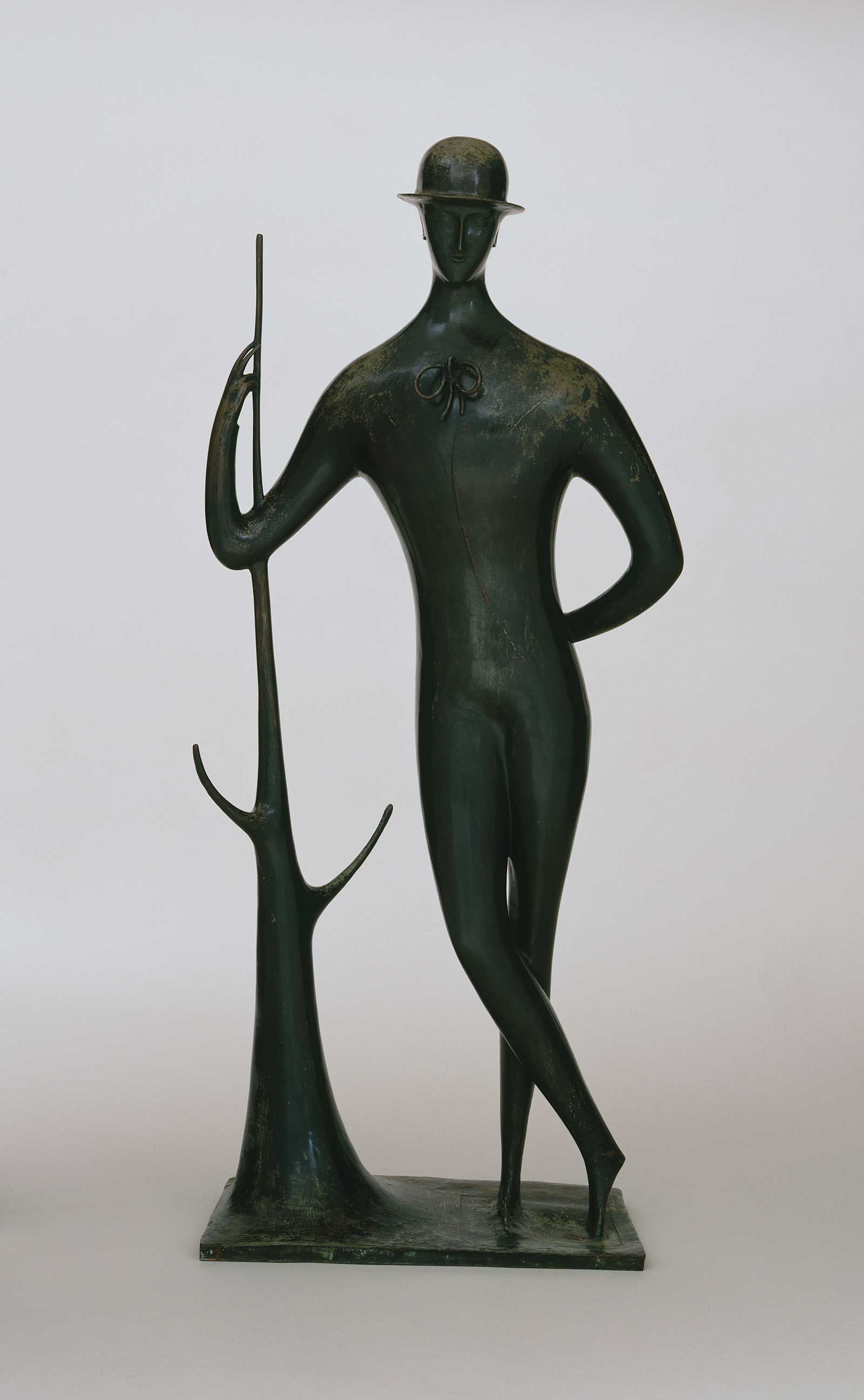 Illus. 5. Elie Nadelman (1882-1946), Man in the Open Air, ca. 1915. Bronze, 54½ x 11¾ x 21½ in. The Museum of Modern Art. Gift of William S. Paley (by exchange). 259.1948. © Estate of Elie Nadelman.
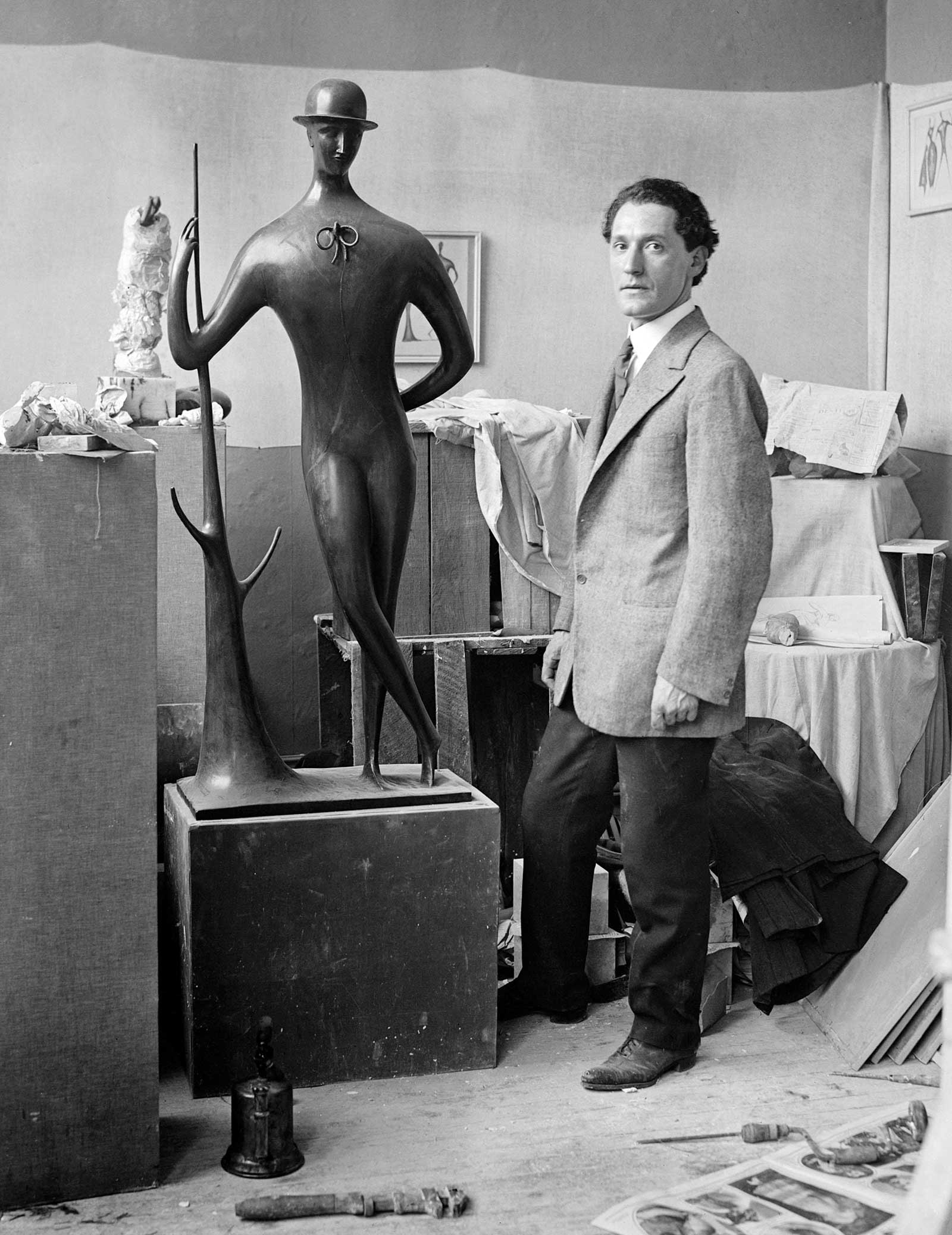 Elie Nadelman (1882-1946), Polish-born American sculptor in his studio with one of his best-known works, Man in the Open Air. Courtesy Everett Collection Historical / Alamy Stock Photo.
In contrast, Nadelman’s Classical Head (illus. 3) from the same period now in the Yale University Art Gallery, is a much more successful effort in creating an original and transformative work. This elongated impersonal visage with its decorative élan is Nadelman’s innovative version of a typical naturalistic Roman portrait head (illus. 4). The vacant expressionless eyes, the accentuated acrolithic-like neck termination which boldly echoes the curve of the hairline, the voluminous abstract waves of hair, and its shiny, highly polished surface, all anticipate a decorative streamlined Modernism while evoking the timeless memory of a Classical sculpture. It is this innovative synthesis that leads to a new insight, producing the emotional reaction that identifies the experience of an authentic work of art.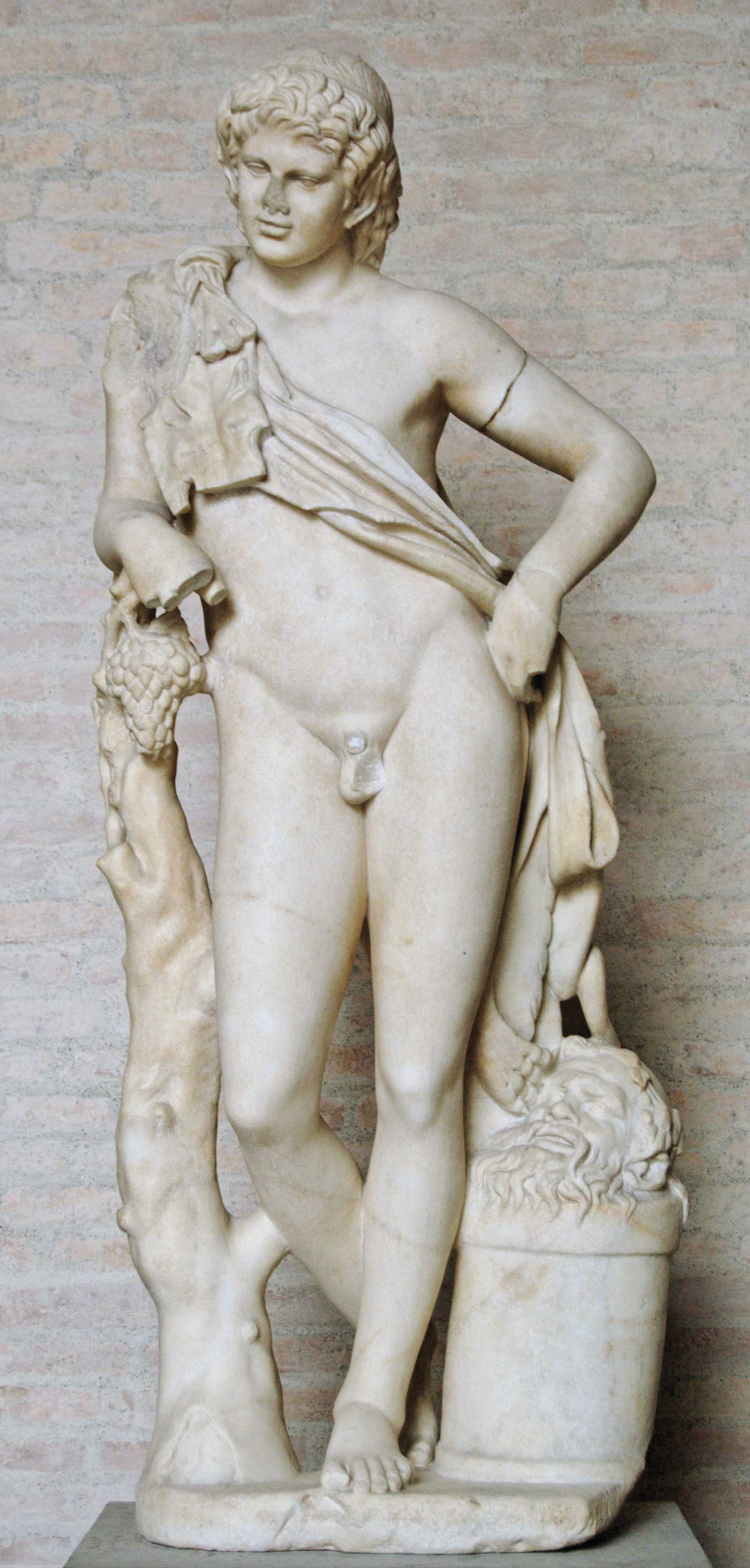 Illus. 6. Leaning Satyr, copy after a Praxitele’s type, ca. 320 BC. 669/10 in. Glyptothek, Munich, Germany. Inv. 228.
Classical sculpture continued to be an influence on Nadelman’s work after he moved to New York. Man in the Open Air (illus. 5), circa 1915, Museum of Modern Art, New York, created shortly after his arrival, is derived from the version of Praxiteles’ Leaning Satyr (illus. 6) in Munich’s Glyptothek, well known to Nadelman from his studies there. Nadelman’s figure captures the humanity and idle leisurely ease inherent in the ancient pose while creating a satirical commentary on American upper-class society. Generalizing the clothing of his modern man with the slight suggestion of a shirt cuff at the wrist and a scribble of a wire bow tie, he tops him off with a bowler hat. Nadelman adeptly parodies the imagery of the Classical figure in his Modernist reductive simplification, substituting the fragility of the cartoonish twig-like tree for the Satyr’s heavy tree stump and the attenuated thinness of the legs and awkward flexibility of the arms for the grace of the marble sculpture. With his curving, spare line and novel volumetric simplification, Nadelman’s imaginative deconstructive vision incorporates Praxiteles’ classic pose into his contemporary figure. Recognition of this fusion of the witty and the monumental is what leads to the perception of this as a unique and convincing work of art in which a new interpretation has been inspired by a Classical model.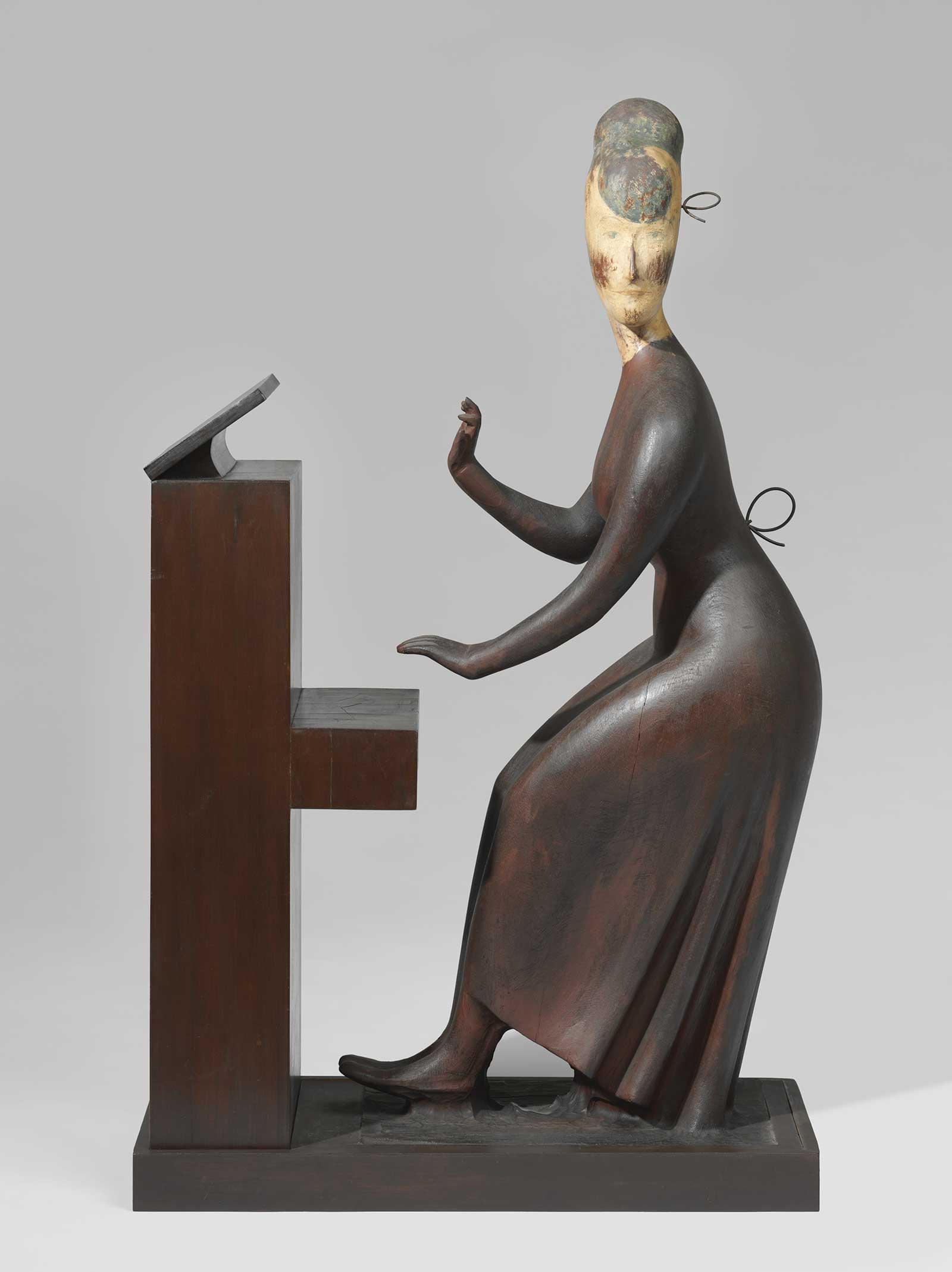 Illus. 7. Elie Nadelman (1882-1946), The Piano Player, ca. 1920-24. Stained and painted wood and iron wire, 36½ x 22 x 11¾ in. Harvard Art Museums/Fogg Museum. Gift of Dr. and Mrs. John P. Spiegel. 1956.200. © President and Fellows of Harvard College.
The Piano Player (illus. 7), 1920 to 1924, at the Fogg Museum, Harvard Art Museums, shows the influence of folk art on Nadelman’s sculpture in his choice of a domestic subject taken from everyday life, the sensate experience and materiality of worn surfaces, and a pervading sense of whimsy. It is the novelty of these elements that, in Dewey’s terms, first attracts attention, after which interest is sustained through a closer examination of the unusual and arresting details. This wind-up automaton-like figural group evokes a frozen moment in time with a woman, her hands poised above the keys as if playing a Rag, her foot raised to tap out the rhythm, and her painted doll-like face swiveled blankly towards the viewer as if in stop-motion. The open piano lid adds a touch of humor as well as enlivening the heavy mass of the piano whose straight lines and sharp edges serve to anchor the composition and act as a foil to the sinuous curves of the figure. There is a humorous visual interplay between the figure’s arms and the lid of the piano as if they were engaged in a sonic dialogue. The imagination and daring in Nadelman’s inspired choice of an audacious anecdotal composition of popular culture, its realization through the means and materials of folk art, and the immediacy of its stop-action pose and ephemeral nature of gesture all challenge accepted norms of sculpture at the time. The insight gained from this recognition of the new possibilities for sculpture is what Dewey would suggest triggers the emotional response and defines the aesthetic experience resulting from Nadelman’s inspired transformation of this novel folk material (illus. 8).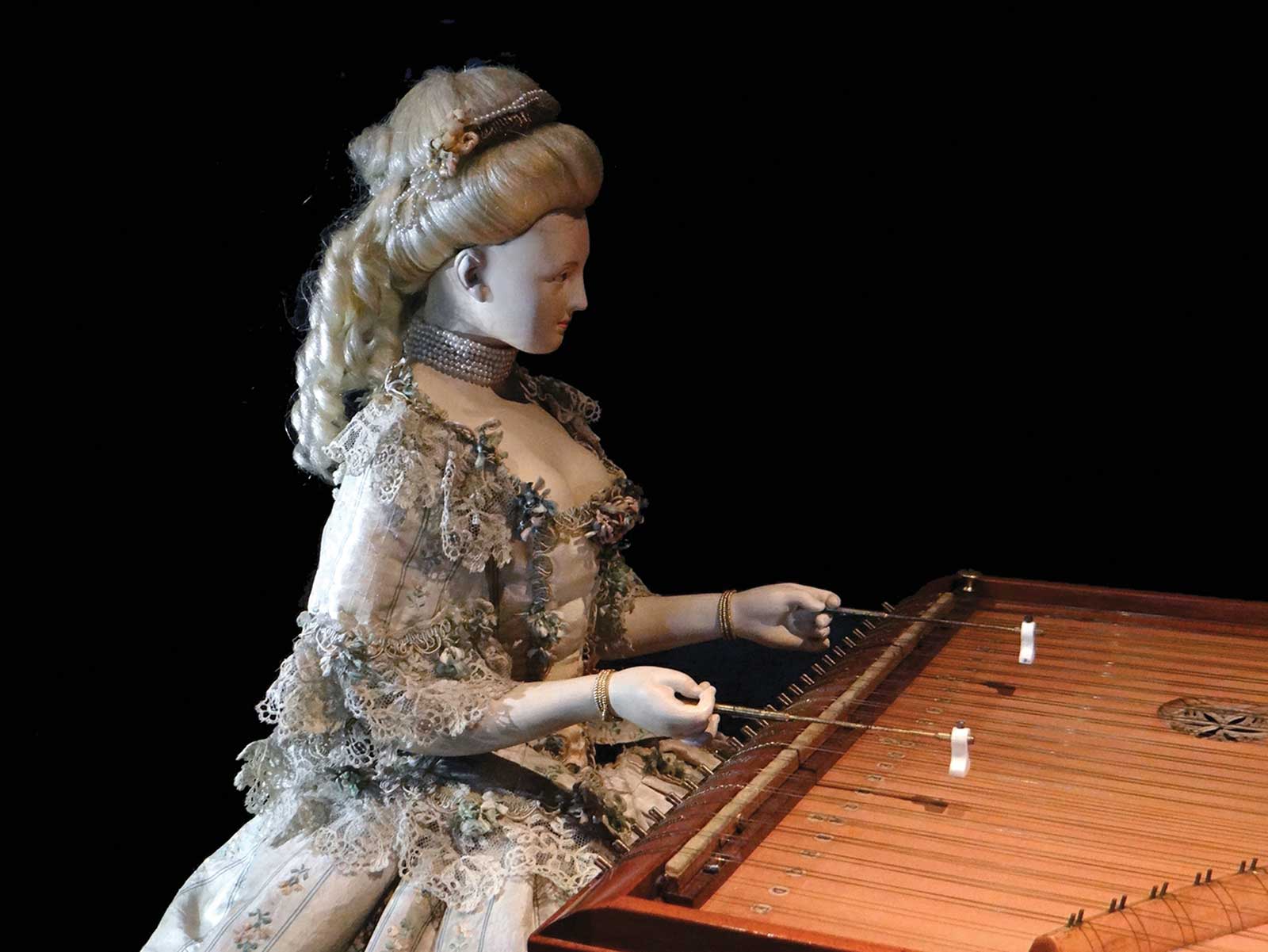 Illus. 8. David Roentgen (1743-1807) and Peter Kinzing (1745-1816), La joueuse de tympanon, ca. 1784. Automaton made from steel, wood, ivory, brass and cloth, 48 x 57½ x 478/10 in. Conservatoire national des arts et métiers, Paris, France.
This article is built on the premise that the essential consideration in determining the existence of a convincing work of art should be that familiar material has been transformed in such a way as to foster a revelatory experience that generates an emotional response. Furthermore, as John Dewey asserted, all successful works of art produce just such a positive emotional reaction. In this process, some knowledge of individual styles is necessary to distinguish between what is innovative and what is merely imitative within a specific style or period. A realization of the difference between the inspired and the derivative is what provides insight into how convincing works are created. Elie Nadelman’s sculpture, which draws on both the stylistic traditions of Classical art and American Folk Art, makes it possible to identify the ways in which he manipulated the mindsets, methods, and materials of the past to transform them into his authentic modern creations. —
Further Reading
Haskell, Barbara. 2003. Elie Nadelman: Sculptor of Modern Life. New York, Whitney Museum of American Art
Hofer, Margaret K. and Olson, Roberta J.M. 2015. Making It Modern: The Folk Art Collection of Elie and Viola Nadelman. New York, The New York Historical Society
Kirstein, Lincoln. 1973. Elie Nadelman. New York, The Eakins Press
Powered by Froala Editor