Christie’s fall American sale on November 20 will feature works from artists who are iconic figures in American art—artists such as Norman Rockwell, Georgia O’Keeffe, Edward Hopper, Albert Bierstadt, Andrew Wyeth, Childe Hassam and many others. 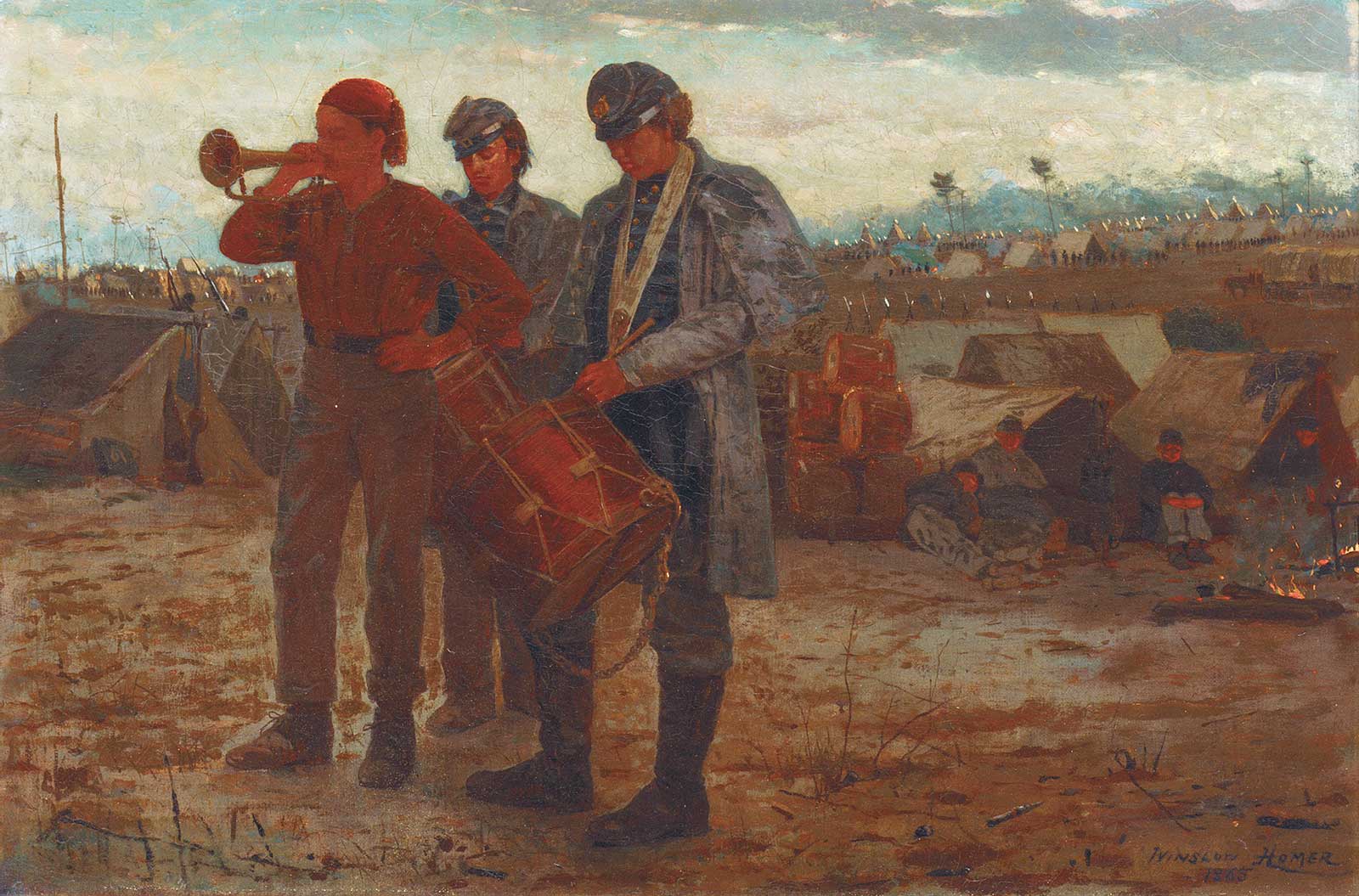 Winslow Homer (1836-1910), Sounding Reveille, 1865. Oil on canvas, 13¼ x 19¾ in., signed and dated lower right: ‘Winslow Homer 1865’. Estimate: $1.5/2.5 million
“We’re very excited about offering a strong selection of American art spanning all the key categories, from 19th-century Hudson River School, to great Civil War imagery, to illustration from artists such as Norman Rockwell and others, to more modernist and regionalist works,” says Paige Kestenman, associate vice president in Christie’s American art department. “It’s a strong sale with some of the icons of American art.”
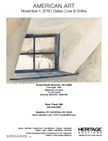
Top works include Wyeth’s 1981 48-inch-square tempera on panel Oliver’s Cap, which shows a chair under an umbrella in the yard of a farmhouse in Chadds Ford, Pennsylvania. “It’s an impressive, large-scale work by the artist that reflects the time he spent in an African American community in Chadds Ford. He became very close with the Winfield family who owned this home. He would often go to Sunday dinner with them and was fond of this umbrella because it reminded him of a flat hat worn by one of the family members,” Kestenman says. “He painted this image after driving past the home and seeing the umbrella blowing in the breeze. Later he wrote in a letter that it was ‘one of my very richest, most personal pictures.’ It’s an interesting piece because it was executed at a time when more modern and abstract art was being produced, and there are elements of very contemporary design in the painting, particularly with the angles and surfaces Wyeth was painting.” 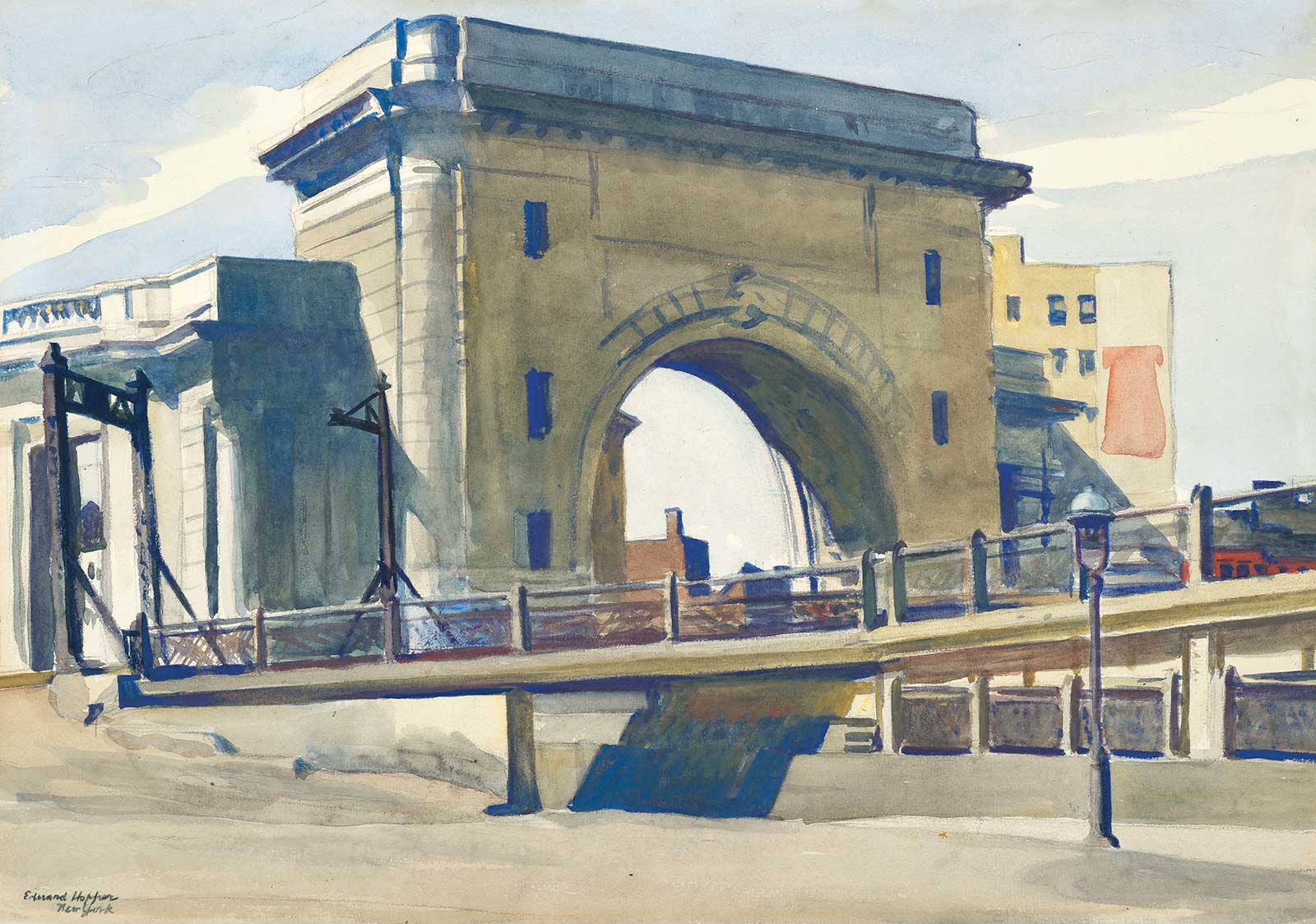 Edward Hopper (1882-1967), Manhattan Bridge Entrance, 1926. Watercolor and pencil on paper, 14 x 20 in., signed lower left: ‘Edward Hopper/New York’. Estimate: $1.2/1.8 million
Wyeth’s Oliver’s Cap, estimated at $3 million to $5 million, comes from the Ron and Diane Disney Miller Collection. Diane Disney Miller, who died in 2013, was the daughter of Walt Disney. Select works from the collection, including Albert Bierstadt’s The American Rockies (est. $120/180,000), are being offered with a portion of proceeds benefiting organizations she supported throughout her life, including the Walt Disney Family Museum, Jane Goodall Institute, Los Angeles Philharmonic and others. The bulk of the collection was acquired in the 1980s so many of the works, including pieces by Thomas Hill and Wyeth, have been off the market for nearly 40 years.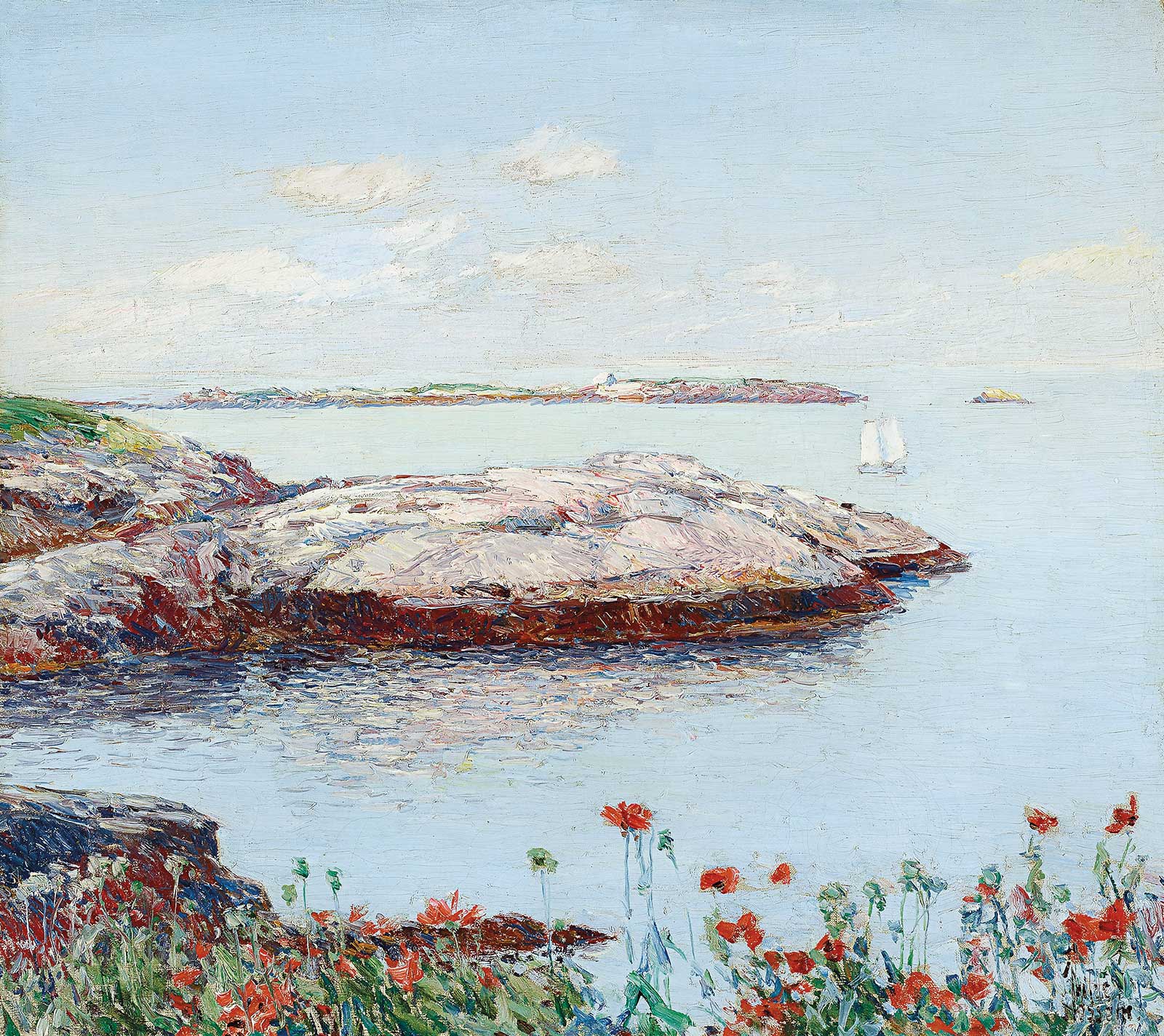 Childe Hassam (1859-1935), Isles of Shoals, ca. 1890. Oil on canvas, 15¾ x 17¾ in., signed lower right with artist’s crescent device: ‘Childe/Hassam’. Estimate: $1/1.5 million
Another important work is Winslow Homer’s early Civil War work Sounding Reveille (est. $1.5/2.5 million), which was created in 1865 after Homer was sent to the front lines of the war for Harper’s Weekly, where the painter was working as an illustrator. The 25-year-old artist would eventually make three trips into the fray. In Marc Simpsons’ book on the artist, Winslow Homer: Paintings of the Civil War, he notes the observations of Thomas Bailey Aldrich: “Mr. Homer’s workshop is as scantily furnished as a shelter tent. A crayon sketch of camp-life here and there on the rough walls, a soldier’s overcoat dangling from a wooden peg, and suggesting a military execution, a rusty regulation musket in one corner, and a table with pipes and tobacco-pouch in the other—these are the homely decorations of Mr. Homer’s chamber.”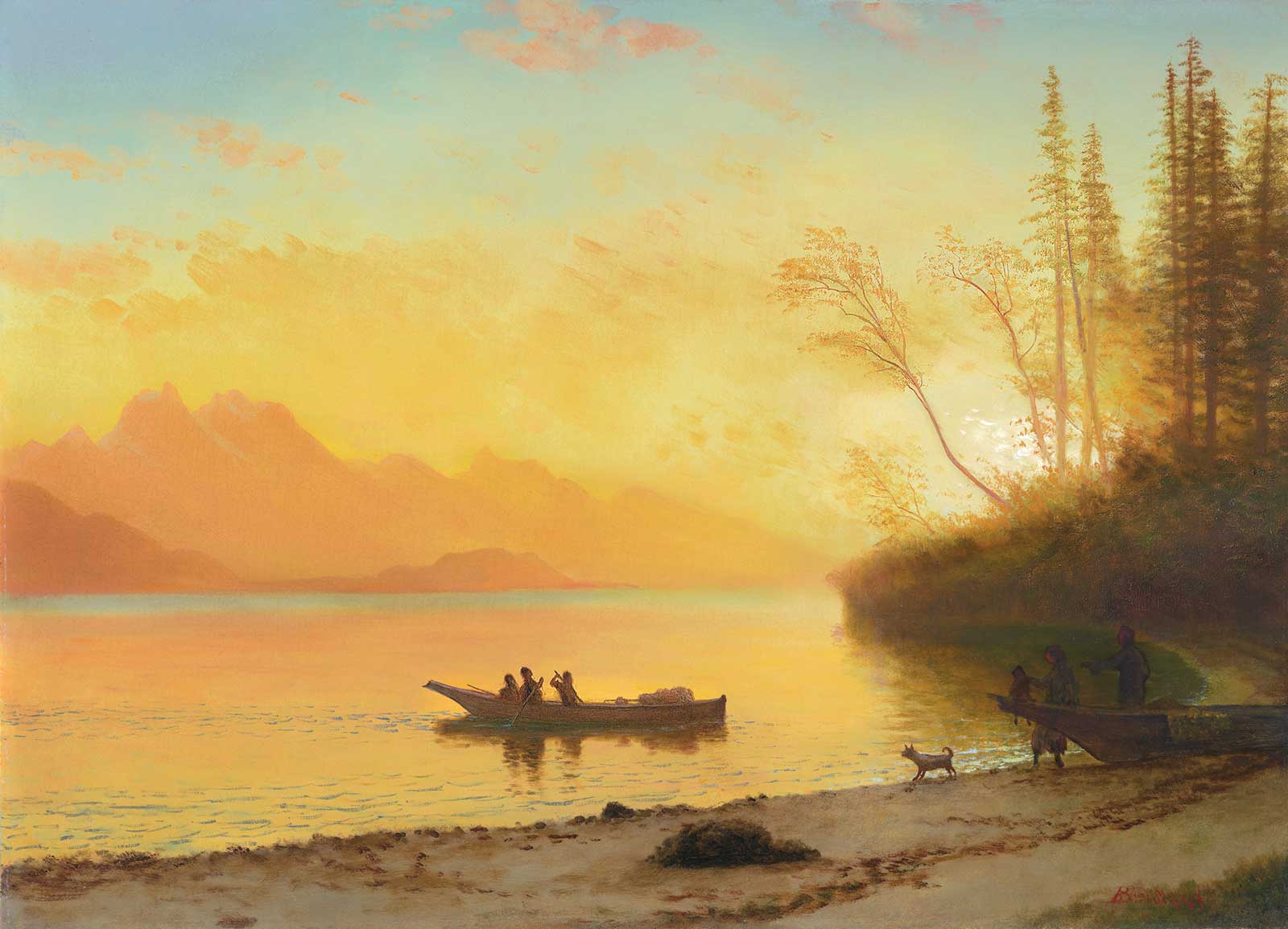 Albert Bierstadt (1830-1902), Afterglow, ca. 1889. Oil on canvas, 26 x 36 in., signed with conjoined initials lower right: ‘ABierstadt’. Estimate: $600/800,000
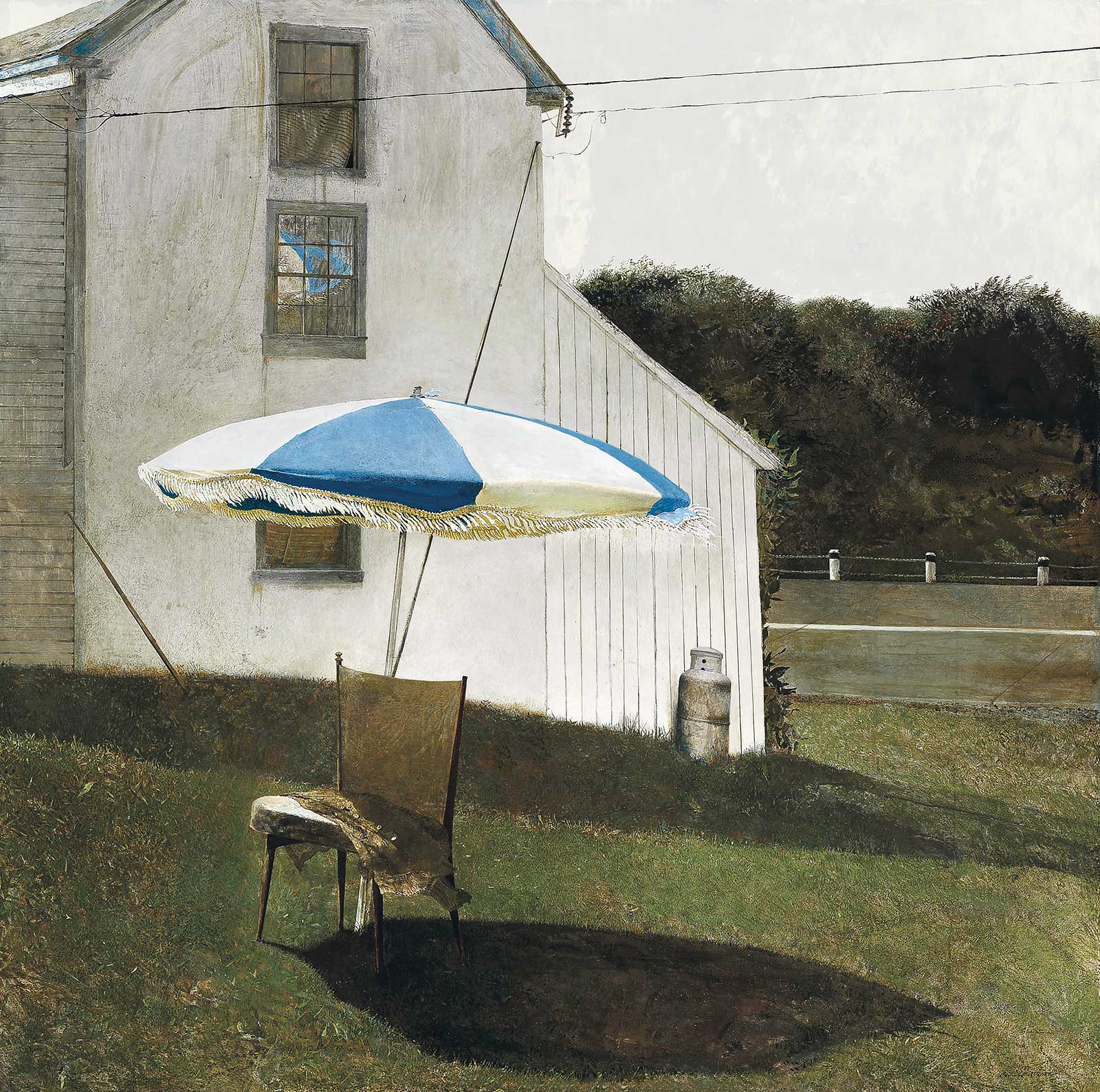 Andrew Wyeth (1917-2009), Oliver’s Cap, 1981. Tempera on panel, 48 x 48 in., signed lower right: ‘Andrew Wyeth’. Estimate: $3/5 million
Homer’s Boats Alongside a Schooner (Fishing Pinky) (est. $300/500,000), another work from the Disney Miller Collection, will also be available to bidders.
Hopper will be represented by his 1926 watercolor and pencil work on paper, Manhattan Bridge Entrance, estimated at $1.2 million to $1.8 million. Depictions of New York City in watercolor are quite rare from Hopper, so the work is already generating considerable attention from potential bidders.
Other key works include Hassam’s Isle of Shoals (est. $1/1.5 million), John Frederick Kensett’s 1858 oil Lake George (Adirondacks Mountains) (est. $300/500,000), Bierstadt’s Afterglow: The Glory Days of the Heavens (est. $600/800,000) and O’Keeffe’s 1936 oil Pink Spotted Lillies (est. $1.2/1.8 million), from the James and Marilynn Alsdorf Collection. “The pinks in the O’Keeffe are really fabulous and make it one of her more feminine compositions. It’s also a complex flower arrangement with two different buds positioned in two different directions, showing her botanical knowledge of plants,” Kestenman says. “It’s a wonderful and vibrant composition.”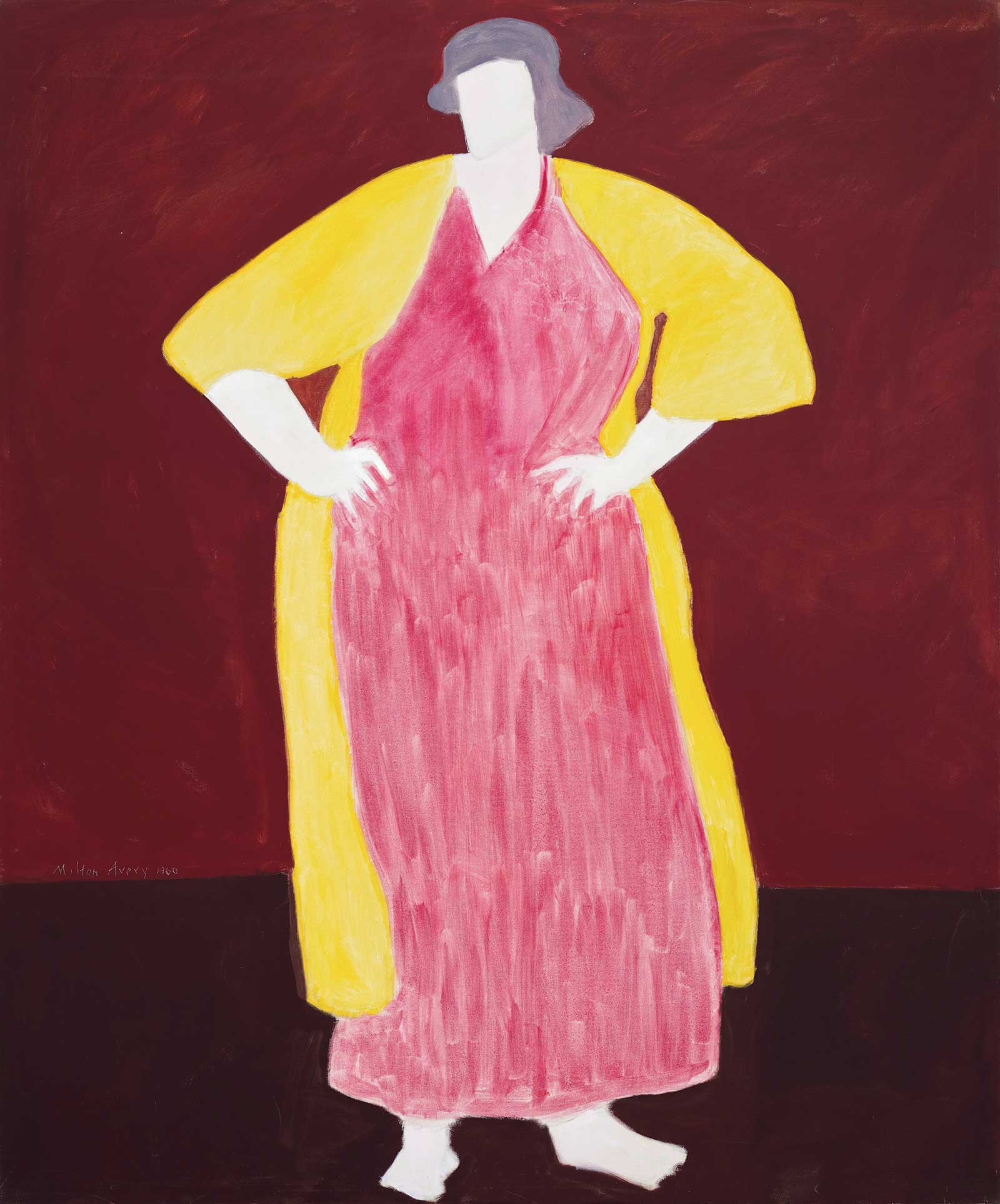 Milton Avery (1885-1965), Yellow Robe, 1960. Oil on canvas, 59½ x 49¾ in., signed and dated lower left: ‘Milton Avery 1960’. Estimate: $1.2/1.8 million
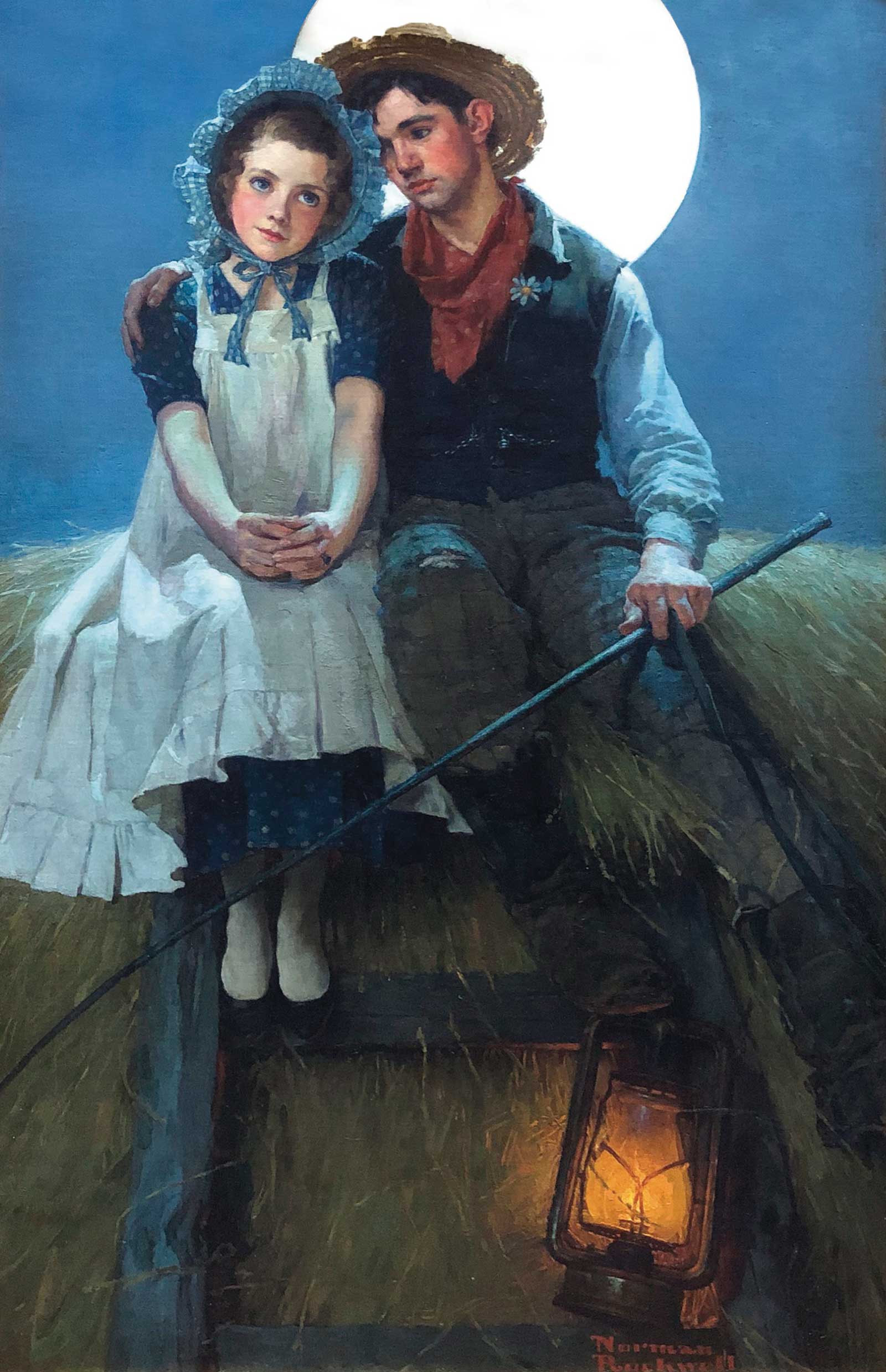 Norman Rockwell (1894-1978), Harvest Moon (Young Lovers on a Hay Rick), ca. 1920s. Oil on canvas, 34 x 21 in., signed lower right: ‘Norman/Rockwell’. Estimate: $1/1.5 million
Rockwell’s Harvest Moon (Young Lovers on a Hay Rick) will be offered with estimates of $1 million to $1.5 million. The work resembles a version of his famous Saturday Evening Post cover Boy and Girl Gazing at Moon (Puppy Love), but with older figures who are seen from the front. Harvest Moon was painted in the 1920s, and was later used as the cover of a 1935 issue of This Week magazine.
Milton Avery’s Yellow Robe will also be available, with estimates of $1.2 million to $1.8 million. The work hits a sweet spot for collectors of Avery’s work: it has a figure rendered in a flattened style, it has bold colors and the painting itself is large at more than 59 inches tall. Avery is considered an important link from more realist figure painting to more abstract art movements in the mid-20th century. “If you look at the background, it really is a color field painting. Mark Rothko was a friend of Avery’s and he even acknowledges Avery’s influence on his work,” says Kestenman. “Avery struck a unique balance with his grounding of representational art but pushing it into the edges of abstraction. And his work also has a sense of humor, which comes across in the dominant stance of this monumental figure.” —
Powered by Froala Editor